


der Passant
passerby
A person who happens to pass by a place, usually on foot on a street or square.
EXAMPLE
Ein Passant fand die verlorene Brieftasche auf dem Gehweg.
A passerby found the lost wallet on the sidewalk.
passerby
Loading your saved state.
passerby
A person who happens to pass by a place, usually on foot on a street or square.
Ein Passant fand die verlorene Brieftasche auf dem Gehweg.
A passerby found the lost wallet on the sidewalk.
'Der Passant' (the passerby) belongs to the N-declension. This means that it takes the ending '-en' in all cases except the nominative singular. This also applies to the plural.
Die Polizei befragte den Passanten als Zeugen.
The police questioned the passerby as a witness.
The word 'Passant' (passerby) is closely related to the verb 'passieren', which means 'to pass by' or 'to happen'. A Passant is therefore literally a person who passes by a place.
Viele Passanten blieben stehen, um dem Straßenmusiker zuzuhören.
Many passersby stopped to listen to the street musician.
The word is often used in reports about accidents or events in public spaces. A typical combination is 'ein zufälliger Passant' (a random passerby).
Ein aufmerksamer Passant rief die Feuerwehr.
An attentive passerby called the fire department.
pedestrian
Fußgänger and Passant can refer to the same person traveling on foot. Fußgänger emphasizes their role in road traffic, while Passant emphasizes that they happen to be passing by a place. Use Fußgänger for traffic rules or paths, and Passant when someone is passing by on a street or in a square.
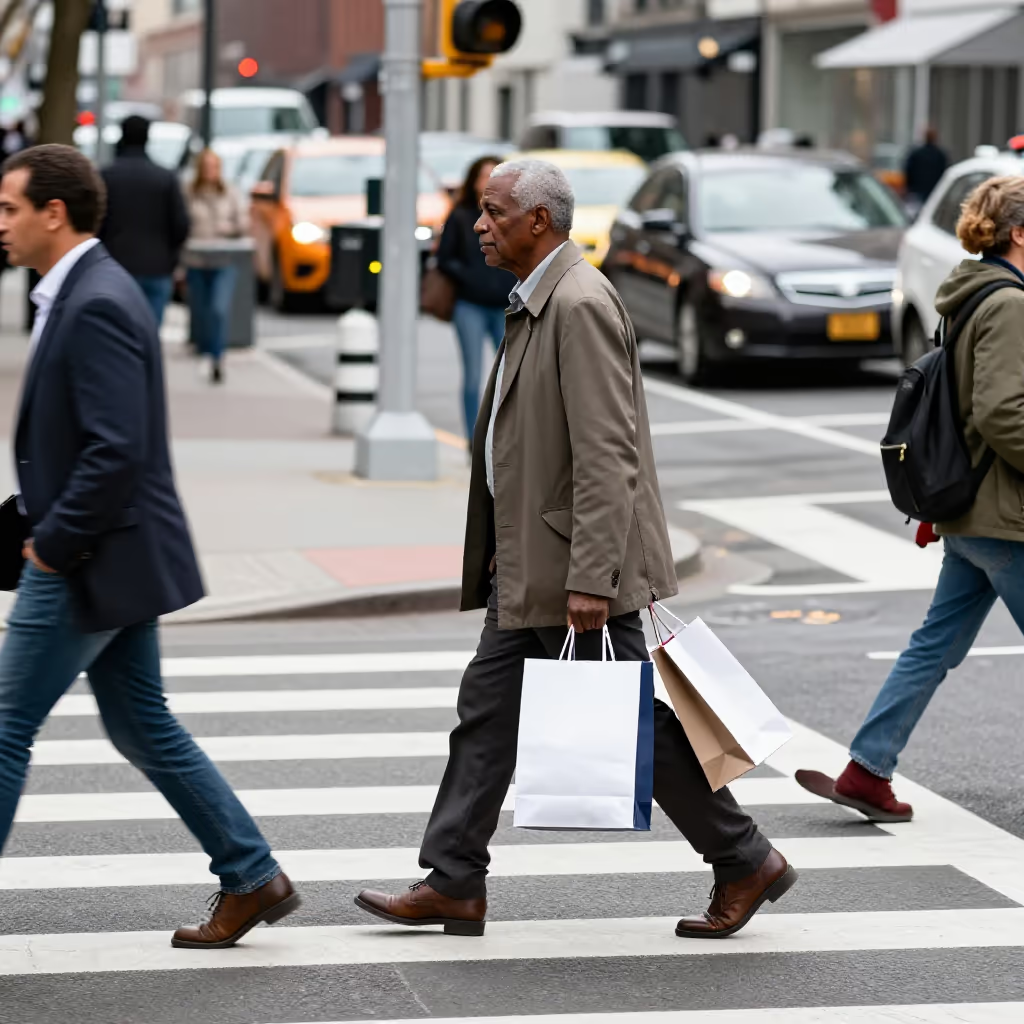
Ein Passant bleibt vor dem Schaufenster stehen und schaut hinein.
A passerby stops in front of the shop window and looks inside.
Der Fußgänger wartet an der roten Ampel, bevor er die Straße überquert.
The pedestrian waits at the red light before crossing the street.