


die Pelle
skin / casing
The thin skin or casing of a sausage.
EXAMPLE
Isst du bei der Wiener Wurst die Pelle mit?
Do you eat the skin of a Vienna sausage too?
skin / peel
Loading your saved state.
skin / casing
The thin skin or casing of a sausage.
Isst du bei der Wiener Wurst die Pelle mit?
Do you eat the skin of a Vienna sausage too?
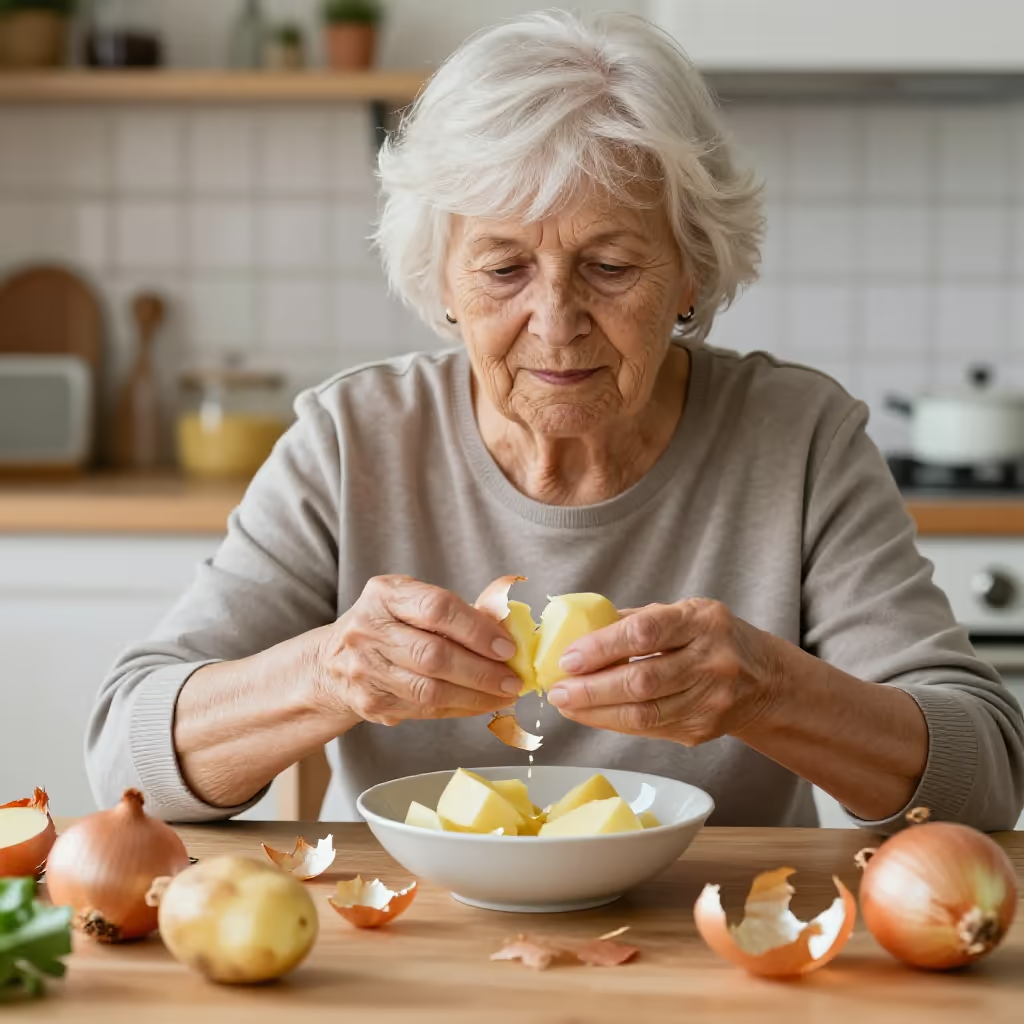
peel / skin
The peel of certain types of vegetables, especially potatoes (as in Pellkartoffeln, potatoes boiled in their skins) or onions.
Für das Gericht musst du die Kartoffeln nur waschen, sie werden mit der Pelle gekocht.
For the dish, you only have to wash the potatoes; they are cooked with the peel on.

skin
Colloquial and often slightly derogatory for a person's skin.
Wenn du dich nicht eincremst, brennt dir die Sonne auf die Pelle.
If you don't put on sunscreen, the sun will burn your skin.

to crowd someone
To come physically too close to someone or to pressure or bother them in an intrusive way.
Der Verkäufer war so aufdringlich, er ist mir ständig auf die Pelle gerückt.
The salesperson was so pushy; he kept crowding me.
'Pelle' (skin/peel) is a colloquial word. In more formal contexts or in written language, people would more likely use 'Haut' (skin, for sausage), 'Schale' (peel, for potatoes), or 'Haut' (skin, for people).
Zieh bitte die Pelle von der Wurst, bevor du sie isst.
Please remove the skin from the sausage before you eat it.
The word 'Pelle' (skin/peel) is especially common in northern and western Germany. In southern Germany or Austria, other terms such as 'Haut' (skin) or 'Schale' (peel) are more common.
In Norddeutschland isst man Pellkartoffeln mit Quark.
In northern Germany, people eat potatoes boiled in their skins with quark.
The idiom 'jemandem auf die Pelle rücken' (to crowd someone/get too close to someone) is fixed. The person being pressured is always in the dative. The expression describes intrusive behavior.
Hör auf, mir so auf die Pelle zu rücken, ich brauche etwas Platz!
Stop crowding me like that; I need some space!
In the meaning of 'Schale' (peel), 'Pelle' is very strongly associated with potatoes. The best-known example is the dish 'Pellkartoffeln' (potatoes boiled in their skins), meaning potatoes that are cooked with their peel on.
Pellkartoffeln sind schnell gemacht und sehr gesund.
Potatoes boiled in their skins are quick to make and very healthy.
When it comes to human skin, there is the idiom 'sich in seiner Pelle wohlfühlen' (to feel comfortable in one's own skin). It means that you are satisfied with yourself and your body.
Seit er regelmäßig Sport treibt, fühlt er sich in seiner Pelle wieder richtig wohl.
Since he started exercising regularly, he feels really comfortable in his own skin again.
skin
Haut is the neutral term for the outer organ of a human being. Pelle can mean the same thing, but it is colloquial and often sounds slightly derogatory. Haut is therefore appropriate in neutral or medical situations; Pelle is more suitable for casual, somewhat disrespectful remarks.
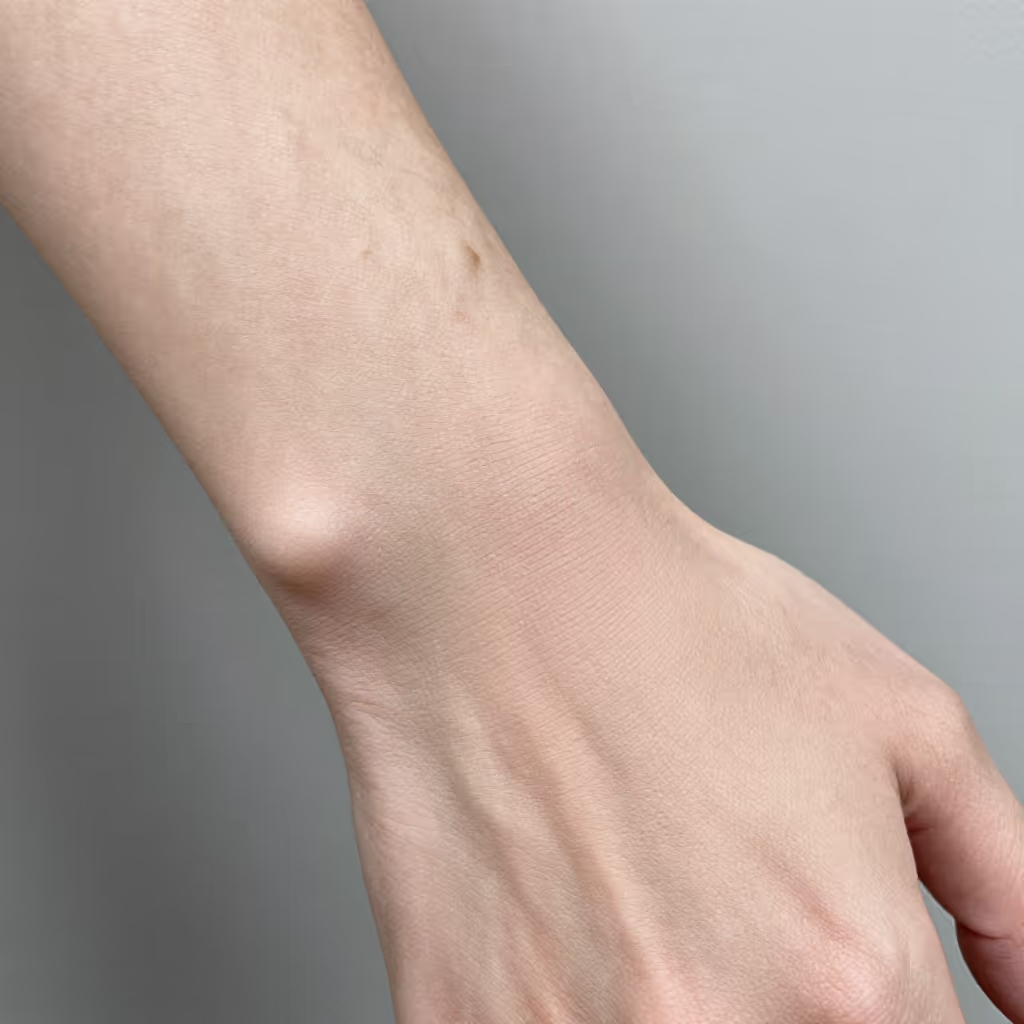
Sein Freund sagt lachend, dass seine Pelle nach dem Urlaub ganz rot ist.
His friend laughs and says that his skin is completely red after the vacation.
Die Ärztin untersucht die gereizte Haut an seinem Rücken.
The doctor examines the irritated skin on his back.