

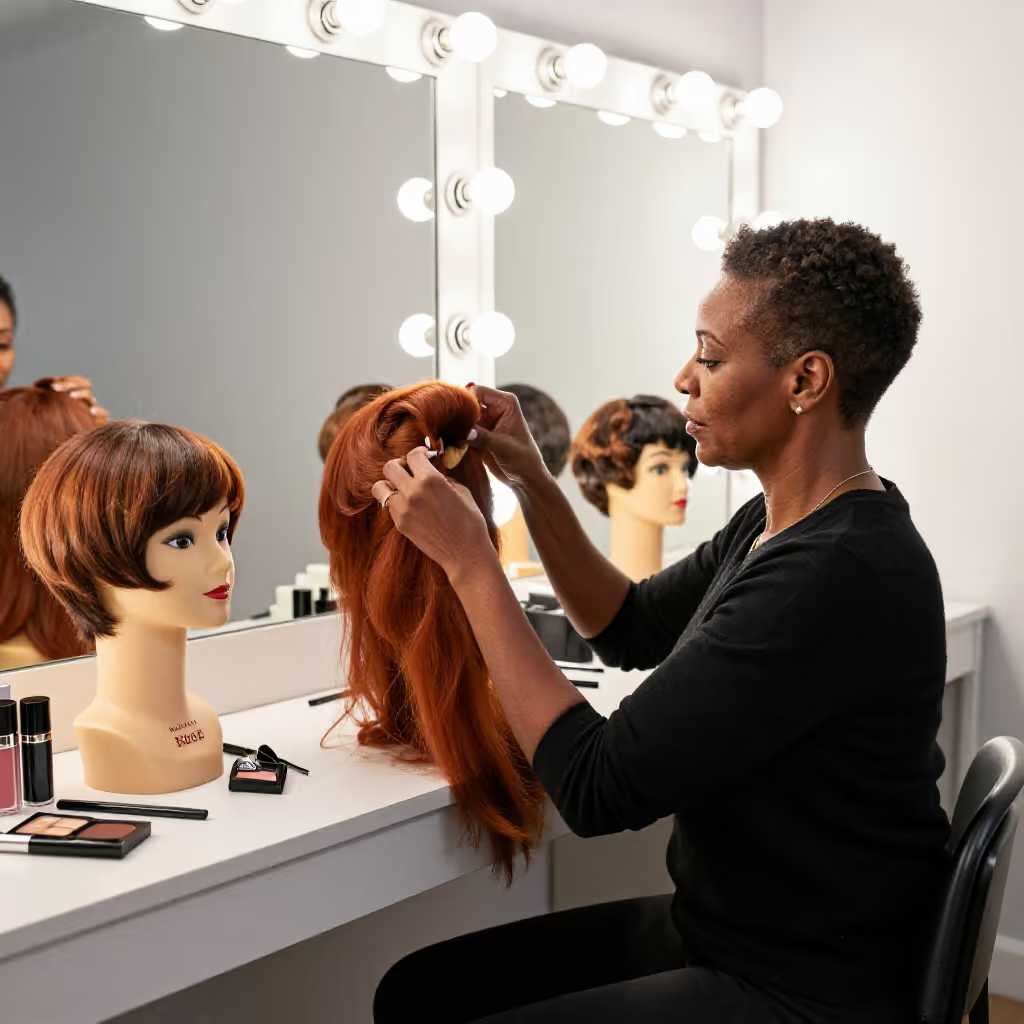
die Perücke
wig
An artificial head covering made of hair, worn to hide baldness, for fashion reasons, or as part of a costume.
EXAMPLE
Der Schauspieler trug für seine Rolle eine blonde Perücke.
The actor wore a blonde wig for his role.
wig
Loading your saved state.
wig
An artificial head covering made of hair, worn to hide baldness, for fashion reasons, or as part of a costume.
Der Schauspieler trug für seine Rolle eine blonde Perücke.
The actor wore a blonde wig for his role.
The most common verbs used with 'Perücke' (wig) are 'tragen' (to wear), 'aufsetzen' (to put on), and 'abnehmen' (to take off).
Für die Party hat er sich eine bunte Perücke aufgesetzt.
For the party, he put on a colorful wig.
Wigs are used in different situations: in the theater for roles, at Carnival or Halloween as part of a costume, or in everyday life in cases of hair loss.
An Karneval tragen viele Leute lustige Perücken und Kostüme.
At Carnival, many people wear funny wigs and costumes.
To state the reason for wearing a wig, you often use the preposition 'als' (as, for costumes) or 'wegen' (because of, for reasons such as hair loss).
Der Clown trug eine rote Perücke als Teil seines Kostüms.
The clown wore a red wig as part of his costume.