

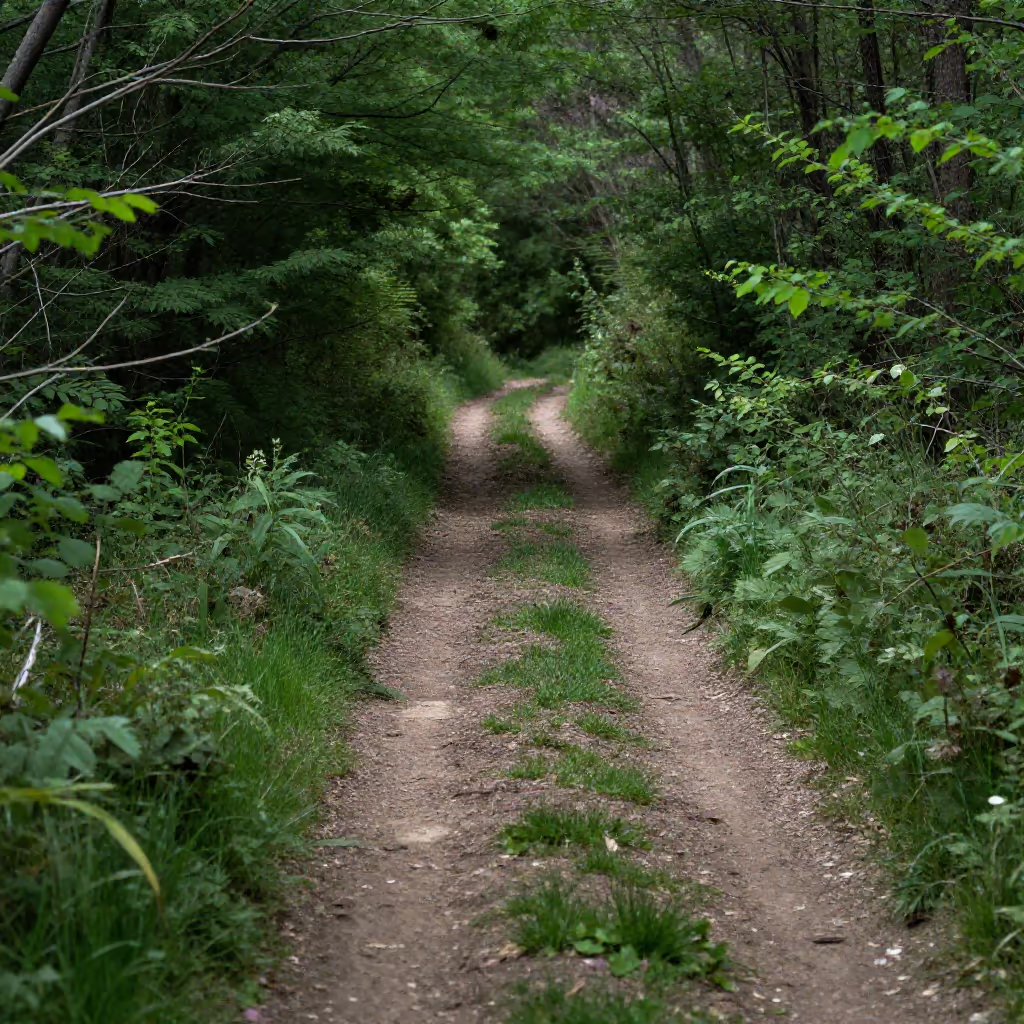
der Pfad
path
A narrow, often unpaved way, usually created by people or animals walking.
EXAMPLE
Wir folgten einem kleinen Pfad durch den dichten Wald.
We followed a small path through the dense forest.
path
Loading your saved state.
path
A narrow, often unpaved way, usually created by people or animals walking.
Wir folgten einem kleinen Pfad durch den dichten Wald.
We followed a small path through the dense forest.

path
In computer science, the exact specification of the storage location of a file or directory in a hierarchical file structure.
Kannst du mir den kompletten Pfad zu der Konfigurationsdatei schicken?
Can you send me the complete path to the configuration file?

path
In a figurative sense, a particular path in life, approach, or moral direction.
Er hat leider den Pfad der Tugend verlassen.
Unfortunately, he has left the path of virtue.
You can recognize the meaning from the context. In nature (forest, mountain), it is a path. On the computer (file, directory), it is the storage location. In a moral or philosophical context (life, virtue), it is a metaphor.
Der Pfad führte steil den Berg hinauf.
The path led steeply up the mountain.
When referring to a path in nature, 'Pfad' (path) is often combined with verbs such as 'folgen' (to follow), 'entlanggehen' (to walk along), or 'verlassen' (to leave). Common adjectives are 'schmal' (narrow), 'steil' (steep), or 'versteckt' (hidden).
Wir sind einem schmalen Pfad durch das Unterholz gefolgt.
We followed a narrow path through the undergrowth.
The computer meaning is a metaphor. The 'Pfad' (path) describes the exact 'way' to a file through the hierarchical folder structure, like a signpost in the real world.
Der Systemadministrator muss den vollständigen Pfad kennen.
The system administrator needs to know the full path.
The figurative meaning is often used in fixed expressions, for example 'den Pfad der Tugend verlassen' (to leave the path of virtue), 'neue Pfade beschreiten' (to break new ground), or 'auf krummen Pfaden wandeln' (to walk crooked paths).
Mit diesem Projekt beschreiten wir völlig neue Pfade.
With this project, we are breaking completely new ground.
track / trace
A Spur is made up of footprints or other signs left by an animal as it moves. A Pfad, by contrast, is the narrow stretch itself that people or animals can walk along. You follow a Spur to find the animal, and a Pfad to take a route.
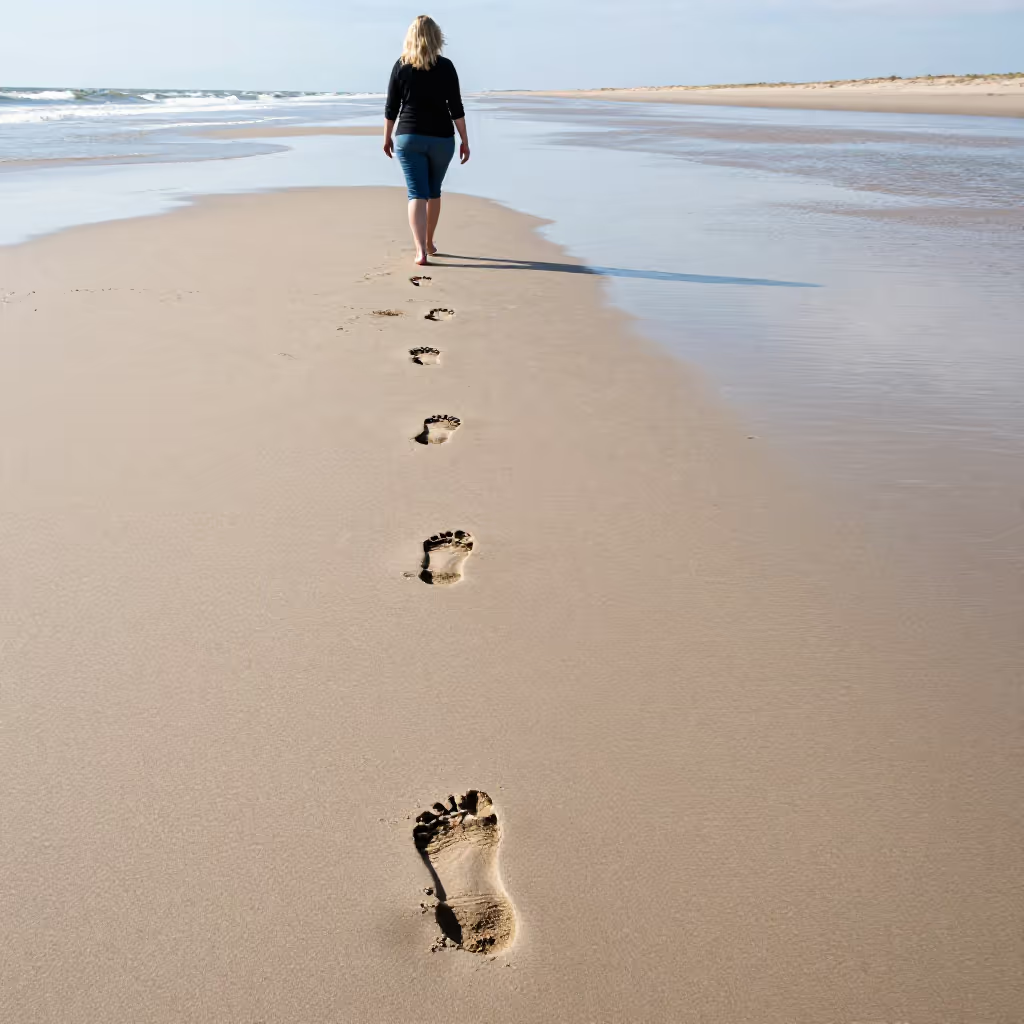
Durch das hohe Gras folgten wir dem schmalen Pfad bis zum Waldrand.
We followed the narrow path through the tall grass to the edge of the forest.
Im Schnee folgten wir der Spur des Rehs bis zum Waldrand.
In the snow, we followed the deer's tracks to the edge of the forest.