

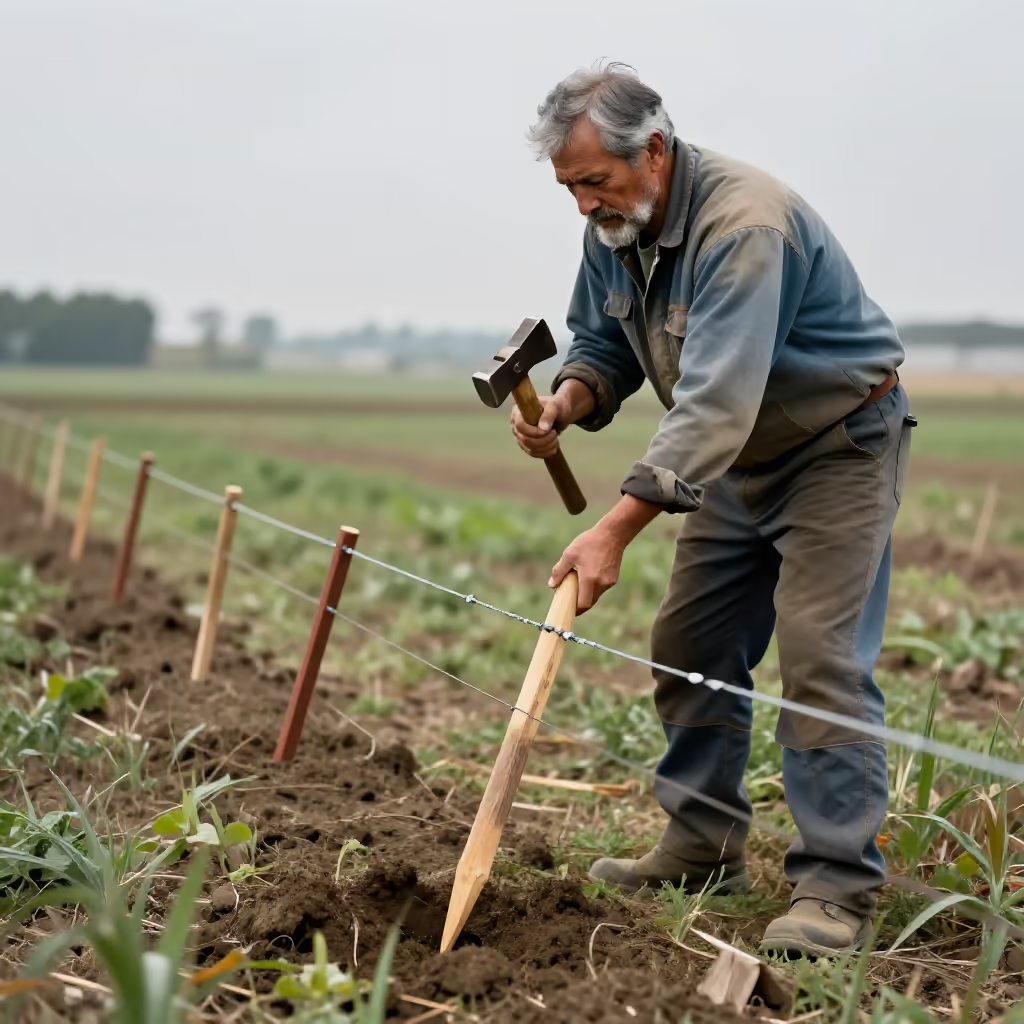
der Pfahl
stake
A long, often pointed object made of wood or metal that is driven into the ground to support, fasten, or mark off something.
Die Tomatenpflanzen wurden an hölzernen Pfählen festgebunden.
The tomato plants were tied to wooden stakes.
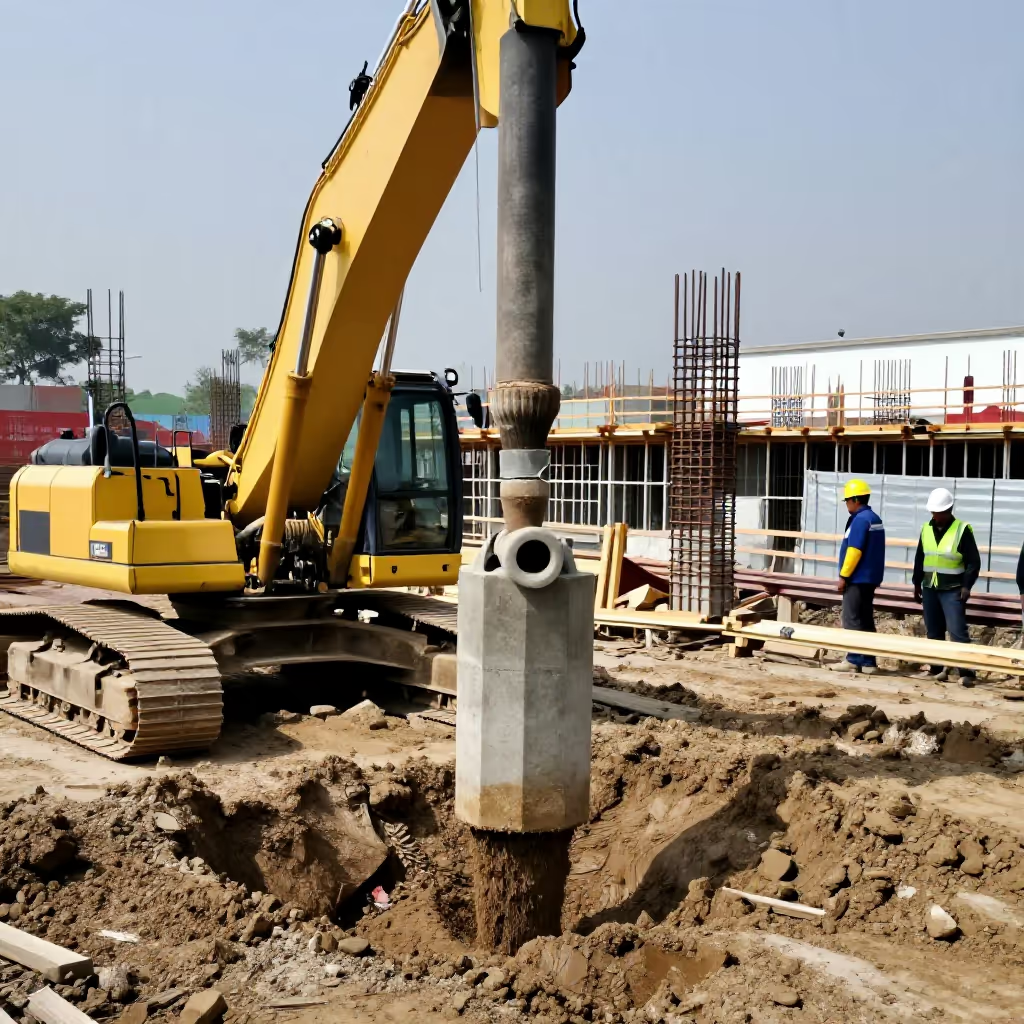

stake / pile
Loading your saved state.
stake
A long, often pointed object made of wood or metal that is driven into the ground to support, fasten, or mark off something.
Die Tomatenpflanzen wurden an hölzernen Pfählen festgebunden.
The tomato plants were tied to wooden stakes.
A 'Pfahl' (stake) is typically driven into the ground. Common verbs in this context are 'einen Pfahl einschlagen' (to drive in a stake), 'rammen' (to ram in), or 'setzen' (to set/place).
Die Arbeiter schlugen die Pfähle für den neuen Zaun in die Erde.
The workers drove the stakes for the new fence into the ground.
This meaning of 'Pfahl' (pile) is a technical term from construction. Here it often refers to large piles made of concrete or steel that serve as a foundation for buildings.
Die Brücke wird auf massiven Betonpfählen errichtet.
The bridge is being built on massive concrete piles.
The idiom 'ein Pfahl im Fleische sein' (to be a thorn in one's side) is fixed. The person or thing that is bothersome is the subject of the sentence. You can add 'für' (for) plus the accusative to say for whom it is a nuisance.
Die ständigen lauten Partys seines Nachbarn sind ihm ein Pfahl im Fleische.
His neighbor's constant loud parties are a thorn in his side.
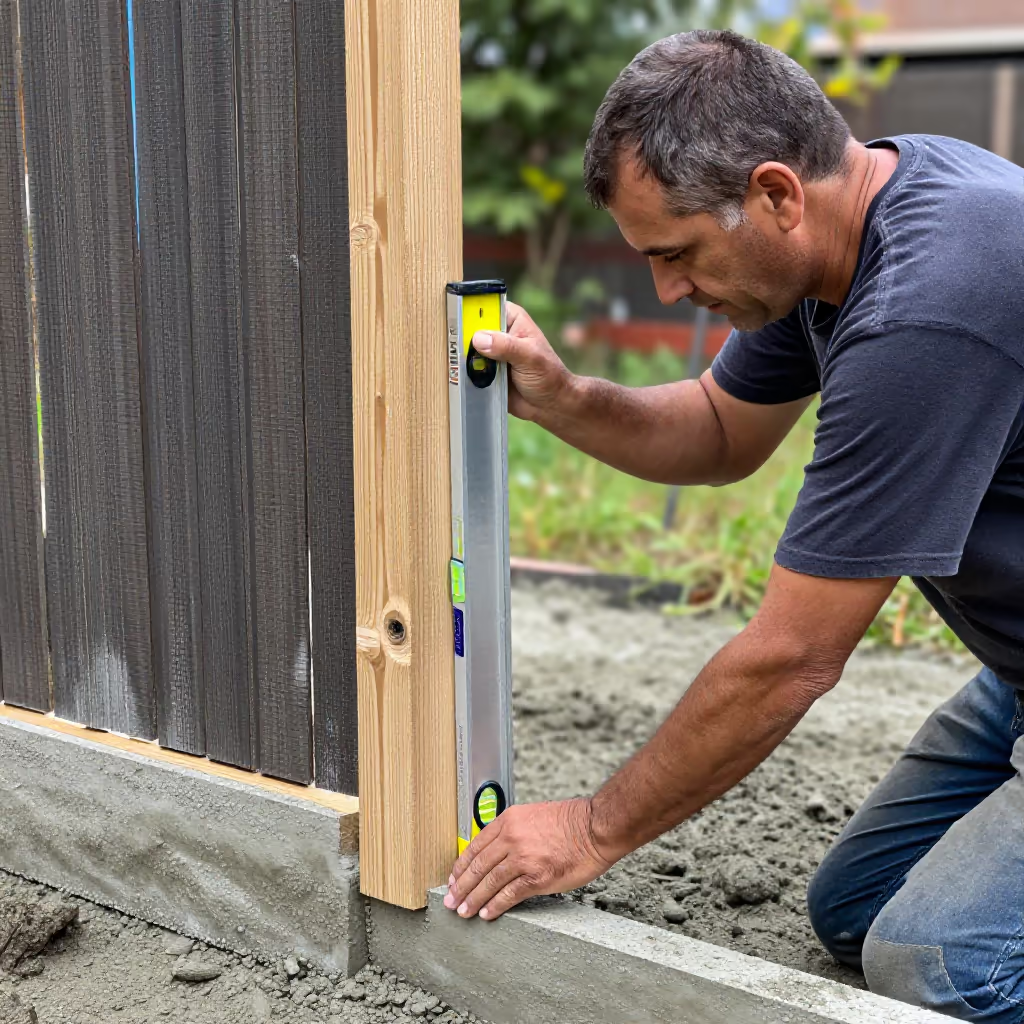
post
'Pfosten' and 'Pfahl' both refer to elongated parts made of wood, metal, or concrete that often stand vertically and support, fasten, or mark off something. A 'Pfosten' is usually part of a visible structure, for example a fence, gate, or railing. A 'Pfahl' is often driven into the ground and can be pointed; in construction, it can also support a foundation deep in the ground. The words can be confused because both occur with fences or in construction. If the part visibly supports a structure, 'Pfosten' often fits. If it is mainly driven into the ground, 'Pfahl' is more likely to fit.

Für den neuen Steg schlagen die Arbeiter lange Pfähle in den Boden.
For the new footbridge, the workers drive long piles into the ground.
Am Eingang hängt das Schild an einem stabilen Pfosten.
At the entrance, the sign hangs on a sturdy post.