

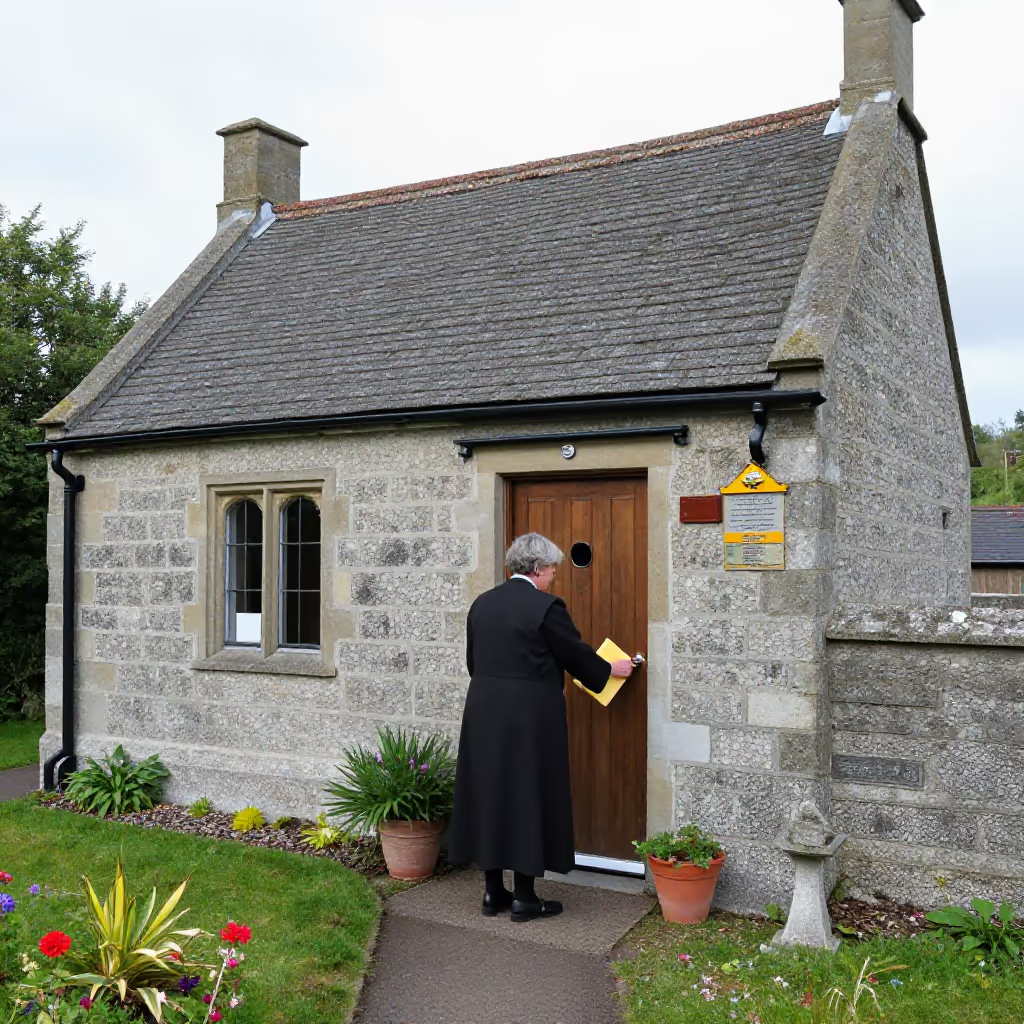
The residence and often also the office building of a pastor, belonging to the church parish and usually located near the church.
example
Die Sitzung des Kirchenvorstands findet heute Abend im Pfarrhaus statt.
The church council meeting is taking place this evening in the rectory.
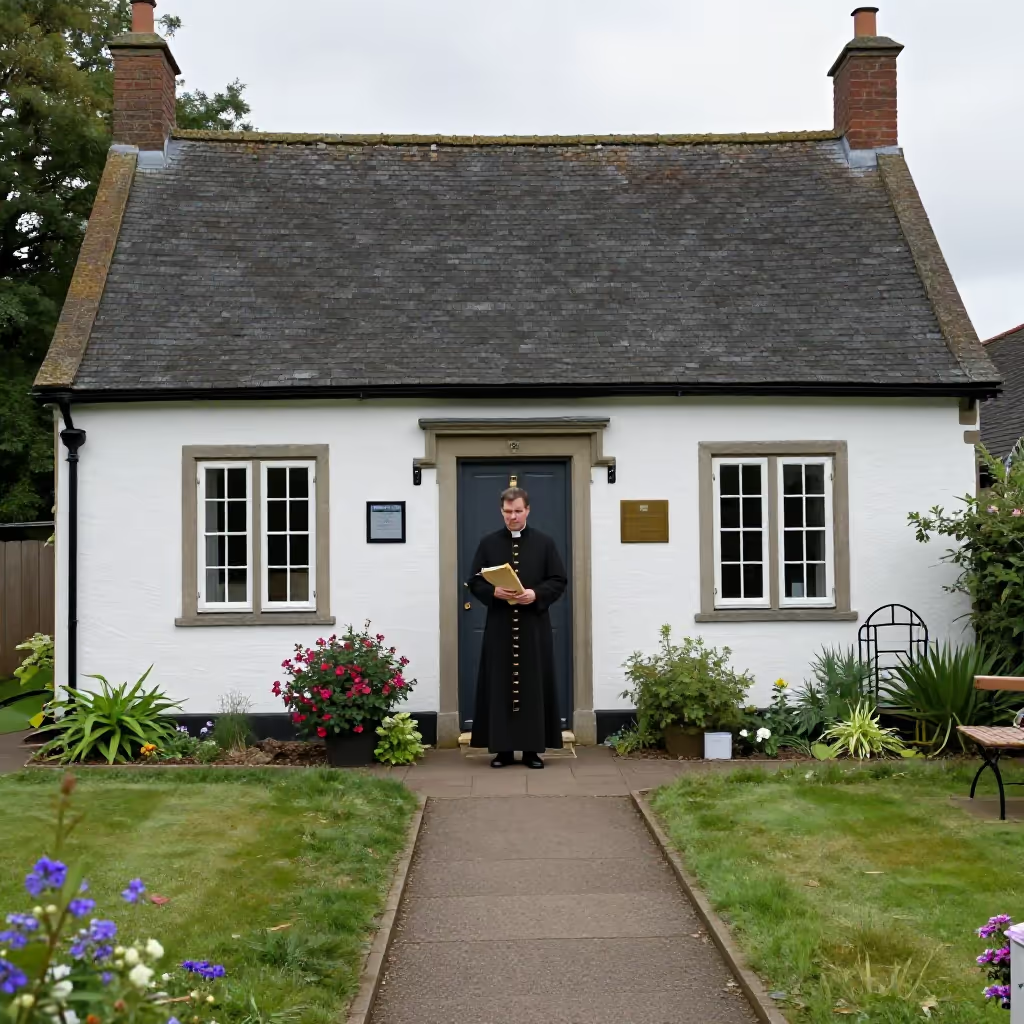
Usage tips
Compound word
The word is made up of 'Pfarrer' (pastor) and 'Haus' (house). The '-s-' is a linking s that connects the two parts. So it is literally the 'Haus des Pfarrers' (pastor's house).
EXAMPLE
Das alte Pfarrhaus neben der Kirche wird gerade renoviert.
The old rectory next to the church is currently being renovated.
Correct preposition
To describe movement, use 'ins Pfarrhaus' (into the rectory) with the accusative. To describe a location or stay, use 'im Pfarrhaus' (in the rectory) with the dative.
EXAMPLE
Wir gehen ins Pfarrhaus, um die Dokumente abzuholen.
We are going to the rectory to pick up the documents.
Cultural context
In many German communities, the 'Pfarrhaus' (rectory) is not only the pastor's residence, but also an administrative center and a meeting place for the church parish.
EXAMPLE
Die Anmeldung zur Taufe erfolgt im Pfarrhaus.
Registration for the baptism takes place at the rectory.
Compare with
synonym · confusable
Pfarrhaus vs Pfarrei
parish
'Pfarrei' and 'Pfarrhaus' can both refer to the house where a priest or pastor lives and works. In this meaning, they are very similar. However, 'Pfarrhaus' is clearer for this and usually easier to understand in everyday language. 'Pfarrei' can also mean the church community or the district. This can easily lead to confusion: if you really mean the building, 'Pfarrhaus' is more precise. 'Pfarrei' only works as a synonym when the context makes it clear that the house is meant.
Pfarrhaus
Der Pfarrer empfängt die Besucher im Pfarrhaus neben der Kirche.
The priest welcomes the visitors in the rectory next to the church.
Pfarrei
Nach dem Gespräch wartet die Familie vor der alten Pfarrei.
After the conversation, the family waits in front of the old parish office.