das Pferd
horse
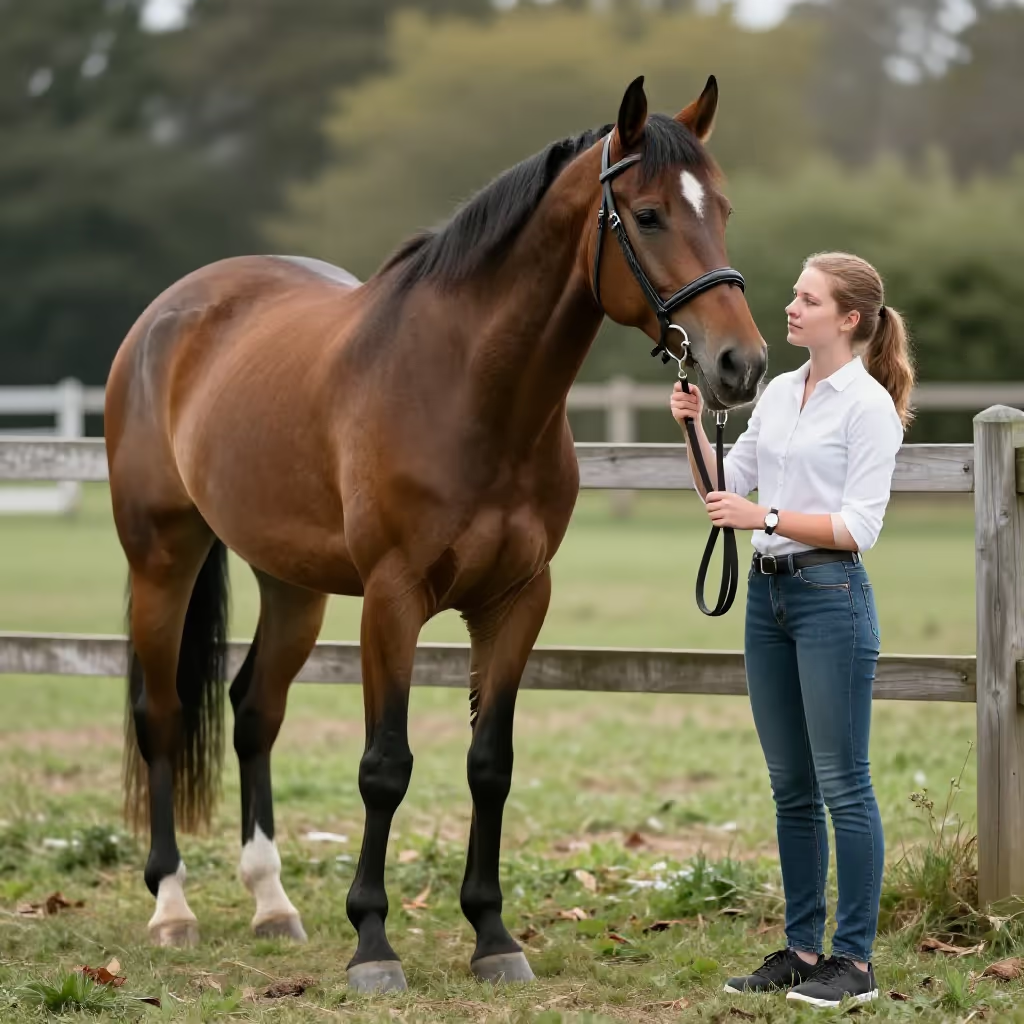
A large domesticated mammal with hooves that is often used for riding, as a draft animal, or in sports.
Am Wochenende reitet sie am liebsten ihr Pferd am Strand entlang.
On weekends, she most enjoys riding her horse along the beach.

horse
Loading your saved state.

horse
A large domesticated mammal with hooves that is often used for riding, as a draft animal, or in sports.
Am Wochenende reitet sie am liebsten ihr Pferd am Strand entlang.
On weekends, she most enjoys riding her horse along the beach.


to back the wrong horse
To make the wrong decision or to trust a person or thing that turns out to be unreliable or unsuccessful.
Mit der Investition in diese Firma hat er eindeutig aufs falsche Pferd gesetzt.
By investing in this company, he clearly backed the wrong horse.

knight
A chess piece, also known in German as 'Springer', that moves across the board in an L-shaped pattern.
Mit dem Pferd auf f3 kontrolliert er das Zentrum.
With the knight on f3, he controls the center.

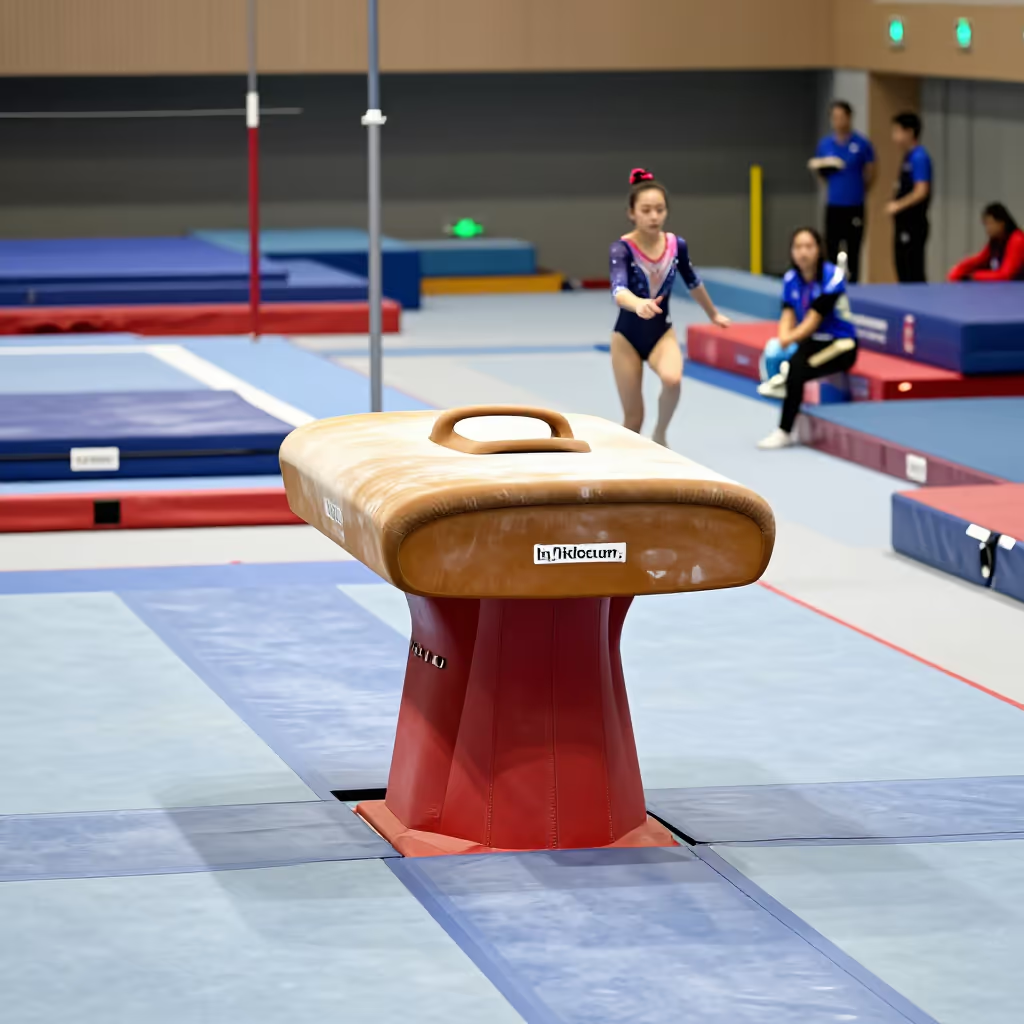
vaulting horse
A piece of gymnastics equipment used for vaulting exercises, also called 'Sprungpferd' or 'Pauschenpferd' in German.
Sie zeigte einen perfekten Sprung über das Pferd.
She performed a perfect vault over the horse.

to tell tall tales
To tell someone unbelievable or nonsensical stories, often with the intention of deceiving or showing off.
Glaub ihm kein Wort, der erzählt dir doch was vom Pferd!
Don't believe a word he says; he's just telling you tall tales!
'Pferd' (horse) is the base word for many compounds. Examples are 'Pferdeschwanz' (ponytail), 'Pferdestärke' (unit of power, horsepower), or 'Rennpferd' (racehorse, sports).
Das Auto hat 200 Pferdestärken.
The car has 200 horsepower.
The meaning of 'Pferd' is usually clear from context. Words like 'Schachbrett' (chessboard), 'Turnhalle' (gymnasium), or a situation in which a decision is being criticized help distinguish the meanings.
Im Sportunterricht mussten wir über das Pferd springen.
In PE class, we had to jump over the horse.
When referring to the animal, typical verbs such as 'ein Pferd reiten' (to ride a horse), 'satteln' (to put on the saddle), 'striegeln' (to groom/brush), and 'füttern' (to feed) are used.
Bevor wir ausreiten, müssen wir die Pferde striegeln und satteln.
Before we go riding, we have to groom and saddle the horses.
The idiom 'aufs falsche Pferd setzen' (to back the wrong horse) is a fixed expression. It is based on the verb 'setzen auf' + accusative, which is also used in betting.
Er dachte, die Aktie würde steigen, aber er hat wohl aufs falsche Pferd gesetzt.
He thought the stock would rise, but he probably backed the wrong horse.
The idiom 'jemandem etwas vom Pferd erzählen' (to tell someone tall tales / nonsense) has a fixed structure with a dative and an accusative object. It means to tell someone nonsense.
Er sagt, er hat den Fisch mit bloßen Händen gefangen? Der erzählt dir doch was vom Pferd!
He says he caught the fish with his bare hands? He's obviously telling you tall tales!
jumper / knight
Pferd and Springer can refer to the same chess piece. In standard chess terminology, it is called a Springer; Pferd also describes the piece, but is not the usual technical term. Springer is therefore the better choice when explaining or recording a move.

Beim Spielen zu Hause sagt Mia: „Mein Pferd zieht auf f3.“
When playing at home, Mia says, “My knight moves to f3.”
Im Schachkurs erklärt der Trainer: „Der Springer zieht auf f3.“
In the chess class, the coach explains, “The knight moves to f3.”