

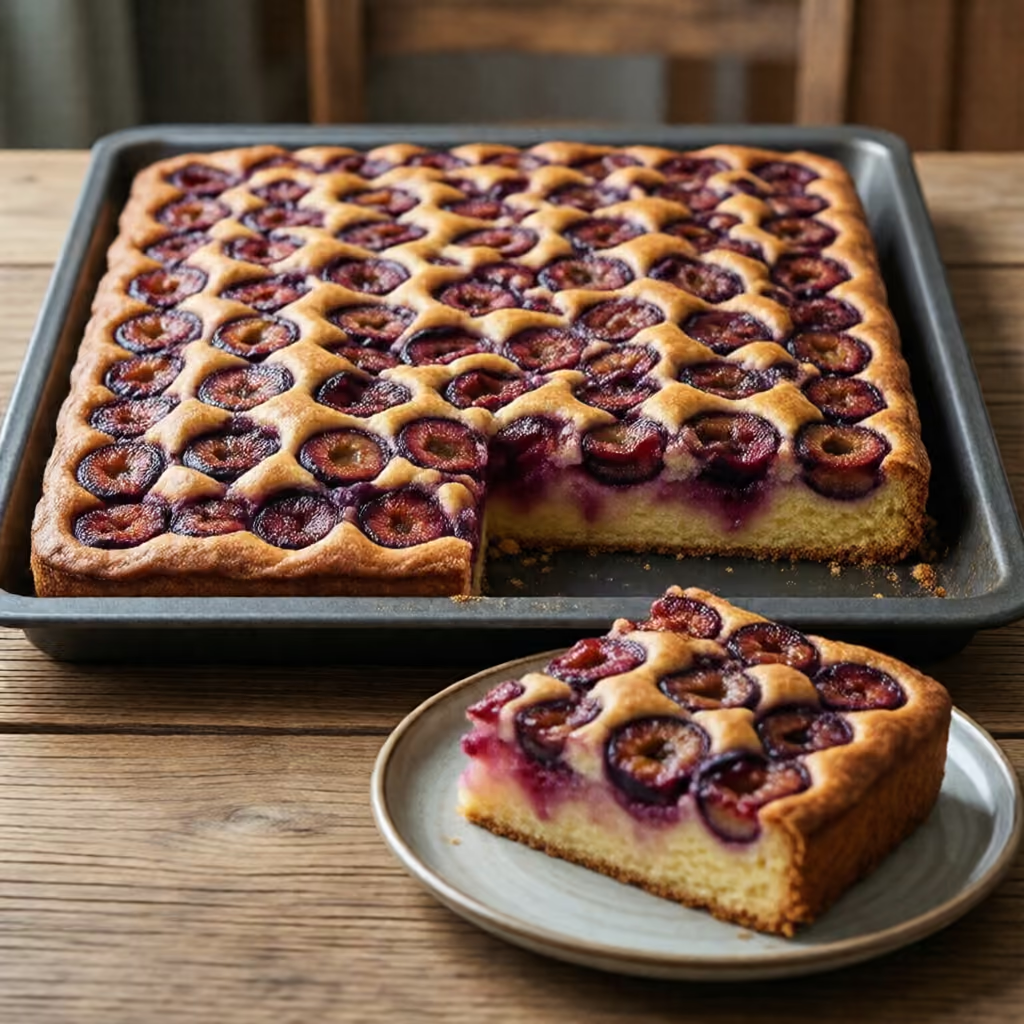
der Pflaumenkuchen
plum cake
A cake made from dough, topped with plums, and baked in the oven.
EXAMPLE
Zum Kaffee gab es selbst gemachten Pflaumenkuchen mit frischen Pflaumen.
We had homemade plum cake with fresh plums with our coffee.
plum cake
der Pflaumenkuchen, die Pflaumenkuchen
Loading your saved state.
plum cake
A cake made from dough, topped with plums, and baked in the oven.
Zum Kaffee gab es selbst gemachten Pflaumenkuchen mit frischen Pflaumen.
We had homemade plum cake with fresh plums with our coffee.
| gender | masculine der |
|---|---|
| plural | die Pflaumenkuchen |
| genitive | des Pflaumenkuchens |
| singular | plural | |
|---|---|---|
| nominative | der Pflaumenkuchen | die Pflaumenkuchen |
| accusative | den Pflaumenkuchen | die Pflaumenkuchen |
| dative | dem Pflaumenkuchen | den Pflaumenkuchen |
| genitive | des Pflaumenkuchens | der Pflaumenkuchen |
The article changes with the case; it is shown in colour.
'Pflaumenkuchen' (plum cake) is made up of 'Pflaumen' (plums) and 'Kuchen' (cake). The first part names the topping, while the second describes the type of baked good.
Meine Großmutter backt jeden Herbst einen großen Pflaumenkuchen.
My grandmother bakes a large plum cake every autumn.
Common collocations are 'Pflaumenkuchen backen' (to bake plum cake), 'ein Stück Pflaumenkuchen essen' (to eat a piece of plum cake), and 'Pflaumenkuchen mit Sahne servieren' (to serve plum cake with whipped cream). The word often appears in sentences about coffee and cake.
Nach dem Spaziergang haben wir ein Stück Pflaumenkuchen gegessen.
After our walk, we ate a piece of plum cake.
'Pflaumenkuchen' (plum cake) is especially associated with late summer or early autumn, when fresh plums are available. That is why the word often appears in conversations about seasonal baking and invitations for coffee.
Im September lädt sie ihre Nachbarn jedes Jahr zu warmem Pflaumenkuchen ein.
Every year in September, she invites her neighbors over for warm plum cake.