

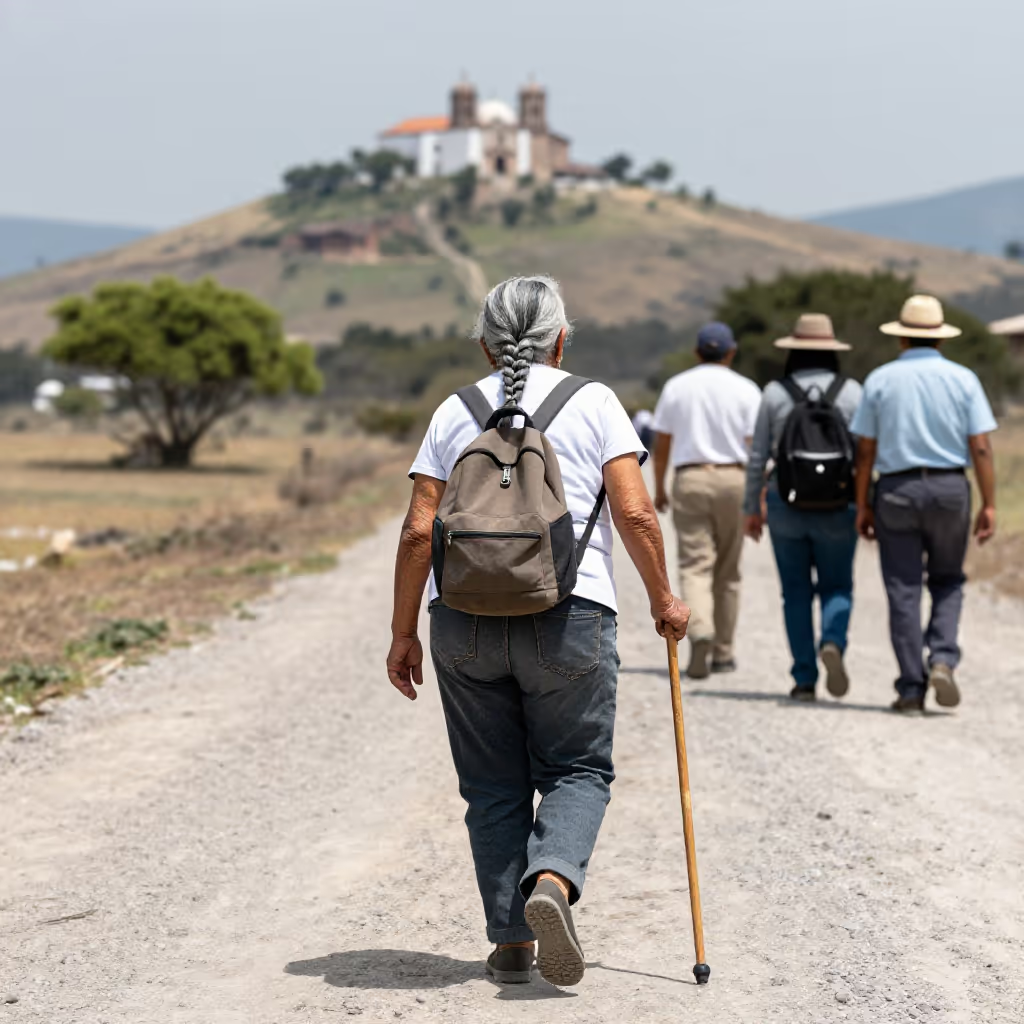
der Pilger
pilgrim
A person who undertakes a journey to a holy place for religious reasons.
Jedes Jahr machen sich Tausende Pilger auf den Weg nach Santiago de Compostela.
Every year, thousands of pilgrims set out for Santiago de Compostela.
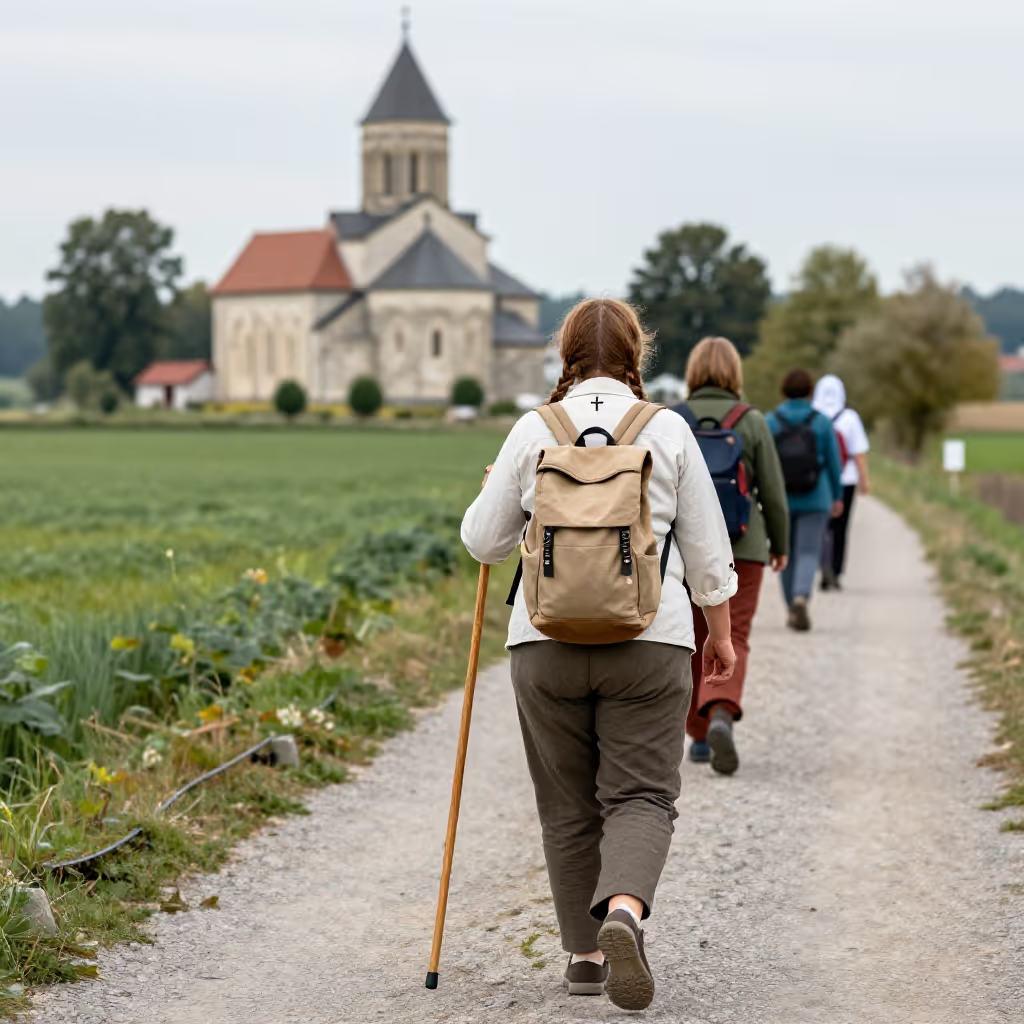
pilgrim
Loading your saved state.

pilgrim
A person who undertakes a journey to a holy place for religious reasons.
Jedes Jahr machen sich Tausende Pilger auf den Weg nach Santiago de Compostela.
Every year, thousands of pilgrims set out for Santiago de Compostela.
'Der Pilger' (the pilgrim) is closely related to the verb 'pilgern' (to go on a pilgrimage) and the noun 'die Pilgerreise' (the pilgrimage). These words form a word family with a shared meaning.
Er beschloss, nächstes Jahr nach Jerusalem zu pilgern.
He decided to go on a pilgrimage to Jerusalem next year.
'Pilger' (pilgrim) is often used with prepositions that describe the route or destination. Common phrases are 'Pilger auf dem Jakobsweg' (pilgrims on the Way of St. James) or 'Pilger auf dem Weg nach Mekka' (pilgrims on the way to Mecca).
Wir trafen viele Pilger aus verschiedenen Ländern auf unserem Weg.
We met many pilgrims from different countries on our way.
Sometimes 'Pilger' (pilgrim) is also used figuratively. It describes people who travel in large numbers to a special, non-religious place, such as a music festival or a stadium.
Die Fans des Fußballvereins sind wie Pilger zu jedem Auswärtsspiel gereist.
The football club's fans traveled like pilgrims to every away game.
catfish / pilgrim
Pilger and Waller can both refer to a person on a religious journey. Pilger is the usual term today, while Waller sounds outdated in this meaning. In normal modern usage, Pilger is therefore usually the appropriate choice.

Der Pilger wandert aus religiösen Gründen zu dem heiligen Ort.
The pilgrim is walking to the holy place for religious reasons.
In dem alten Bericht wird der Reisende zum heiligen Ort als Waller bezeichnet.
In the old account, the traveler to the holy place is referred to as a Waller.