

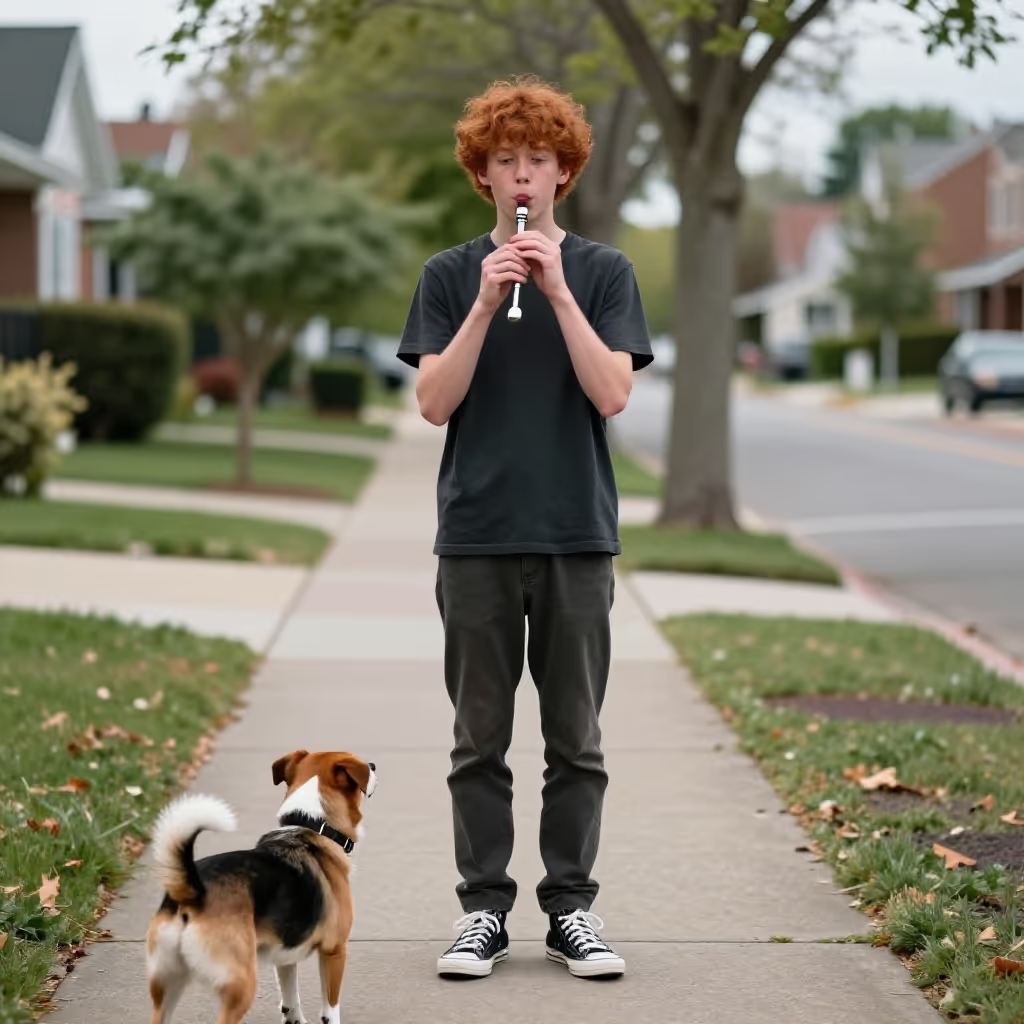
pfeifen
to whistle
To produce a high, clear sound by forcing air through pursed lips or by using a special instrument (a whistle).
EXAMPLE
Er ging fröhlich pfeifend die Straße entlang.
He walked down the street happily whistling.
to whistle
Loading your saved state.
to whistle
To produce a high, clear sound by forcing air through pursed lips or by using a special instrument (a whistle).
Er ging fröhlich pfeifend die Straße entlang.
He walked down the street happily whistling.
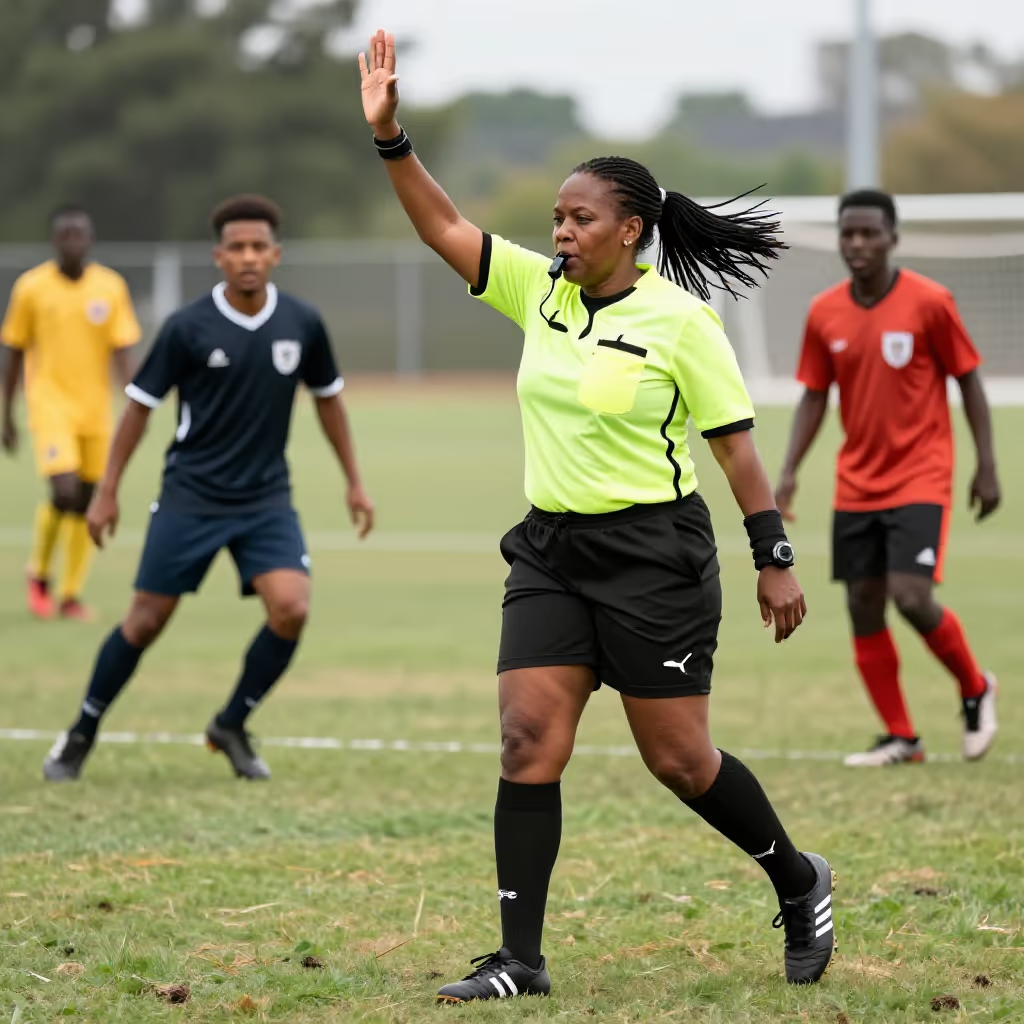
to whistle
To interrupt, end, or start a game or action with a whistle, as a referee does.
Der Schiedsrichter hat das Foul sofort gepfiffen.
The referee whistled the foul immediately.

to whistle
To produce a high, whooshing sound caused by fast movement, for example from the wind or a bullet.
Der kalte Wind pfiff durch die undichten Fenster.
The cold wind whistled through the leaky windows.

not to care about
Colloquial for: to deliberately ignore something or not care about it; to consider something unimportant.
Ich pfeife auf seine Meinung und mache es so, wie ich es für richtig halte.
I don't care about his opinion and will do it the way I think is right.
You can recognize the meaning of 'pfeifen' (to whistle) from the context. If the subject is the wind, it is about a sound. In sports, the referee whistles. The preposition 'auf' points to the colloquial meaning 'to ignore' or 'not to care about'.
Der Wind pfiff ihm um die Ohren.
The wind whistled around his ears.
In the meaning 'to produce a sound with the mouth', the verb can stand alone or have an object. A very common and natural combination is 'ein Lied pfeifen' (to whistle a song).
Mein Opa pfeift bei der Gartenarbeit immer ein altes Lied.
My grandpa always whistles an old song while gardening.
When a referee whistles, what exactly they whistle is often named. Typical objects are 'ein Foul' (a foul), 'einen Elfmeter' (a penalty), or 'Abseits' (offside).
Der Schiedsrichter hat das Spiel pünktlich angepfiffen.
The referee blew the whistle to start the game on time.
The colloquial expression 'auf etwas pfeifen' means that someone doesn't care about something. It always requires the preposition 'auf' followed by a noun or pronoun in the accusative.
Sie pfeift auf die Meinung der anderen und macht ihr eigenes Ding.
She doesn't care about other people's opinions and does her own thing.
to blow
Blasen and pfeifen can both occur when producing a sound with the mouth. Blasen emphasizes blowing air out or into an instrument, whereas pfeifen emphasizes the high-pitched sound produced through pursed lips or with a whistle. Blasen is used for a flute, while pfeifen is used for a whistle.

Die Musikerin pfeift einen hohen Ton, damit die anderen sie hören.
The musician whistles a high note so the others can hear her.
Die Musikerin bläst kräftig in die Flöte, damit ein Ton entsteht.
The musician blows hard into the flute to produce a sound.