


pink
Having the color pink; a bright, vivid mixture of red and white.
EXAMPLE
Sie hat sich ein pinkes Kleid für die Party gekauft.
She bought herself a pink dress for the party.
Loading your saved state.
Having the color pink; a bright, vivid mixture of red and white.
Sie hat sich ein pinkes Kleid für die Party gekauft.
She bought herself a pink dress for the party.
Like 'rosa' (pink) and 'lila' (purple), 'pink' is often not declined, especially in spoken language. Both forms, with and without an ending, are common.
Sie trägt ein pinkes T-Shirt.
She is wearing a pink T-shirt.
Like other color terms, 'pink' can also be used as a noun. It is then neuter and capitalized: 'das Pink' (the pink).
Dieses grelle Pink steht dir wirklich gut.
This bright pink really suits you.
The color 'pink' is often associated with fashion, accessories, and eye-catching objects. Typical phrases are 'pinke Haare' (pink hair), 'ein pinkes Handy' (a pink phone), or 'ein pinker Lippenstift' (a pink lipstick).
Der Popstar ist für seine pinken Anzüge bekannt.
The pop star is known for his pink suits.
pink
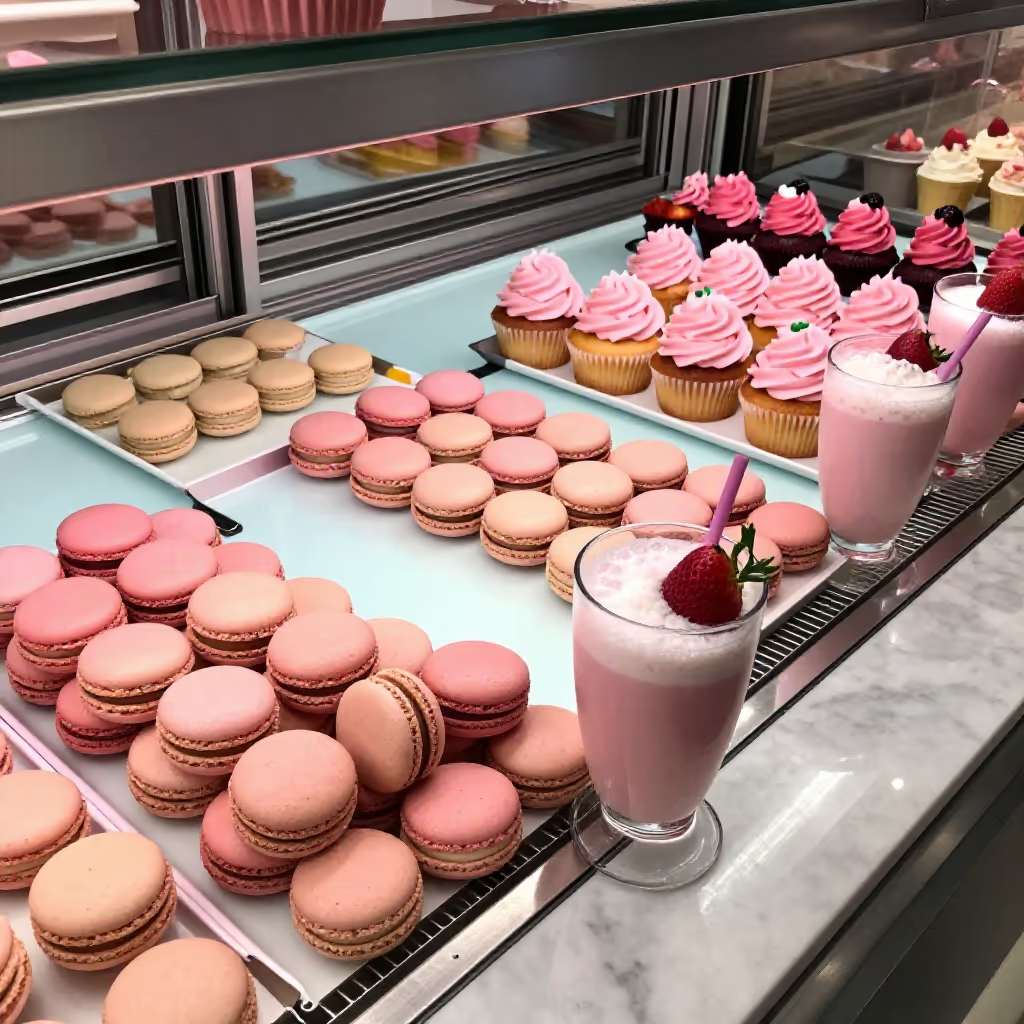
Rosa and pink both refer to light mixtures of red and white, and in everyday use they can overlap. Rosa usually sounds paler or more delicate, while pink often refers to a stronger, brighter shade. Choose rosa for a soft shade and pink for greater vividness.
Das Mädchen trägt heute ein pinkes T-Shirt in einem kräftig leuchtenden Farbton.
The girl is wearing a bright pink T-shirt today.
Das Mädchen trägt heute ein rosa T-Shirt in einem zarten Farbton.
The girl is wearing a pale pink T-shirt today.