

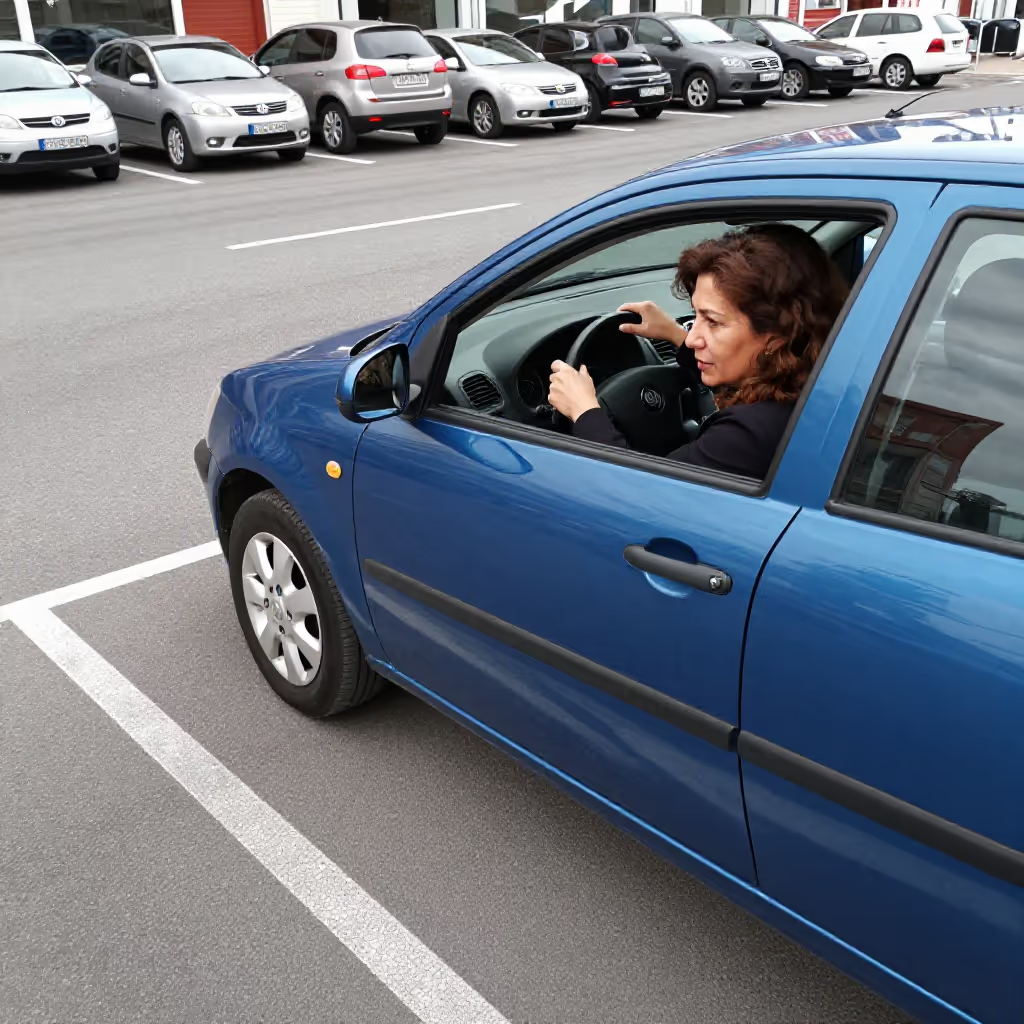
parken
to park
To leave a vehicle in a designated or permitted place and let it stand there for a certain time.
EXAMPLE
Ich muss noch einen Platz finden, um das Auto zu parken.
I still need to find a spot to park the car.
to park
Loading your saved state.
to park
To leave a vehicle in a designated or permitted place and let it stand there for a certain time.
Ich muss noch einen Platz finden, um das Auto zu parken.
I still need to find a spot to park the car.
to park
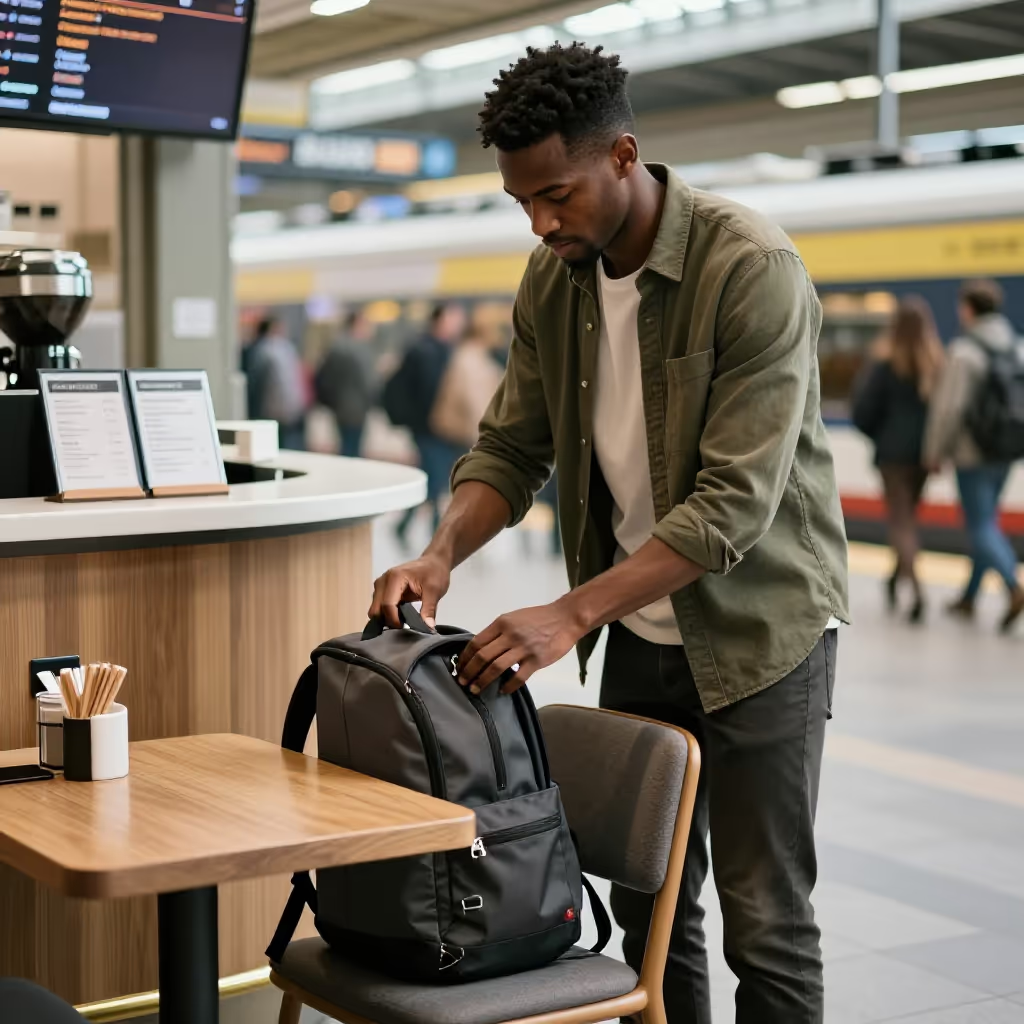
Colloquial for temporarily putting down or leaving an object in a place.
Kann ich meine Jacke kurz hier auf dem Stuhl parken?
Can I park my jacket here on the chair for a moment?

to set aside
In a figurative sense, to temporarily set aside a task, an idea, or funds without actively working on them, but keeping them available for later use.
Lass uns diese Idee erstmal parken und im nächsten Meeting darüber sprechen.
Let's set this idea aside for now and talk about it in the next meeting.
The verb 'parken' (to park) always forms the past with the auxiliary verb 'haben' (to have). It describes an action and not a change of state or movement from A to B.
Ich habe mein Auto direkt vor dem Eingang geparkt.
I parked my car right in front of the entrance.
In colloquial speech, 'parken' (to park) is often used jokingly for temporarily putting down any kinds of objects, or even people. This use is very informal.
Park deinen Rucksack bitte nicht mitten im Flur.
Please don't park your backpack in the middle of the hallway.
The figurative meaning of 'eine Idee oder Aufgabe zu parken' (to park/set aside an idea or task) is typical of everyday work life, especially in meetings and project management. It means postponing the topic until later.
Das ist ein guter Punkt, aber lass uns das Thema für heute parken.
That's a good point, but let's set the topic aside for today.
Common combinations are 'falsch parken' (to park illegally/incorrectly), 'im Halteverbot parken' (to park in a no-stopping zone), or 'in der zweiten Reihe parken' (to double-park). These describe leaving the vehicle in a place where it is not allowed.
Wer hier falsch parkt, bekommt schnell einen Strafzettel.
Anyone who parks illegally here will quickly get a ticket.
to hold
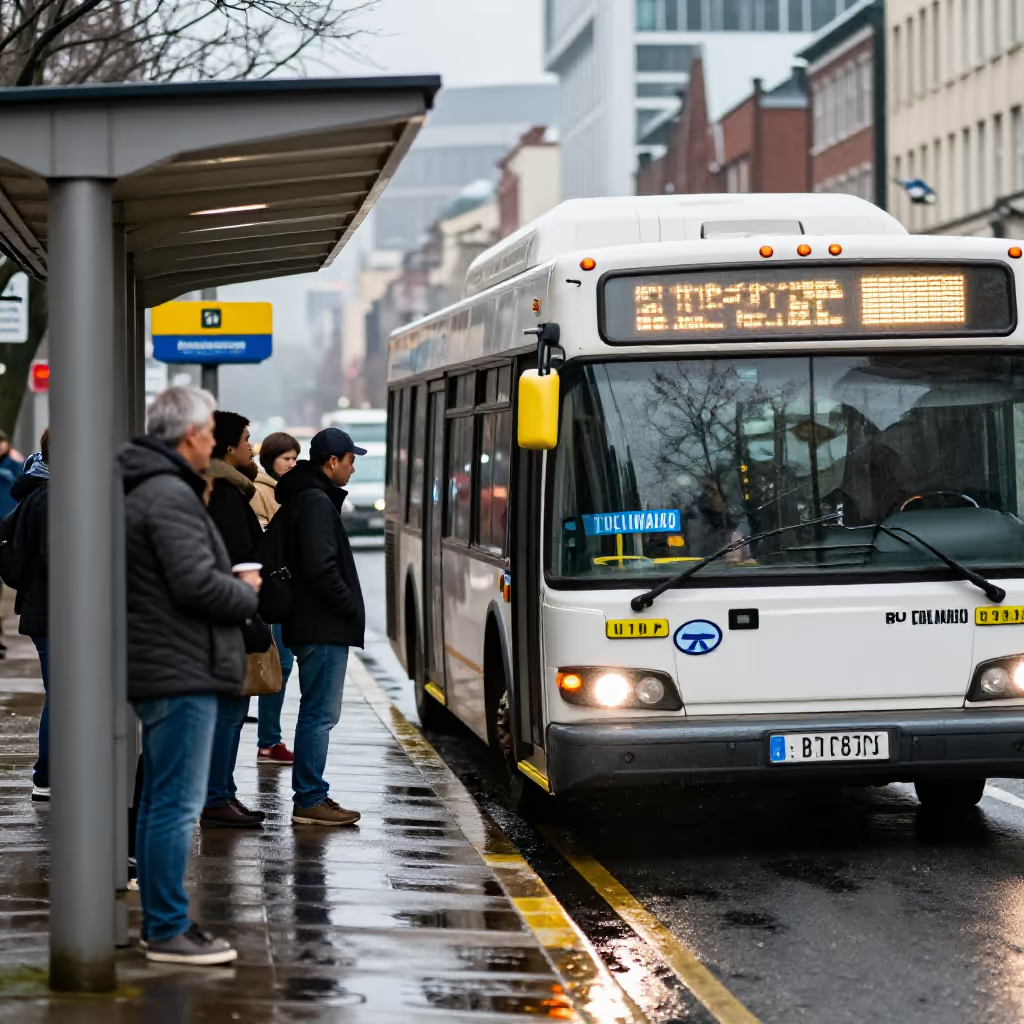
For a vehicle, “halten” initially refers to briefly ending its movement, for example to let someone get in or out. “Parken” means leaving the vehicle in a suitable place and letting it remain there for some time.
Ich parke vor dem Haus und gehe für eine Stunde einkaufen.
I’ll park in front of the house and go shopping for an hour.
Ich halte kurz vor dem Haus, damit Mia aussteigen kann.
I’ll stop briefly in front of the house so Mia can get out.