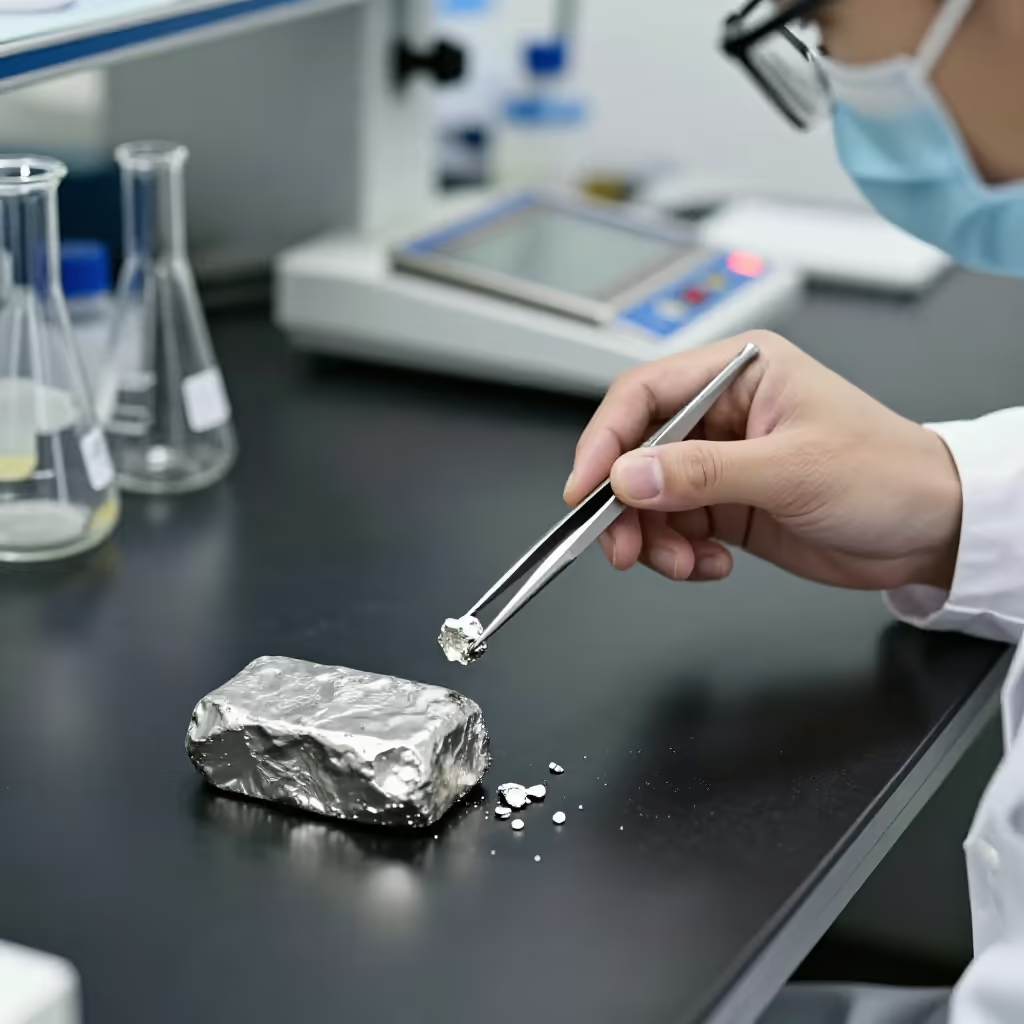
An alternative term, originating from English or Latin, for the chemical element platinum, a very rare, corrosion-resistant, and valuable precious metal.
example
Für hochwertige Zündkerzen wird eine Elektrode aus Platinum verwendet.
An electrode made of platinum is used for high-quality spark plugs.

Usage tips
Context clue
You can recognize the meaning of 'Platinum' (platinum) from the context. If it is about chemistry, technology, or jewelry, the metal is meant. In the context of music and sales figures, the award is meant.
EXAMPLE
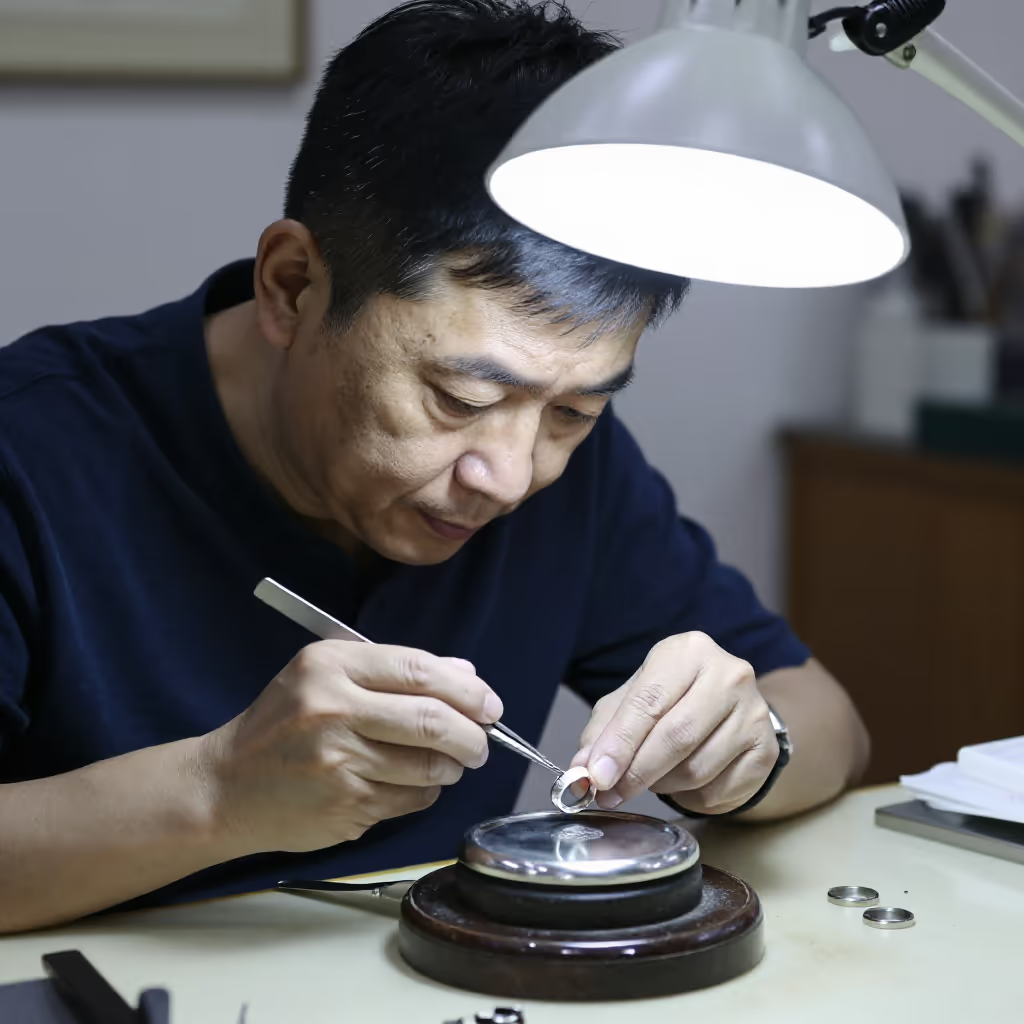
Dieser Ring ist nicht aus Silber, sondern aus Platinum.
This ring is not made of silver, but of platinum.
Use as a material
When 'Platinum' (platinum) refers to the metal, it is often used in phrases with the preposition 'aus' (made of/from) to describe the material.
EXAMPLE
Die teuersten Uhren haben oft ein Gehäuse aus Platinum.
The most expensive watches often have a case made of platinum.
Typical collocations
In a music context, 'Platinum' (platinum) is often combined with verbs such as 'erreichen' (to reach) or 'verleihen' (to award). The phrase 'Platinum-Status haben' (to have platinum status) is also very common.
EXAMPLE
Die Single hat in mehreren Ländern Platinum erreicht.
The single reached platinum in several countries.
Compare with
synonym · confusable
Platinum vs Platin
platinum
'das Platin' and 'das Platinum' can mean the same thing: the valuable precious metal or a high award in music. 'Platin' is the normal and natural form in German, especially when talking about the metal. 'Platinum' feels more English and is more likely to appear in international names, product names, or in the music field. They are easy to confuse because the meaning is almost the same. In a normal German sentence, 'Platin' is usually the safer choice.
Platinum
Das Album bekam Platinum, weil es sich so oft verkauft hat.
The album went platinum because it sold so many copies.
Platin
Der Ring besteht aus Platin und ist deshalb sehr teuer.
The ring is made of platinum and is therefore very expensive.