

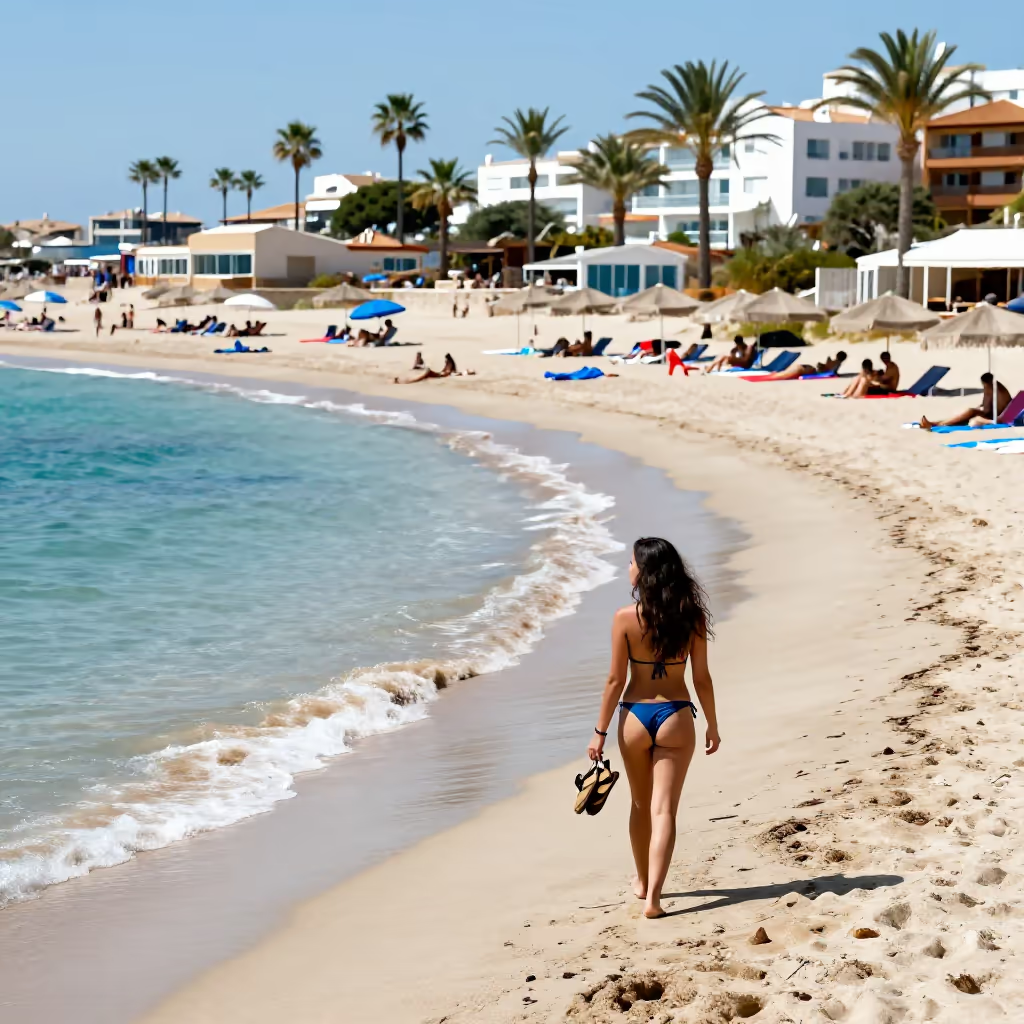
A word borrowed from Spanish for beach. In German, it is often used in the context of vacations in Spanish-speaking countries or as a trendy term.
example
Wir haben den ganzen Nachmittag an der Playa de Palma verbracht.
We spent the whole afternoon at Playa de Palma.
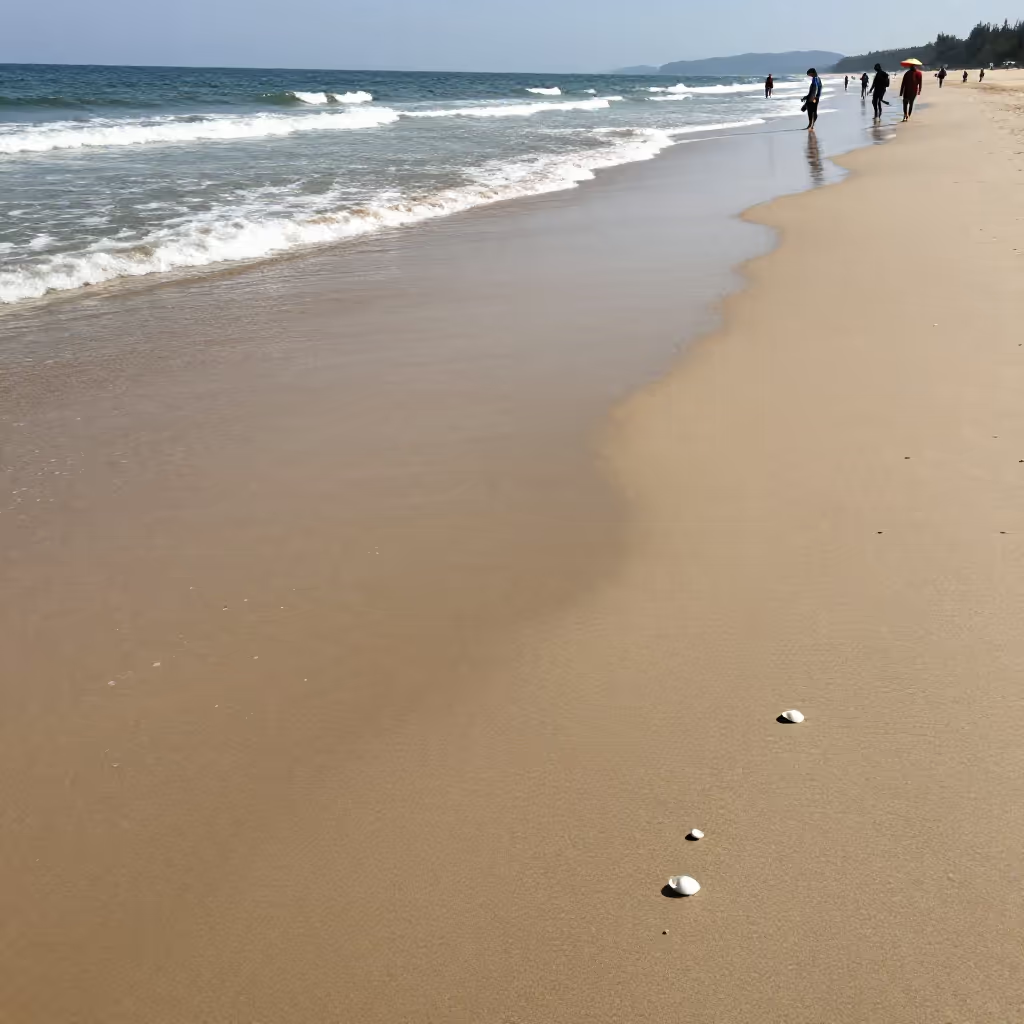
Usage tips
Register and context
'Playa' (beach) is a loanword from Spanish. It is mainly used in the context of vacations in Spanish-speaking countries or as a trendy, colloquial term for 'Strand' (beach).
EXAMPLE
Im Urlaub auf Mallorca waren wir jeden Tag an einer anderen Playa.
On vacation in Mallorca, we went to a different playa every day.
Use with proper names
Very often, 'Playa' is used as part of a Spanish proper name, which is then not translated in German either.
EXAMPLE
Die Playa de Muro ist für ihr flaches Wasser bekannt.
Playa de Muro is known for its shallow water.
Pronunciation note
Since the word comes from Spanish, it is also pronounced in the Spanish way. The letter 'y' sounds like a German 'j'.
EXAMPLE
Lass uns zur Playa gehen und die Sonne genießen.
Let's go to the playa and enjoy the sun.
Compare with
synonym · confusable
Playa vs Strand
beach
'der Strand' and 'die Playa' can mean the same thing: an area by the sea or by a lake where people swim, walk, or lie in the sun. 'Strand' is the normal German word and fits in almost any situation. 'Playa' is borrowed from Spanish and in German sounds more like vacation, Spain, or a trendy, relaxed style. The words can be confused because they are used similarly in conversations about vacations. In normal everyday life, 'Strand' is more natural. 'Playa' only fits when this special vacation or fun tone is intended.
Playa
Auf Mallorca treffen wir uns abends wieder an der Playa.
On Mallorca, we will meet again at the playa in the evening.
Strand
Nach der Arbeit zeigt mir meine Freundin Fotos vom Strand.
After work, my friend shows me photos of the beach.