

plattdeutsch
Low German
As an adjective, refers to the Low German language, its speakers, or the culture shaped by it in northern Germany.
Im Norden gibt es viele plattdeutsche Ortsnamen.
In the north, there are many Low German place names.
Low German
Loading your saved state.
Low German
As an adjective, refers to the Low German language, its speakers, or the culture shaped by it in northern Germany.
Im Norden gibt es viele plattdeutsche Ortsnamen.
In the north, there are many Low German place names.

The word is made up of 'platt' (flat/low) and 'deutsch' (German). Here, 'platt' refers to the 'flache Land' (flat land), the North German Plain, in contrast to the mountainous regions of southern and central Germany.
Die plattdeutsche Sprache hat eine lange Geschichte in den Küstenregionen.
The Low German language has a long history in the coastal regions.
As an adjective, 'plattdeutsch' (Low German) stands before a noun and is declined. As an adverb, it describes a verb (e.g., sprechen — to speak) and always remains unchanged in the form 'plattdeutsch'.
Er erzählte einen alten plattdeutschen Witz.
He told an old Low German joke.
Common combinations are 'plattdeutsch sprechen' (to speak Low German), 'plattdeutsch verstehen' (to understand Low German), or 'auf plattdeutsch' (in Low German). As an adjective, it appears in 'die plattdeutsche Sprache' (the Low German language), 'ein plattdeutsches Wort' (a Low German word), or 'das plattdeutsche Theater' (Low German theater).
Viele ältere Menschen an der Küste können noch plattdeutsch sprechen.
Many older people on the coast can still speak Low German.
The term refers specifically to the language, culture, and people of northern Germany. It is used to draw a clear distinction from other German regions and dialects.
Das Festival feiert die plattdeutsche Musik und Literatur.
The festival celebrates Low German music and literature.
flat / exhausted
'platt' and 'plattdeutsch' can both have to do with the Low German language in northern Germany. 'plattdeutsch' is more precise and unambiguous: it describes the language, its speakers, or something said in that language. In this context, 'platt' can be a short form of Plattdeutsch, but it has many other meanings, such as flat, exhausted, or a tire with no air. That is why the words can easily be confused. If the context is not completely clear, 'plattdeutsch' is better because it avoids misunderstandings.

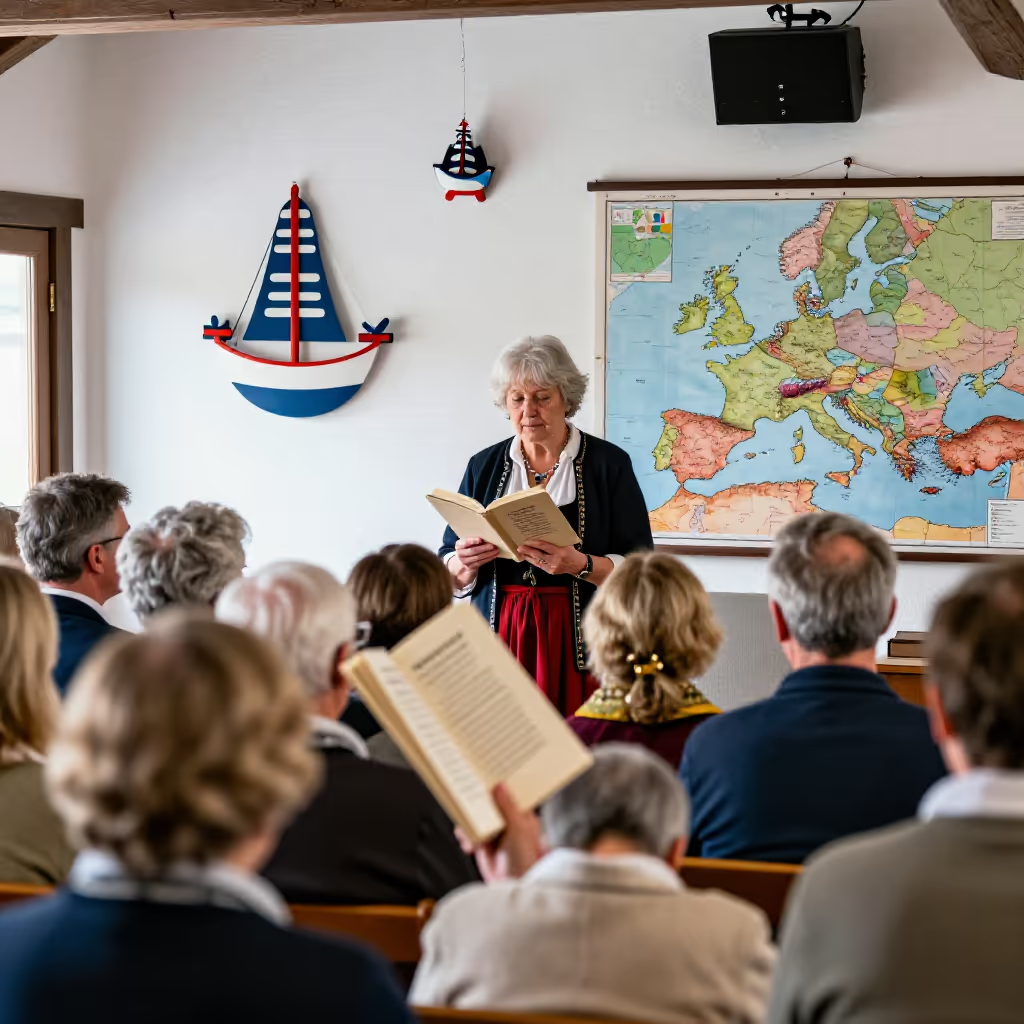
Zu Hause liest mein Vater manchmal plattdeutsche Geschichten vor.
At home, my father sometimes reads Low German stories aloud.
Meine Oma spricht mit ihren alten Nachbarn oft platt.
My grandma often speaks Low German with her old neighbors.