

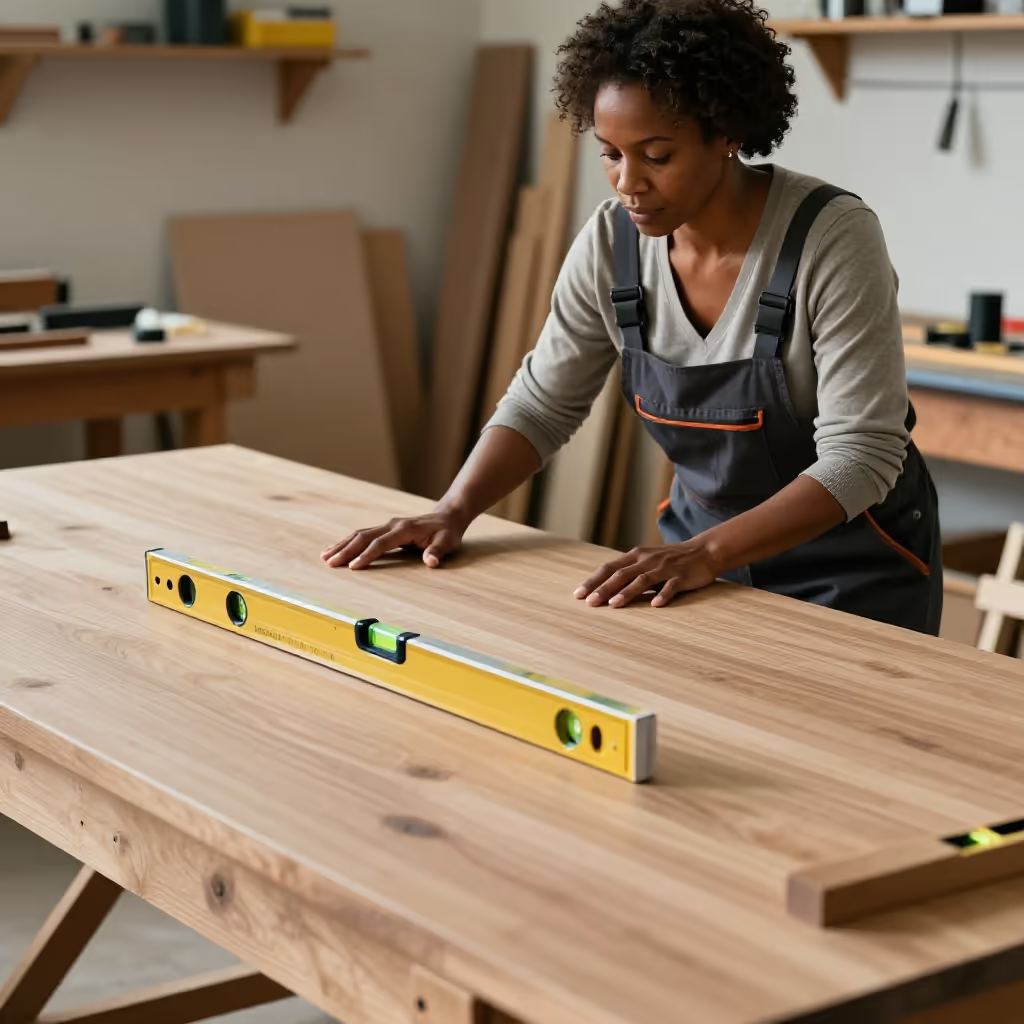
platt
flat
Level, flat, and without elevations.
EXAMPLE
Die Landschaft hier ist völlig platt, es gibt keine Hügel.
The landscape here is completely flat; there are no hills.
flat / exhausted
Loading your saved state.
flat
Level, flat, and without elevations.
Die Landschaft hier ist völlig platt, es gibt keine Hügel.
The landscape here is completely flat; there are no hills.

exhausted
Completely exhausted and without energy. Colloquial for tired.
Nach dem Umzug war ich abends komplett platt und bin sofort eingeschlafen.
After the move, I was completely exhausted in the evening and fell asleep right away.
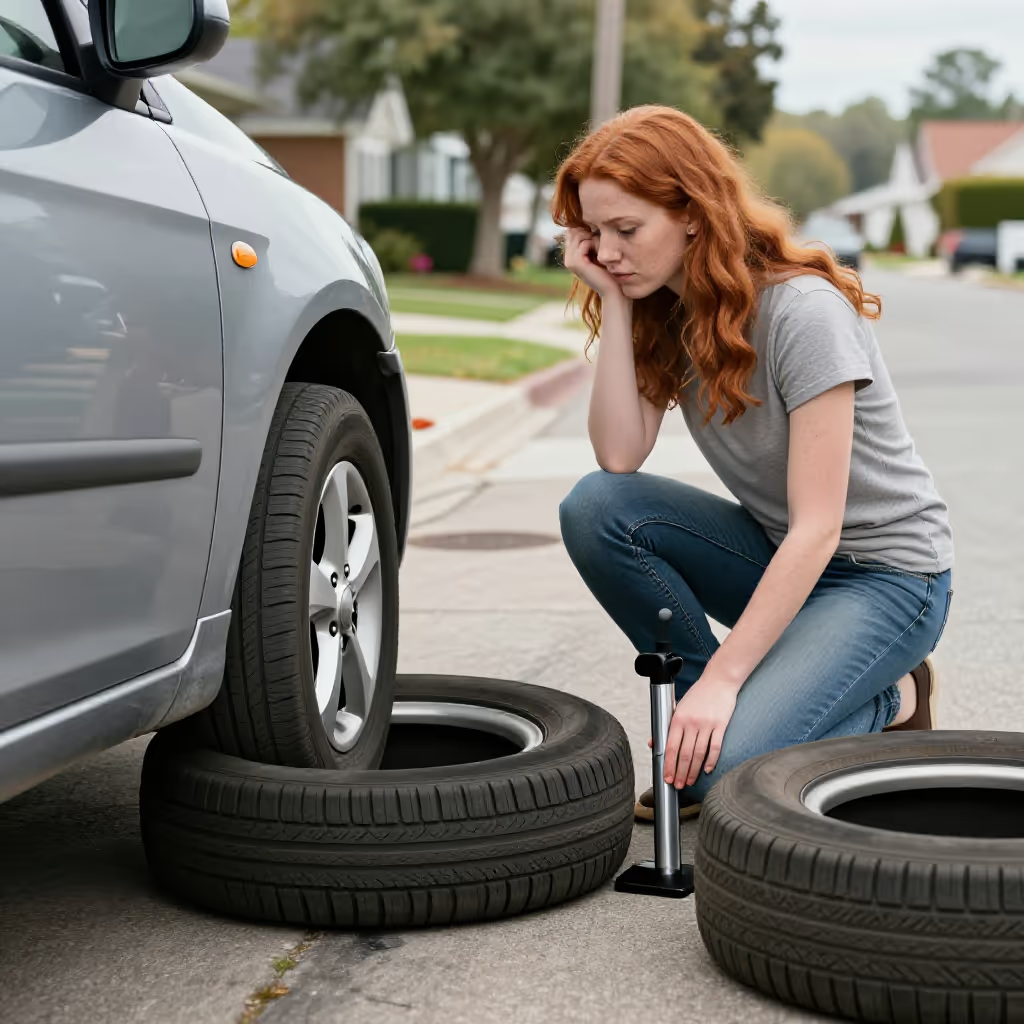
flat
Refers to a tire that has no air or too little air.
Ich kam zu spät, weil ich unterwegs einen platten Reifen hatte.
I was late because I had a flat tire on the way.

stunned
To be very amazed or speechless. Colloquial for surprised.
Als sie mir erzählte, dass sie auswandert, war ich erst mal platt.
When she told me she was emigrating, I was stunned at first.

corny / crude
Disparagingly used for a statement or joke that is very simple, lowbrow, or unoriginal.
Seine platten Sprüche findet schon lange niemand mehr lustig.
No one has found his corny remarks funny for a long time.
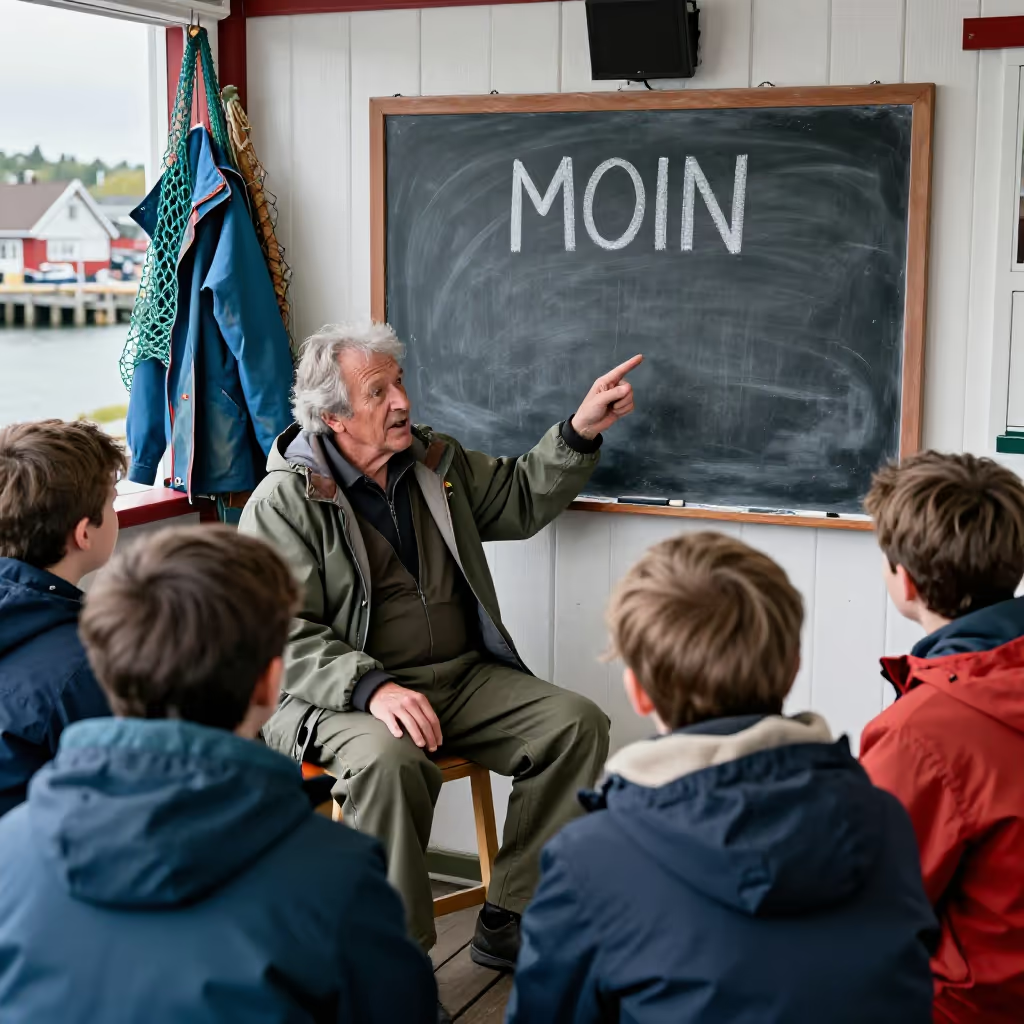
Low German
Refers to Low German, a group of dialects spoken in northern Germany.
Meine Großeltern unterhalten sich manchmal auf platt, damit ich nichts verstehe.
My grandparents sometimes talk in Low German so that I don't understand anything.
The basic meaning 'flach' (flat) is neutral. However, the figurative meanings such as 'erschöpft' (exhausted), 'erstaunt' (amazed), or 'niveaulos' (lowbrow) are colloquial and should not be used in formal contexts.
Die Pfannkuchen müssen schön dünn und platt sein.
The pancakes need to be nice and thin and flat.
In the meaning 'erschöpft' (exhausted), 'platt' is used only predicatively, that is, after a verb like 'sein' (to be). You cannot say 'ein platter Mensch' if you mean that the person is tired.
Ich gehe heute früh ins Bett, ich bin einfach nur platt.
I'm going to bed early today; I'm just exhausted.
In connection with a tire, the colloquial expression 'einen Platten haben' (to have a flat) is very common. Here, the adjective is used as a noun: 'der Platte'.
Wir müssen anhalten, ich glaube, wir haben einen Platten.
We need to stop; I think we have a flat.
When someone is 'platt' (stunned), it can also mean that he or she is speechless with surprise. Here too, the word is used only predicatively, often with 'sein' (to be) or 'machen' (to make).
Seine Reaktion hat mich echt platt gemacht.
His reaction really stunned me.
When something is described as 'platt' (corny/crude), it is unoriginal or primitive. Typical combinations are 'ein platter Witz' (a corny joke), 'ein platter Spruch' (a corny remark), or 'eine platte Ausrede' (a lame excuse).
Er versucht immer, mit platten Komplimenten Eindruck zu machen.
He always tries to make an impression with corny compliments.
When referring to the dialect, 'Platt' can be used like a noun without an article. You say 'Platt sprechen' (to speak Low German) or 'etwas auf Platt sagen' (to say something in Low German).
An der Küste können noch viele alte Leute Platt sprechen.
On the coast, many older people can still speak Low German.
flat / shallow
Both words can describe a surface without noticeable raised areas. „Flach“ mainly emphasizes limited height or depth, while „platt“ tends to highlight a completely level or compressed shape. Use „flach“ for limited depth and „platt“ when something is completely flat or compressed.
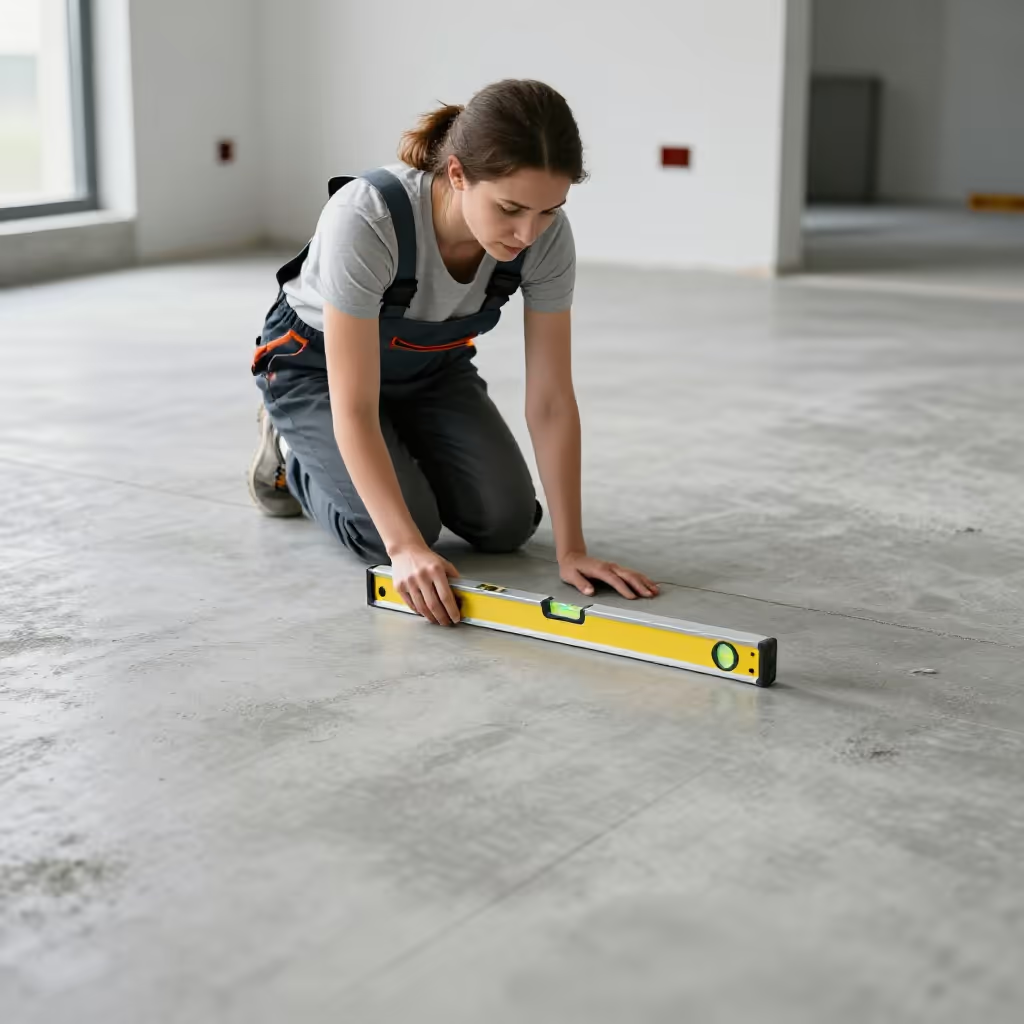
Nach dem Umzug war die leere Schachtel ganz platt zusammengedrückt.
After the move, the empty box was completely flattened.
Die flache Schachtel ist nur fünf Zentimeter tief und passt unter das Bett.
The shallow box is only five centimeters deep and fits under the bed.