

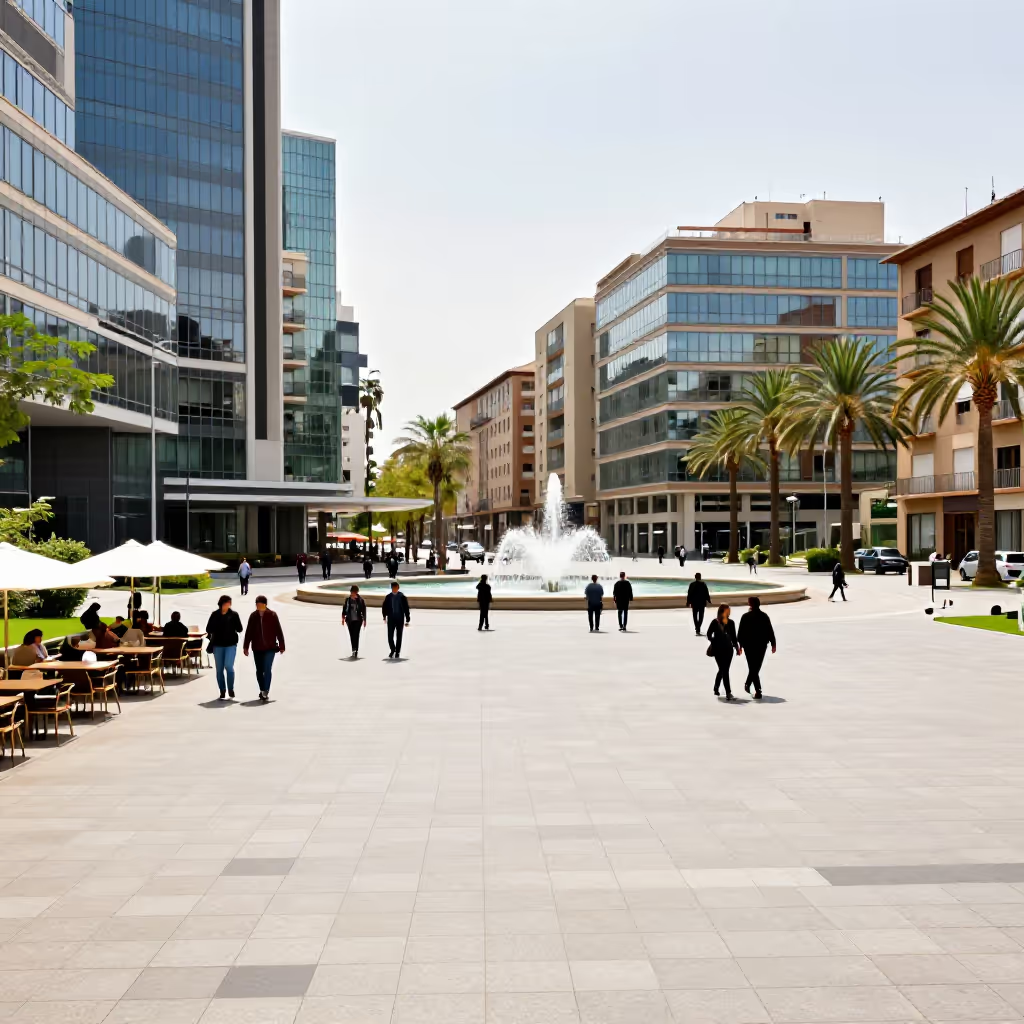
A large, open public square in a city, often surrounded by buildings. The term is frequently used in modern architecture or in reference to Spanish-speaking cities.
example
Im Zentrum des neuen Stadtviertels wurde eine große Plaza mit Cafés und Geschäften angelegt.
In the center of the new district, a large plaza with cafés and shops was created.
Usage tips
Register and style
'Plaza' is a loanword from Spanish. It is often used to give a square a modern or southern European/Latin character, especially in architecture and urban planning.
EXAMPLE
Die Architekten entwarfen eine offene Plaza als zentralen Treffpunkt.
The architects designed an open plaza as a central meeting point.
Typical collocations
Common verbs used with 'Plaza' (plaza) are 'eine Plaza gestalten' (to design a plaza) or 'eine Plaza anlegen' (to create/build a plaza). Often, what is located on the square is described, e.g. 'eine Plaza mit Brunnen' (a plaza with fountains) or 'eine Plaza mit Sitzgelegenheiten' (a plaza with seating).
EXAMPLE
Vor dem Einkaufszentrum wurde eine neue Plaza mit vielen Bänken angelegt.
A new plaza with many benches was created in front of the shopping center.
Context: architecture
The word 'Plaza' (plaza) is found especially often in texts about modern architecture, urban development, or descriptions of newly built shopping centers and residential complexes.
EXAMPLE
Jedes Gebäude des neuen Komplexes hat Zugang zur zentralen Plaza.
Each building in the new complex has access to the central plaza.
Compare with
near_synonym · confusable
Plaza vs Platz
place / space
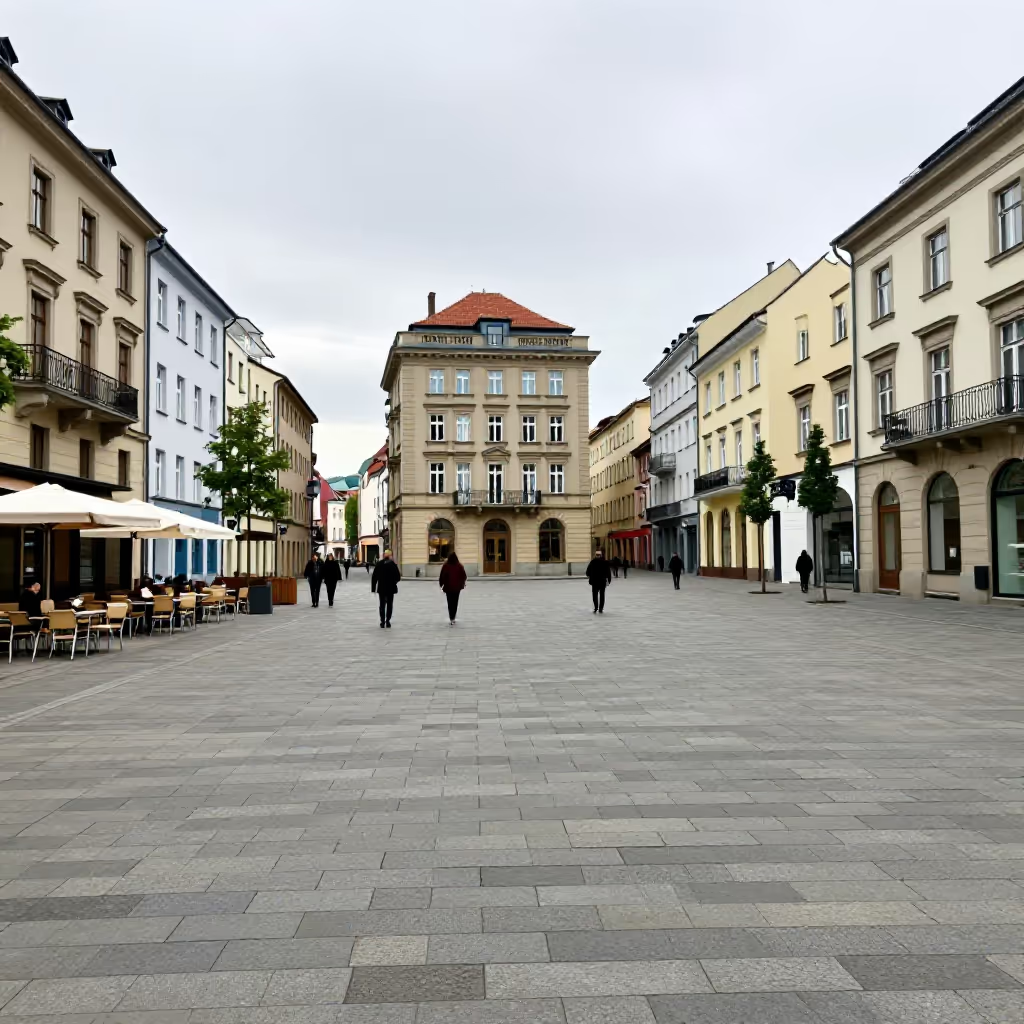
'der Platz' and 'die Plaza' can both mean an open area in a city, often between buildings. 'Platz' is the normal German word and fits in almost all everyday situations. 'Plaza' sounds more specific and is often used for modern architecture, large public complexes, or places with a Spanish connection. Learners may confuse the words because they look similar and refer to similar places. On a normal city map or in conversation, you usually say 'Platz'. 'Plaza' fits better when the place is actually called that or is meant to sound deliberately international.
Plaza
Am Wochenende saßen viele Besucher auf der Plaza vor dem neuen Einkaufszentrum.
At the weekend, many visitors sat on the plaza in front of the new shopping center.
Platz
Vor dem Rathaus gibt es einen großen Platz mit vielen Bänken.
In front of the town hall, there is a large square with many benches.