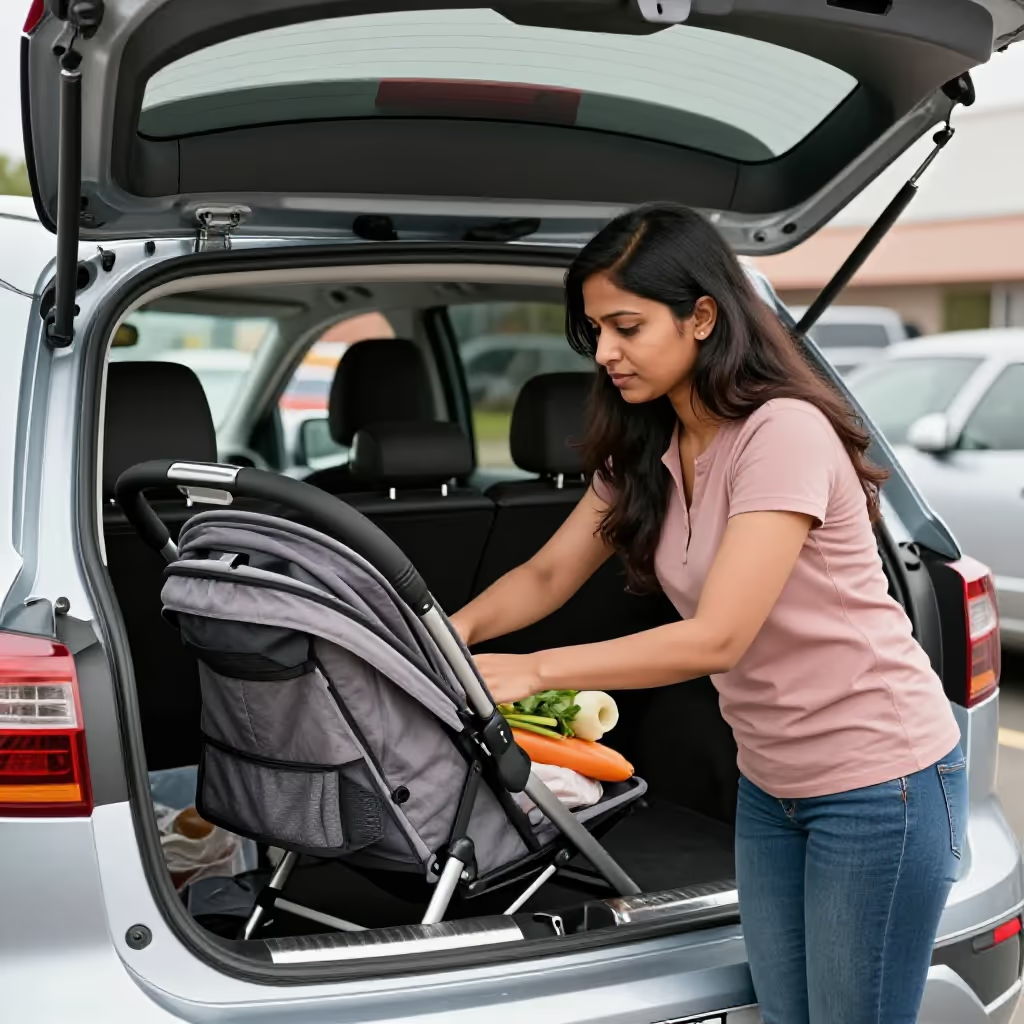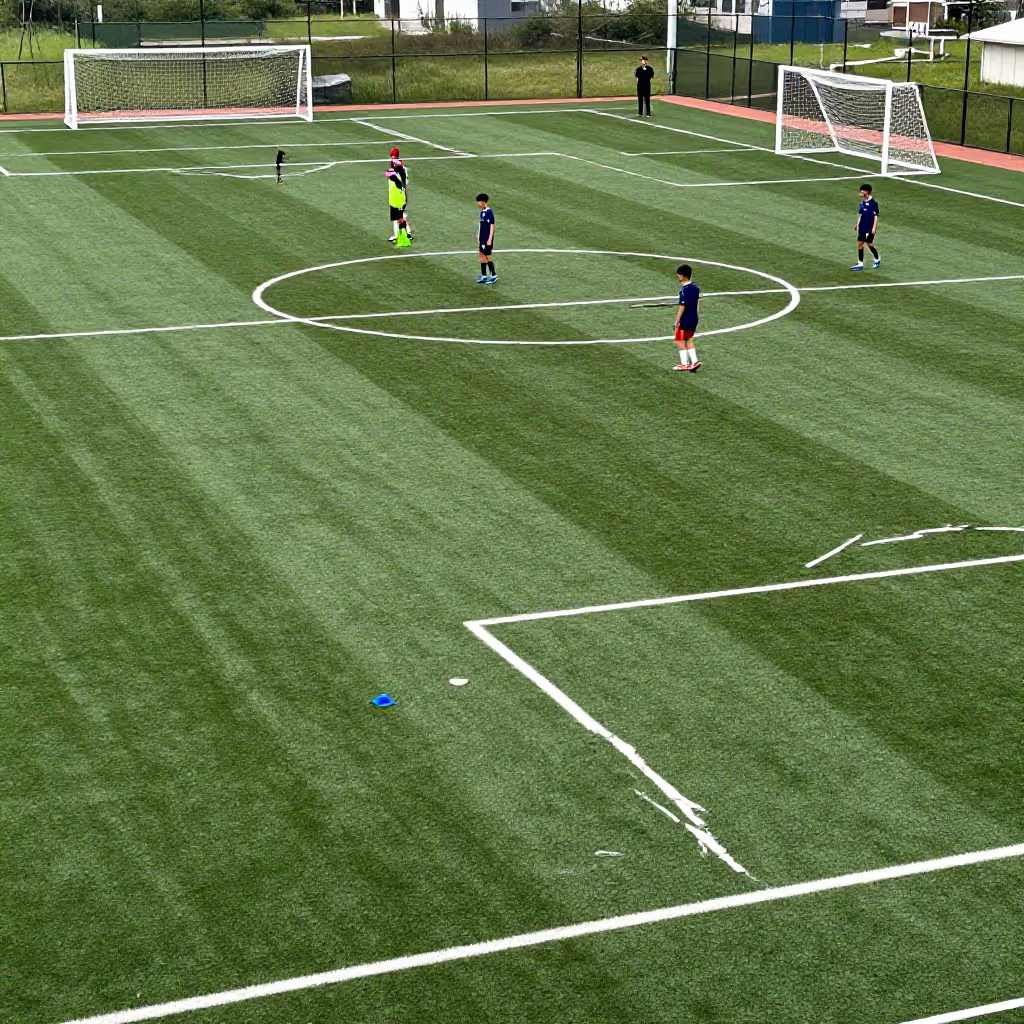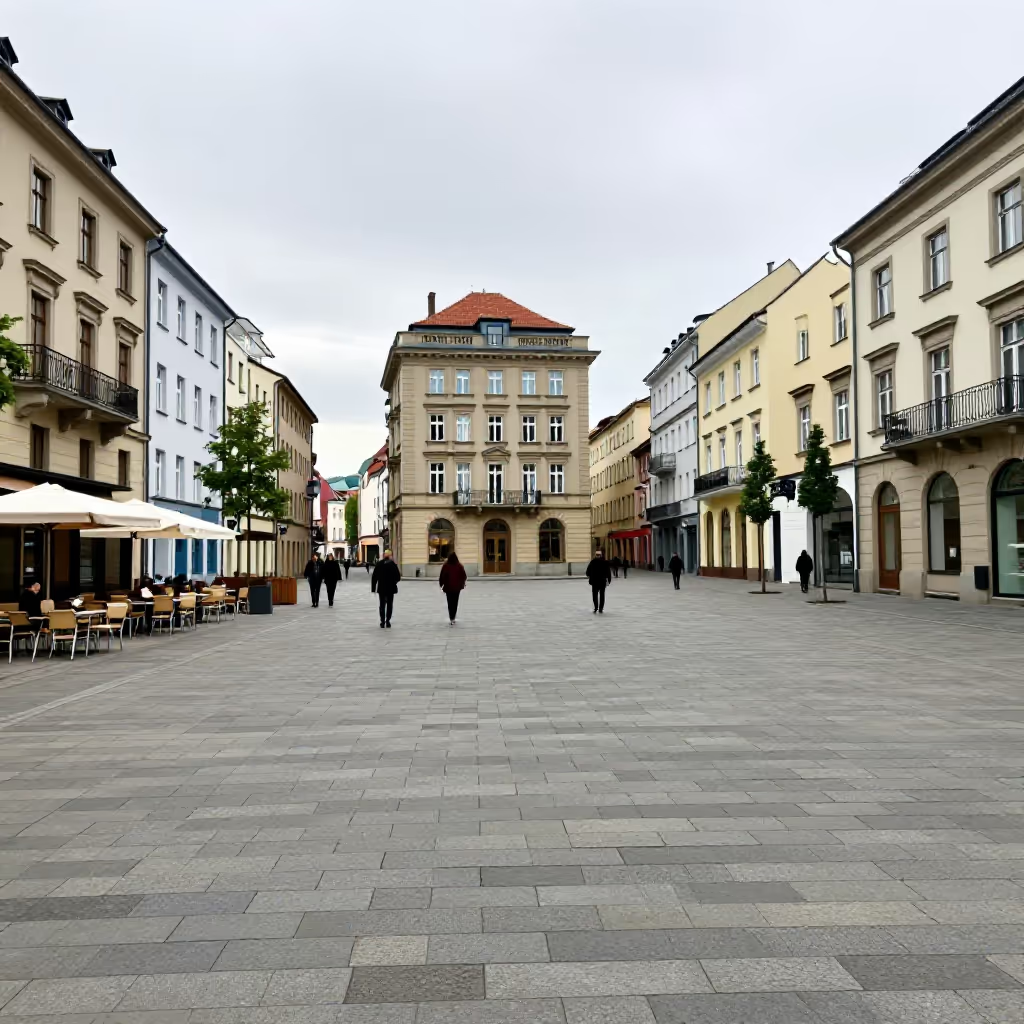
An open, undeveloped area in a city, often surrounded by streets or buildings.
example
Der Wochenmarkt findet immer auf dem großen Platz vor dem Rathaus statt.
The weekly market always takes place in the large square in front of the town hall.
Usage tips
Countable vs. uncountable
When 'Platz' (place/seat) means a seat or a specific spot, it is countable (ein Platz, viele Plätze). When it means 'space', it is uncountable and is often used without an article.
EXAMPLE
Gibt es hier noch zwei freie Plätze?
Are there still two free seats here?
Word family
'Platz' (place/space) is related to the verb 'platzieren' (to place something somewhere). This helps you understand that 'Platz' is always about a location or position.
EXAMPLE
Der Kellner platzierte die Weingläser sorgfältig auf dem Tisch.
The waiter carefully placed the wine glasses on the table.
Common compounds
'Platz' (place/space) is the second part of many useful nouns that describe the type of place more precisely, e.g. 'Arbeitsplatz' (workplace), 'Parkplatz' (parking space), 'Sitzplatz' (seat), or 'Spielplatz' (playground).
EXAMPLE
Ich suche einen ruhigen Arbeitsplatz in der Bibliothek.
I'm looking for a quiet workspace in the library.
Typical collocations for 'space'
When 'Platz' (space) means 'Raum' (room/space), it is often used in fixed phrases such as 'Platz für etwas haben' (to have space for something), 'Platz schaffen' (to create space), or 'Platz machen' (to make room / move out of the way).
EXAMPLE
Könntest du bitte etwas Platz machen, damit ich vorbeigehen kann?
Could you please make some room so I can get past?
Typical verbs in competitions
In the context of competitions, 'Platz' (place) is often combined with verbs such as 'belegen', 'erreichen', or 'machen' to express a ranking.
EXAMPLE
Er hat beim Schwimmwettbewerb den zweiten Platz gemacht.
He took second place in the swimming competition.
Polite expression
The phrase 'Platz nehmen' (to take a seat) is a formal and polite way to ask someone to sit down. It is often used in professional settings such as medical practices or offices.
EXAMPLE
Nehmen Sie doch bitte im Wartezimmer Platz.
Please take a seat in the waiting room.
Compare with
near_synonym · confusable
Platz vs Ort
place / town
'Platz' and 'Ort' can both mean a place or spot, but they do not always fit equally well. 'Platz' is often used for a concrete area, a seat, or available space. It can also be a public square in a city. 'Ort' is more general and means a specific place or also a locality such as a village. Learners confuse these words because in some situations you can say both. When it is about space, sitting, or an open/free area, 'Platz' sounds more natural. When asking where something happens or where something is located, 'Ort' is often more precise.
Platz
Im Bus war noch ein Platz neben dem Fenster frei.
There was still a seat free next to the window on the bus.
Ort
Der Ort des Treffens steht noch nicht fest.
The location of the meeting has not been decided yet.