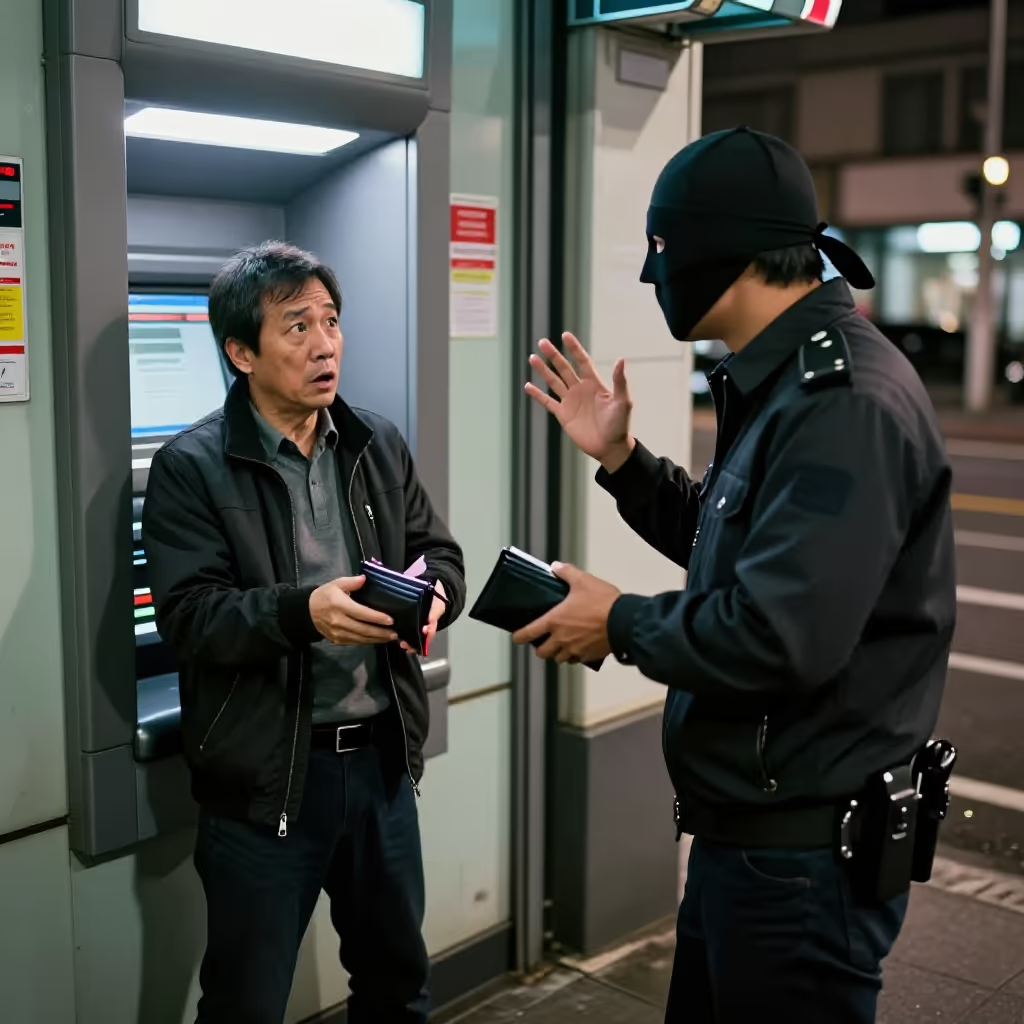
To forcefully, and often as part of a group, enter buildings or areas in order to steal valuables, typically during a war, natural disaster, or social unrest.
example
Nach dem Sturm begannen einige Leute, die verlassenen Geschäfte zu plündern.
After the storm, some people began to loot the abandoned shops.

Usage tips
Verb with accusative
'Plündern' (to loot) is a transitive verb and almost always needs an accusative object. You ask: Whom or what is being looted? The object is the thing or place that is being emptied.
EXAMPLE
Die Einbrecher haben das ganze Haus geplündert.
The burglars looted the entire house.
Typical collocations
In its serious meaning, 'plündern' (to loot) is often connected with places that are violently robbed, for example 'eine Stadt plündern' (to loot a city), 'Geschäfte plündern' (to loot shops), or 'ein Museum plündern' (to loot a museum).
EXAMPLE
Historische Berichte erzählen, wie die feindlichen Truppen die eroberte Stadt plünderten.
Historical accounts describe how the enemy troops looted the conquered city.
Context clue
You can tell whether the serious or colloquial meaning is intended from the object. Looting 'Städten' (cities) is literal, while raiding a 'Kühlschrank' (refrigerator) is an exaggerated, humorous way to say 'to eat everything up.'
EXAMPLE
Nach dem Sport haben die Jungs die Küche geplündert und alle Kekse gegessen.
After sports, the boys raided the kitchen and ate all the cookies.
Colloquial use
Using 'plündern' (to raid) for emptying refrigerators or buffets is colloquial and figurative. In a formal text, you would avoid this phrasing.
EXAMPLE
Kaum waren die Gäste da, wurde auch schon das Kuchenbuffet geplündert.
No sooner had the guests arrived than the cake buffet was already being raided.
Compare with
near_synonym · confusable
plündern vs stehlen
to steal
'stehlen' and 'plündern' both have to do with someone unlawfully taking things that belong to someone else. 'stehlen' is the general word: a person secretly takes something away, for example a wallet or a bicycle. 'plündern' sounds much stronger and fits situations involving violence, chaos, or large groups, such as during war, unrest, or after a disaster. Learners may confuse the words because in both cases something is stolen. As a simple guide: secretly taking a single thing is usually 'stehlen'; violently taking many things from a place is 'plündern'.
plündern
Nach den Unruhen plünderten mehrere Menschen ein Geschäft in der Innenstadt.
After the unrest, several people looted a shop in the city center.
stehlen
Im Supermarkt hat jemand einer Kundin die Geldbörse gestohlen.
In the supermarket, someone stole a customer's wallet.