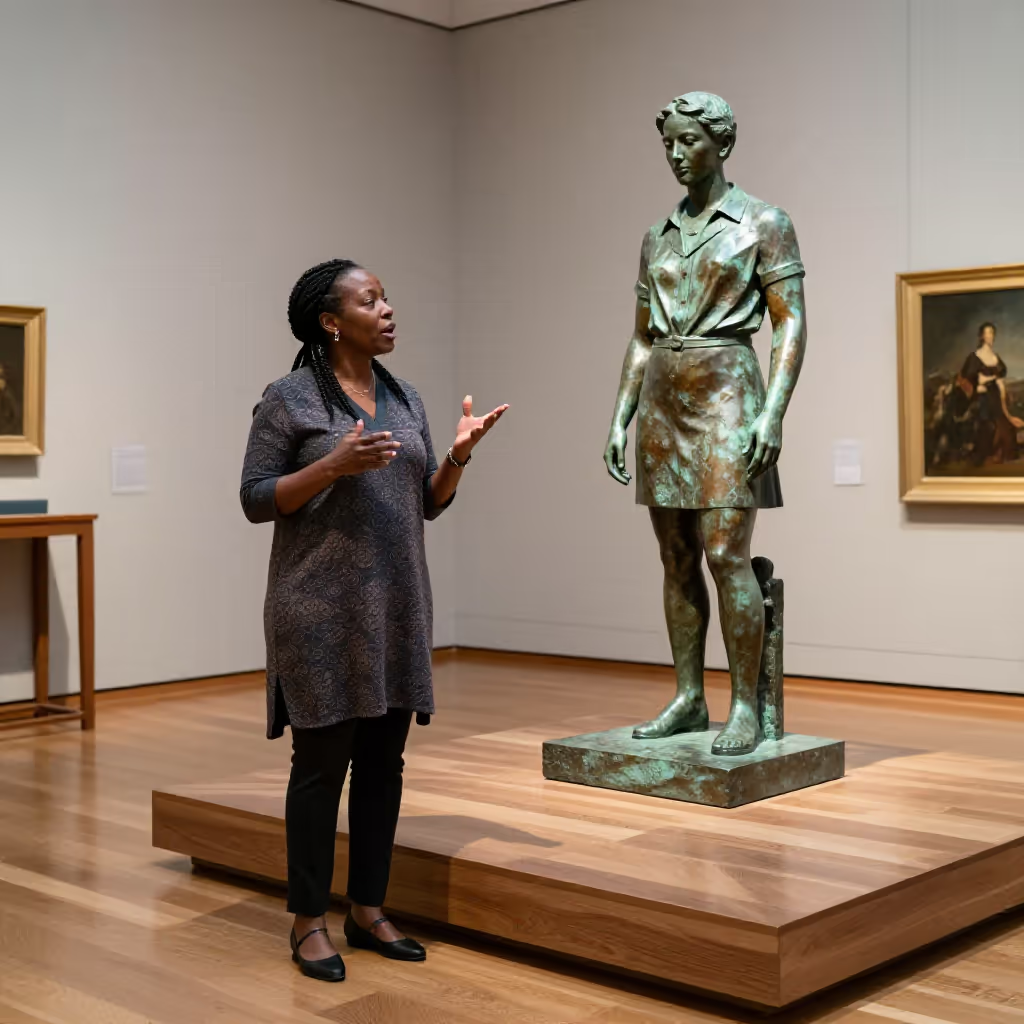
A small raised surface or platform on which a person, e.g. a speaker, or an object, e.g. a statue, is placed in order to highlight it.
example
Der Dirigent stieg auf das Podest und hob den Taktstock.
The conductor stepped onto the podium and raised the baton.

Usage tips
Preposition and case
The word 'Podest' (platform/podium) is almost always used with the preposition 'auf' (on/onto). Pay attention to the case: 'auf das Podest' (onto the podium, accusative) describes movement, while 'auf dem Podest' (on the podium, dative) describes a position.
EXAMPLE
Der Sieger sprang mit einem lauten Jubel auf das Podest.
The winner jumped onto the podium with a loud cheer.
Figurative meaning
The expression 'jemanden auf ein Podest stellen' (to put someone on a pedestal) means to idealize a person or admire them excessively. It is often used to criticize unrealistic adoration.
EXAMPLE
Er stellt seine Professorin auf ein Podest und bewundert alles, was sie sagt.
He puts his professor on a pedestal and admires everything she says.
Typical collocations
In a sports context, there are fixed expressions with 'Podest' (podium). Common ones are 'es aufs Podest schaffen' (to make it onto the podium, to finish in the top three) or 'das Podest verpassen' (to miss the podium, to come fourth).
EXAMPLE
Nach einem spannenden Rennen schaffte sie es doch noch aufs Podest.
After an exciting race, she still managed to make it onto the podium.
Compare with
near_synonym · confusable
Podest vs Bühne
stage
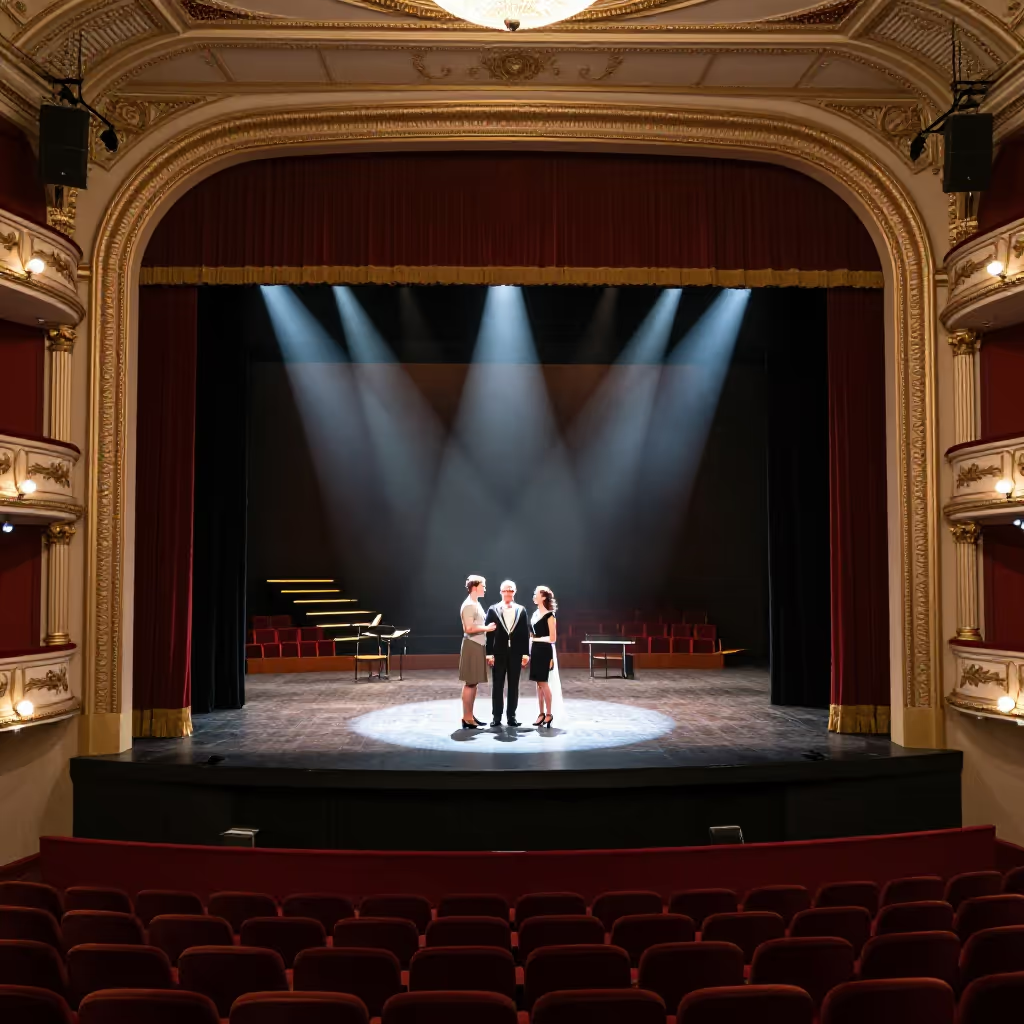
'die Bühne' and 'das Podest' are both raised surfaces that people can stand on. 'Bühne' is used mainly for theater, concerts, or performances. It is the place where something is performed or shown in front of an audience. A 'Podest' is usually smaller and serves to make a person or object higher and easier to see, for example during a speech or at an awards ceremony. The words can be confused because both are raised. When it is about a performance, 'Bühne' sounds more natural; when only the height or emphasis is important, 'Podest' fits better.
Podest
Der Redner stellt sich auf das Podest, damit ihn alle im Saal sehen können.
The speaker stands on the platform so that everyone in the hall can see him.
Bühne
Vor dem Konzert stehen die Musiker schon hinter der Bühne bereit.
Before the concert, the musicians are already waiting backstage.