

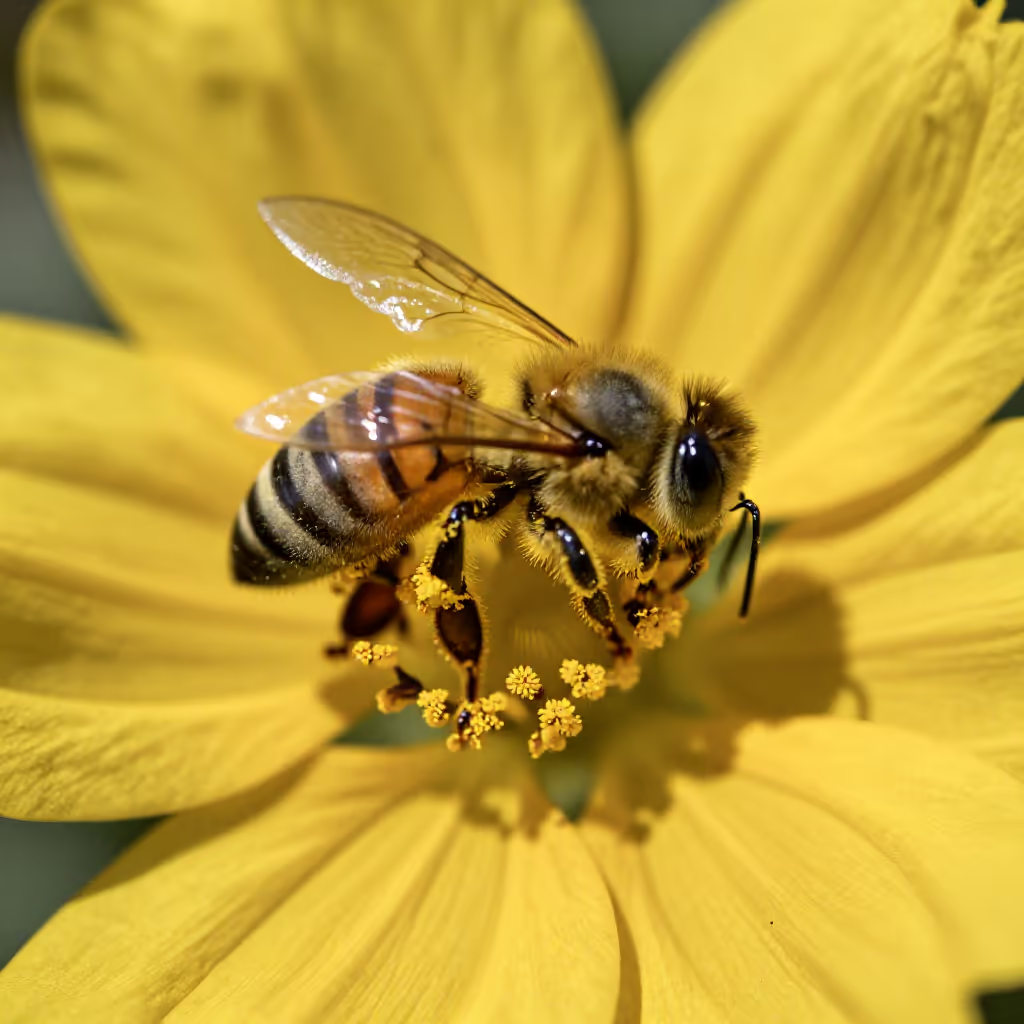
The fine, usually yellow flower dust from plants that is necessary for pollination and triggers allergies in some people. The singular is often used collectively for a mass of pollen.
example
Im Frühling ist die Luft voller Pollen, was für Allergiker eine schwere Zeit ist.
In spring, the air is full of pollen, which makes it a difficult time for allergy sufferers.
Usage tips
Word formation
'Pollen' (pollen) is often the first part of compound nouns that have to do with allergies. When you see the word 'Pollen-' at the beginning, it usually points to this topic.
EXAMPLE
Der Pollenflugkalender zeigt an, wann welche Pflanzen blühen.
The pollen count calendar shows when which plants are blooming.
Use as a collective term
In everyday language, 'der Pollen' (pollen) is usually used in the singular as an uncountable noun to describe the entire mass of flower dust in the air. The plural 'die Pollen' is used more in scientific contexts for individual grains or types.
EXAMPLE
Dieses Jahr ist die Belastung durch Pollen besonders hoch.
This year, the pollen burden is especially high.
Typical collocations
In connection with allergies, 'Pollen' (pollen) is often combined with certain verbs and expressions. You will often hear 'allergisch gegen Pollen sein' (to be allergic to pollen), 'unter dem Pollenflug leiden' (to suffer from airborne pollen), or 'die Pollen fliegen' (the pollen is in the air).
EXAMPLE
Ich kann im Frühling kaum lüften, weil ich allergisch gegen Pollen bin.
I can hardly air out the room in spring because I'm allergic to pollen.
Compare with
near_synonym · confusable
Pollen vs Staub
dust
'der Staub' and 'der Pollen' are both very fine particles that can be in the air or lie on surfaces. But 'Staub' is more general: it can consist of earth, dirt, or many other dry materials. 'Pollen' comes from plants and is flower dust. People often talk about pollen especially in spring because it can trigger allergies. Learners may confuse the words because pollen can look like dust. If the particles come from flowers, trees, or grasses, 'Pollen' is more precise. Otherwise, you usually say 'Staub'.
Pollen
Wegen der Pollen muss Lisa im Frühling oft niesen.
Because of the pollen, Lisa often has to sneeze in spring.
Staub
Auf dem alten Regal liegt eine dicke Schicht Staub.