

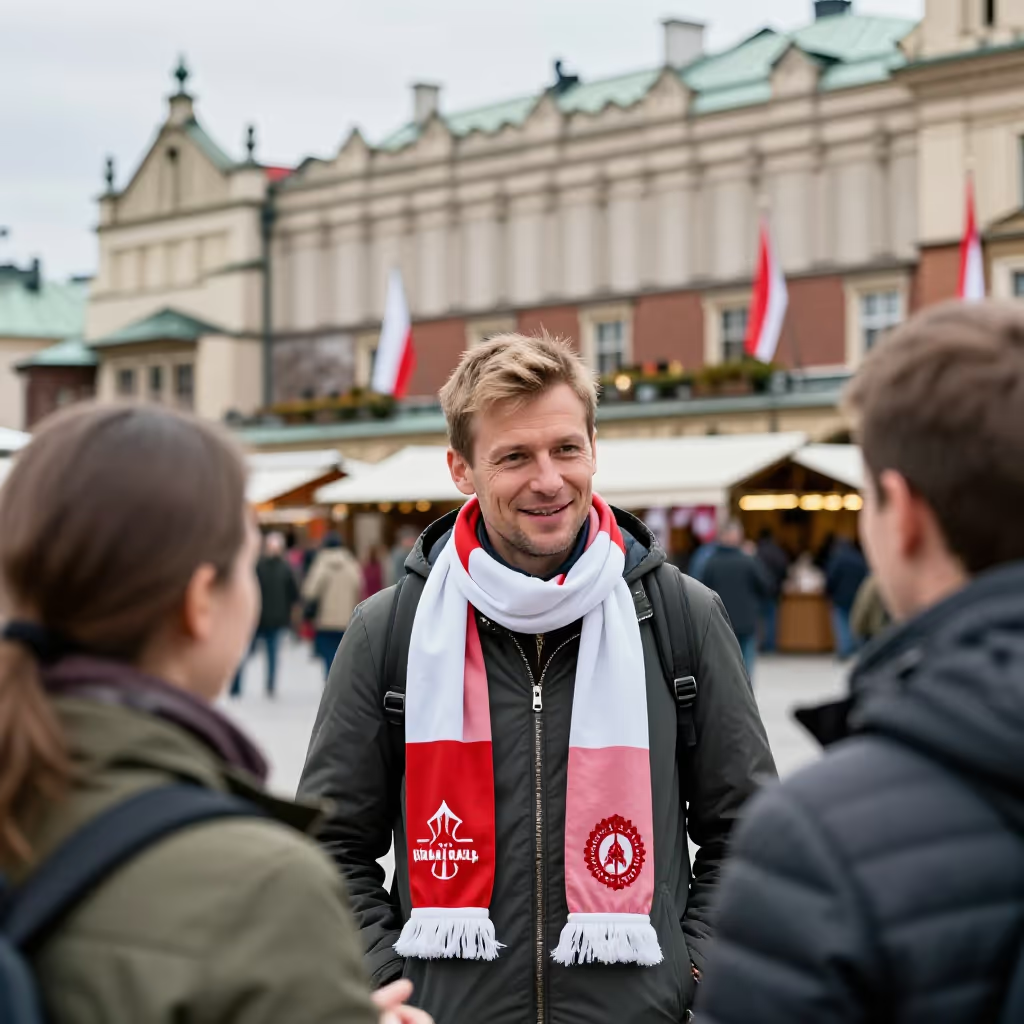
der Pole
Pole
A male person who comes from Poland or has Polish citizenship. The female form is 'die Polin' (Polish woman).
Mein neuer Kollege ist Pole und kommt ursprünglich aus Krakau.
My new colleague is a Pole and originally comes from Kraków.

Pole
Loading your saved state.
Pole
A male person who comes from Poland or has Polish citizenship. The female form is 'die Polin' (Polish woman).
Mein neuer Kollege ist Pole und kommt ursprünglich aus Krakau.
My new colleague is a Pole and originally comes from Kraków.

'Der Pole' refers to a person from Poland. The English word 'pole' means 'Stange' or 'Pol' (e.g., North Pole), which often leads to confusion.
Ich habe im Urlaub einen netten Polen kennengelernt.
I met a nice Pole while on vacation.
'Der Pole' belongs to the N-declension. This means that the word takes the ending '-n' in all cases except the nominative singular.
Ich spreche mit dem Polen.
I am speaking with the Pole.
The word is part of a word family. The country is called 'Polen' (Poland), the language and adjective are 'polnisch' (Polish), and a male person is 'der Pole' (the Pole).
Er kommt aus Polen und spricht Polnisch.
He comes from Poland and speaks Polish.
Polish
'polnisch' and 'der Pole' both refer to Poland, but grammatically they belong to different groups. 'polnisch' is an adjective. You use it for the language, culture, origin, or things from Poland, for example 'polnisches Essen' (Polish food) or 'polnisch sprechen' (to speak Polish). 'der Pole' is a noun and means a man from Poland or with Polish citizenship. The words can be confused because both have to do with nationality. Remember: for a quality or a language, use 'polnisch'; for a male person, use 'der Pole'.

Der neue Fahrer ist Pole und kommt aus Krakau.
The new driver is a Pole and comes from Kraków.
Meine Nachbarin spricht zu Hause oft polnisch mit ihrer Familie.
My neighbor often speaks Polish with her family at home.