

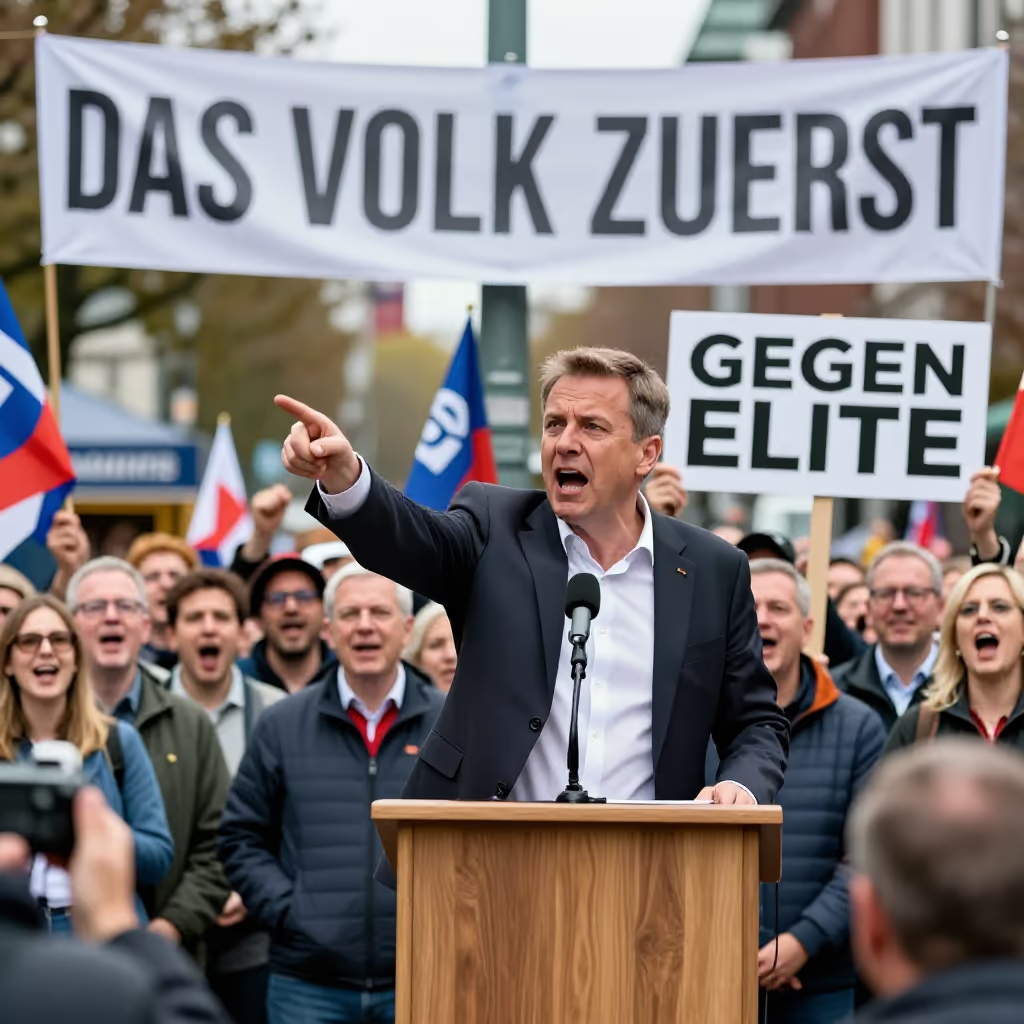
Describes a kind of politics that aims to win the favor of the general population through highly simplified messages and appeals to emotion, often by positioning itself against a supposed elite. The word usually has a negative meaning.
example
Seine Rede war voller populistischer Parolen, die komplexe Probleme ignorierten.
His speech was full of populist slogans that ignored complex problems.

Usage tips
Word family
The adjective 'populistisch' (populist) belongs to the noun 'der Populismus' (populism). The ending '-istisch' is often used to form adjectives from nouns ending in '-ismus' that describe a political or philosophical movement.
EXAMPLE
Der Populismus verspricht oft einfache Lösungen für komplizierte Probleme.
Populism often promises simple solutions to complicated problems.
Negative meaning
The word 'populistisch' (populist) is almost always used critically or pejoratively. It describes a style of politics perceived as manipulative and unserious.
EXAMPLE
Kritiker warfen dem Politiker vor, eine populistische Kampagne zu führen.
Critics accused the politician of running a populist campaign.
Typical collocations
'Populistisch' (populist) often describes terms from politics and communication. Typical combinations are 'populistische Parolen' (populist slogans), 'populistische Forderungen' (populist demands), 'eine populistische Partei' (a populist party), or 'ein populistischer Politiker' (a populist politician).
EXAMPLE
Seine populistischen Aussagen kamen bei vielen Wählern gut an.
His populist statements went down well with many voters.
Compare with
confusable
populistisch vs populär
popular
'populär' and 'populistisch' look similar and both have a connection to many people. Still, they do not mean the same thing. 'populär' is usually positive or neutral: something is well known, liked, or understandable to many people. 'populistisch' is used mainly in politics. It describes simple, emotional messages used to win the approval of many people. The word usually sounds negative. The risk of confusion is high because both words begin with 'popul-'. Remember: 'populär' means popular or generally understandable; 'populistisch' describes a political method.
populistisch
Im Wahlkampf kritisierten viele die populistischen Aussagen des Kandidaten.
During the election campaign, many people criticized the candidate's populist statements.
populär
Omar findet den neuen Film populär, weil fast alle darüber sprechen.
Omar thinks the new film is popular because almost everyone is talking about it.