


der Porter
porter
A person whose job is to carry luggage and other loads, especially in a hotel, train station, or airport.
EXAMPLE
Der Porter brachte unsere Koffer sofort aufs Zimmer.
The porter brought our suitcases up to the room right away.
porter
Loading your saved state.
porter
A person whose job is to carry luggage and other loads, especially in a hotel, train station, or airport.
Der Porter brachte unsere Koffer sofort aufs Zimmer.
The porter brought our suitcases up to the room right away.

porter
A type of dark, top-fermented beer with a malty flavor.
Im Pub bestellte er sich einen halben Liter Porter.
In the pub, he ordered himself a pint of porter.
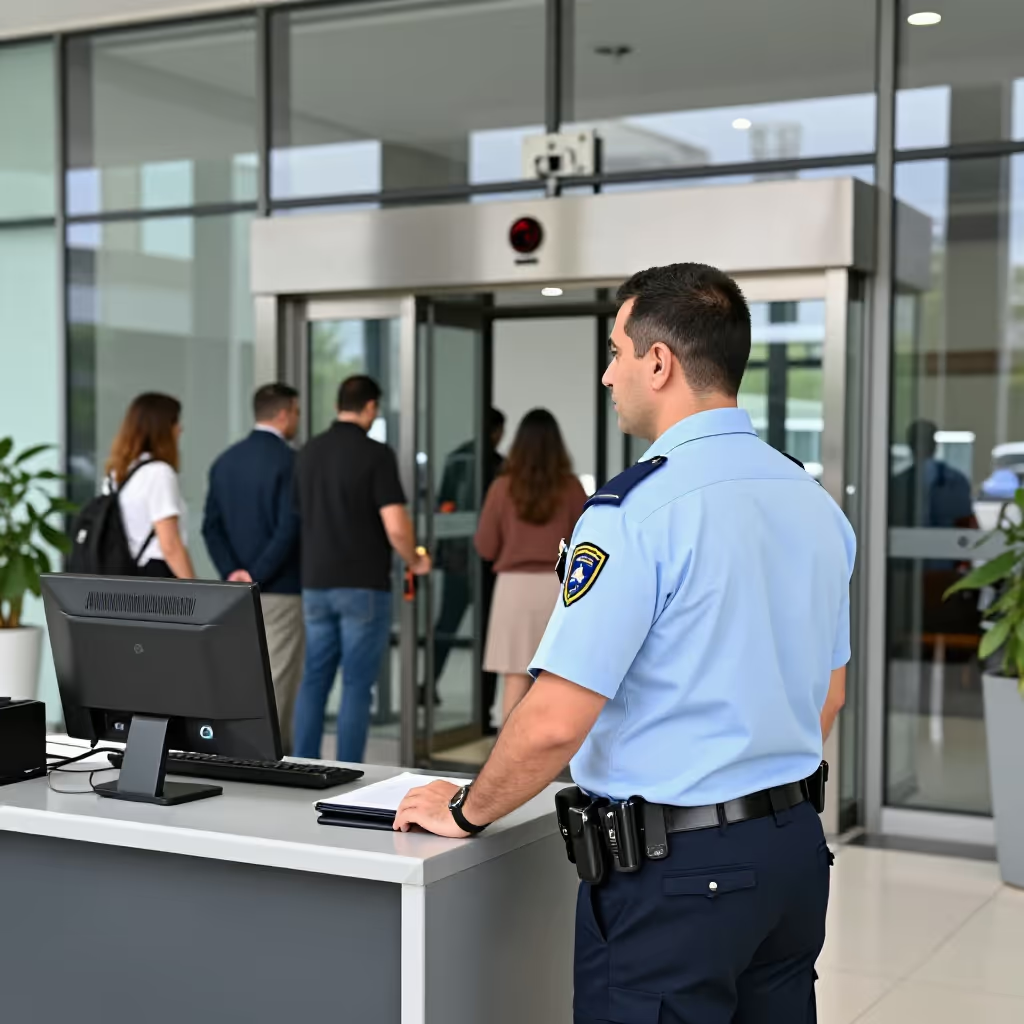
porter / doorman
A person who guards the entrance to a building; a gatekeeper or doorman.
Der Porter am Eingang des Colleges kontrollierte die Ausweise der Studenten.
The porter at the entrance to the college checked the students' IDs.
Since 'Porter' has three very different meanings, context is crucial. Pay attention to words like 'Gepäck' (luggage) for the person, 'bestellen' (to order) for the beer, or 'Eingang' (entrance) for the doorman, in order to recognize the correct meaning.
Der Porter im Hotel war sehr hilfsbereit.
The porter in the hotel was very helpful.
In the meaning 'Gepäckträger' (luggage porter), you find the word almost exclusively in the context of travel. Typical places are hotels, train stations, or airports.
Am Bahnhof half uns ein Porter mit den schweren Taschen.
At the train station, a porter helped us with the heavy bags.
When it refers to the drink, 'Porter' is usually connected with verbs like 'bestellen' (to order), 'trinken' (to drink), or 'zapfen' (to draw/pour from a tap). You find it on menus in pubs or restaurants.
Ich bestelle mir ein kühles Porter.
I'll order myself a cold porter.
The meaning 'Pförtner' (doorman/gatekeeper) is less common in German. It is often used for staff at entrances to historic or prestigious institutions such as old hotels or universities.
Der Porter des alten Internats kannte jeden Schüler mit Namen.
The porter of the old boarding school knew every student by name.
bellhop / page
Page and Porter can both carry a guest’s luggage in a hotel. The Porter is primarily responsible for carrying luggage and other loads. In addition, the Page typically performs other small services for guests; this broader role makes Page the more suitable term.

Der Porter brachte den schweren Koffer vom Eingang aufs Zimmer.
The porter carried the heavy suitcase from the entrance to the room.
Der Page brachte den Koffer aufs Zimmer und übergab dem Gast eine Nachricht.
The bellhop took the suitcase to the room and handed the guest a message.