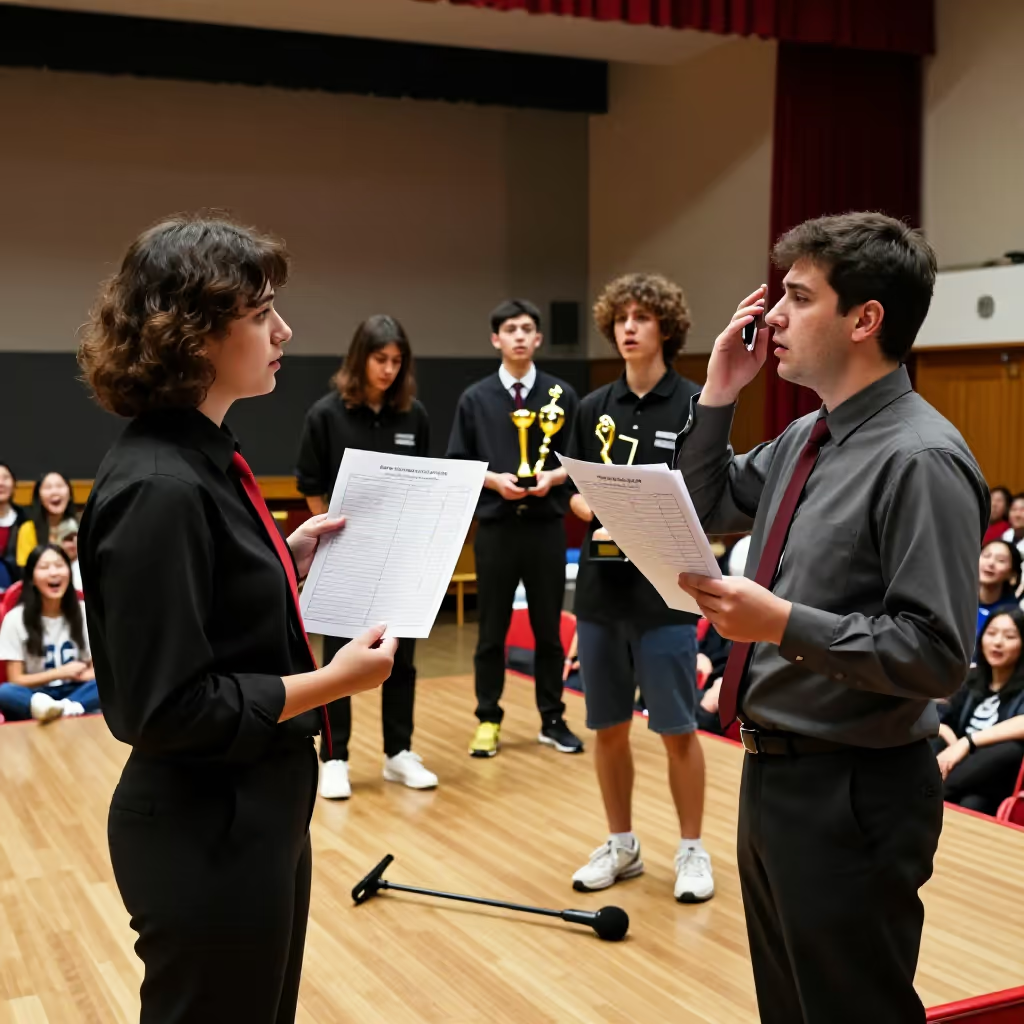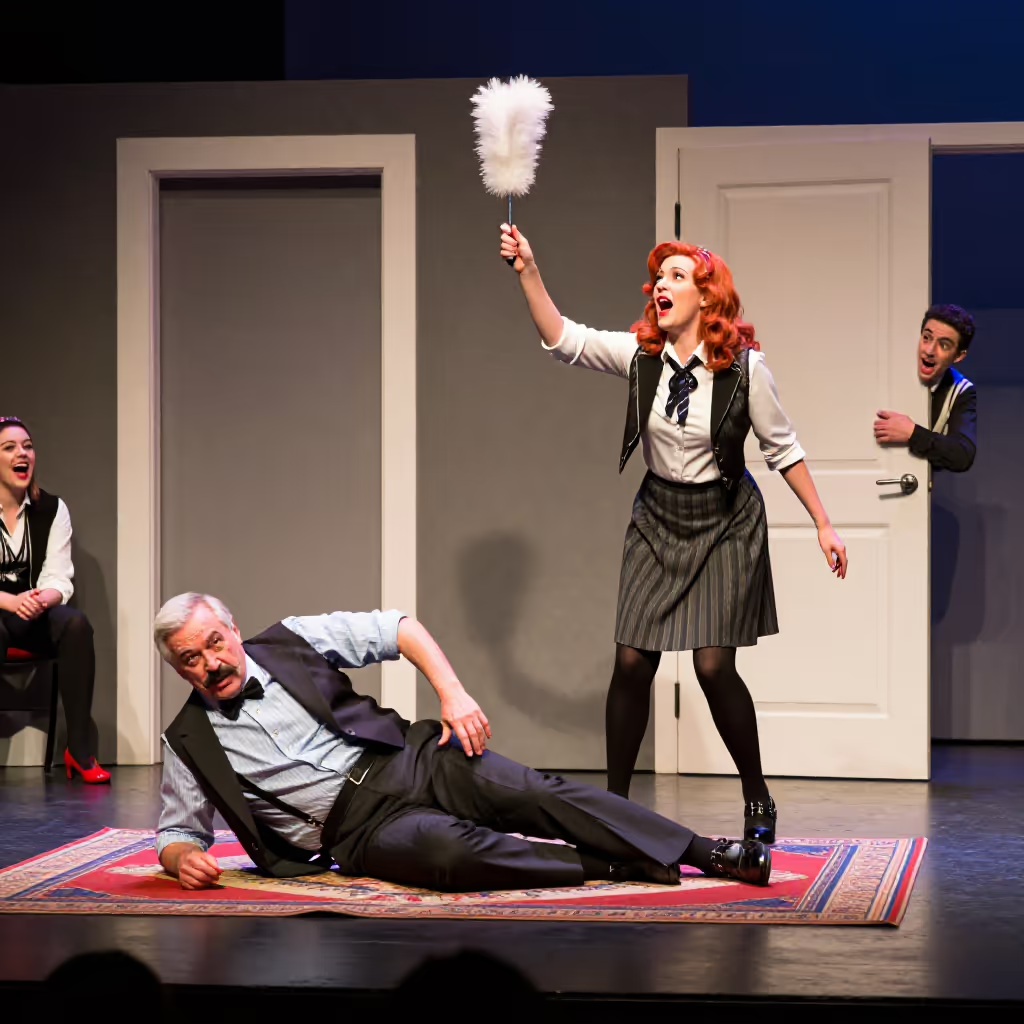
A short, coarse, and funny play with simple, often exaggerated characters and comic situations. Synonyms are Schwank (comic farce) or Farce (farce).
example
Im Stadttheater wurde gestern eine Posse aus dem 19. Jahrhundert aufgeführt.
A 19th-century farce was performed at the city theater yesterday.

Usage tips
Register and style
The word 'Posse' (farce) belongs to an elevated or educated register. In everyday conversation, it is used rather rarely to describe a funny or absurd situation.
EXAMPLE
Die Debatte im Parlament wurde in den Nachrichten als politische Posse bezeichnet.
The debate in parliament was described in the news as a political farce.
Context clue
You can recognize the figurative meaning by the fact that it is about an event in real life, often in politics or public life. If, on the other hand, it is about a performance on a stage, the play is meant.
EXAMPLE
Der Streit der Nachbarn um den Gartenzaun entwickelte sich zu einer peinlichen Posse.
The neighbors' dispute over the garden fence developed into an embarrassing farce.
Typical collocations
When a real-life incident is meant, 'Posse' (farce) is often combined with adjectives such as 'peinlich' (embarrassing), 'absurd' (absurd), or 'lächerlich' (ridiculous). A common phrase is also that something 'sich zu einer Posse entwickelt' (develops into a farce).
EXAMPLE
Die ganze Angelegenheit war eine absurde Posse.
The whole affair was an absurd farce.
Typical collocations
In the context of theater, 'Posse' (farce) is often used with verbs such as 'aufführen' (to perform), 'inszenieren' (to stage), or 'schreiben' (to write).
EXAMPLE
Die Theatergruppe wird nächsten Monat eine alte Posse aufführen.
The theater group will perform an old farce next month.
Compare with
near_synonym · confusable
Posse vs Theater
theater
'das Theater' and 'die Posse' can both have to do with stage art and also with exaggerated situations. 'Theater' is the general term for the art form or for dramatic behavior in everyday life. 'Posse' is more specific: it can be a comic, often coarse play. Figuratively, 'Posse' means a ridiculous or embarrassing incident. The words can be confused because both bring to mind a scene on stage. 'Theater' fits for general fuss or agitation, while 'Posse' is more likely when something seems absurd or ridiculous.
Posse
Die lange Diskussion um den kaputten Fahrradständer wurde langsam zur Posse.
The long discussion about the broken bike rack was slowly turning into a farce.
Theater
Um neue Wörter zu üben, spielen wir im Kurs eine kleine Szene wie im Theater.
To practice new words, we act out a short scene in class, like in the theater.