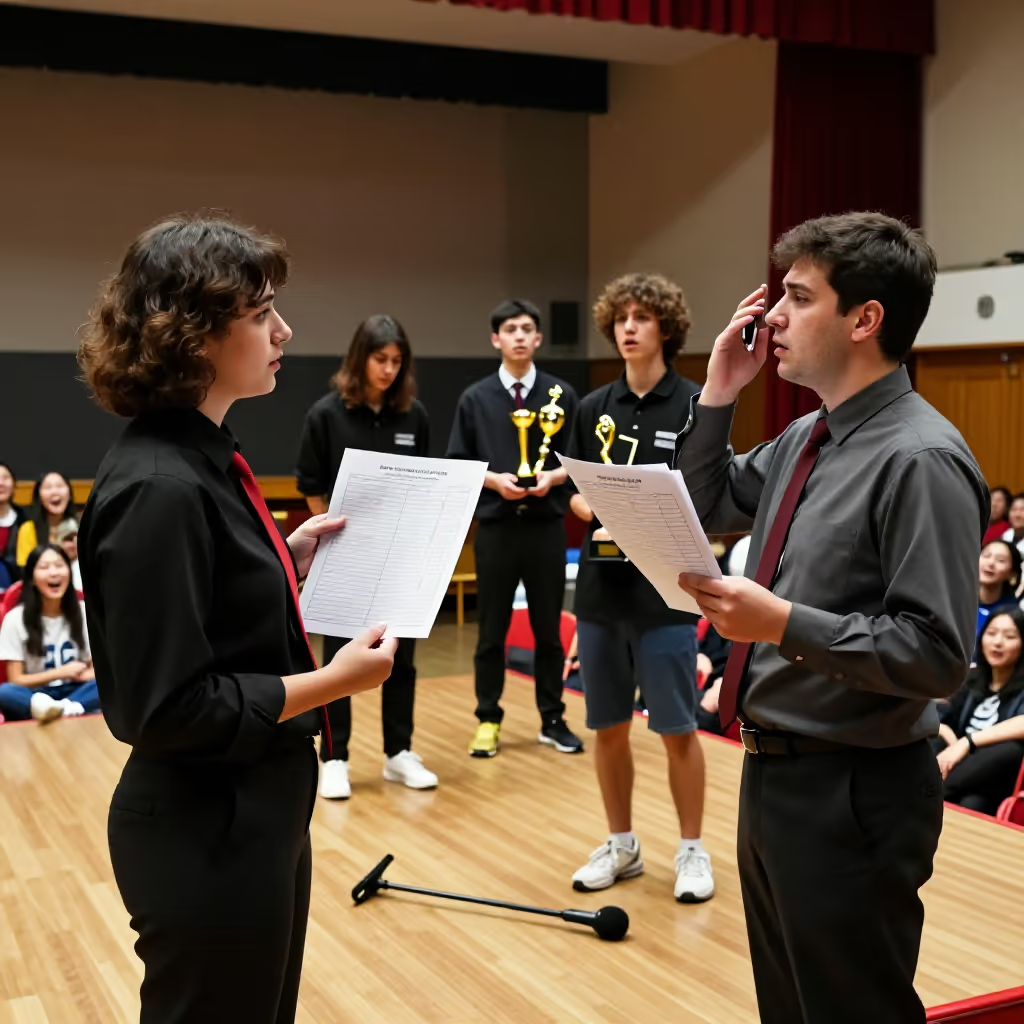
An event or process that is so poorly organized, unfair, or absurd that it seems ridiculous and impossible to take seriously.
example
Die Gerichtsverhandlung war eine reine Farce, da der Sieger von Anfang an feststand.
The trial was a complete farce, since the winner had been decided from the start.
Usage tips
Context clues
You can recognize the meaning 'absurd event' from words related to politics, justice, or organization, e.g. 'Wahl' (election), 'Prozess' (trial), or 'Sitzung' (meeting). You can recognize the theater meaning from words like 'Theater' (theater), 'Bühne' (stage), 'Komödie' (comedy), or 'sehen' (to see/watch).
EXAMPLE
Die politische Debatte entwickelte sich zu einer reinen Farce.
The political debate turned into a complete farce.
Typical collocation
In the figurative meaning, 'Farce' (farce) is very often combined with the adjective 'rein' (pure/complete): 'eine reine Farce' (a complete farce). This phrase emphasizes the total absurdity of the situation.
EXAMPLE
Die Sitzung war eine reine Farce, weil keine wichtigen Entscheidungen getroffen wurden.
The meeting was a complete farce because no important decisions were made.
Strong negative judgment
When you describe a process as a 'Farce' (farce), it is not a neutral description but a very strong criticism. It expresses that something is ridiculous, unfair, and impossible to take seriously.
EXAMPLE
Er nannte die Wahl eine Farce, da die Ergebnisse manipuliert worden seien.
He called the election a farce because the results had allegedly been manipulated.
Theater context
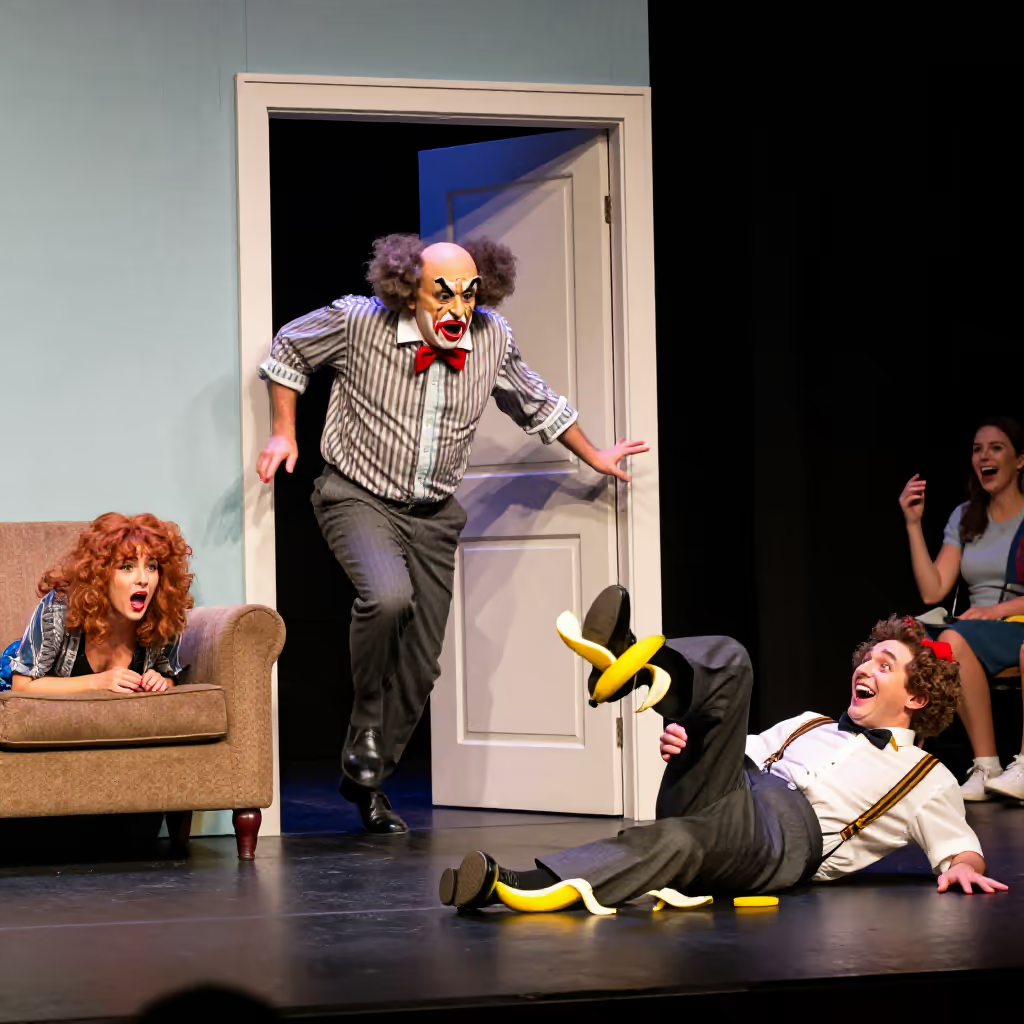
As a theatrical genre, 'Farce' (farce) is often combined with adjectives that describe its entertaining character, for example 'eine turbulente Farce' (a lively farce), 'eine lustige Farce' (a funny farce), or 'eine französische Farce' (a French farce).
EXAMPLE
Das Stück ist eine turbulente Farce mit vielen überraschenden Wendungen.
The play is a lively farce with many surprising twists.
Compare with
near_synonym · confusable
Farce vs Witz
joke
'der Witz' and 'die Farce' can both express that something is so absurd or bad that you cannot take it seriously. In this use, 'der Witz' sounds colloquial and can refer to many things, such as a price, an offer, or a decision. 'die Farce' fits better for an entire process, event, or official procedure that seems ridiculous, unfair, or poorly organized. Learners may confuse the words because both express strong criticism. As a practical rule: for a short, direct complaint, people often say 'Das ist ein Witz' (that's a joke); for a larger embarrassing or unfair process, 'Farce' is a better fit.
Farce
Die Besprechung war eine Farce, weil niemand vorbereitet war und keine Entscheidung fiel.
The meeting was a farce because no one was prepared and no decision was made.
Witz
Der Lohn für so viel Arbeit ist wirklich ein Witz.