

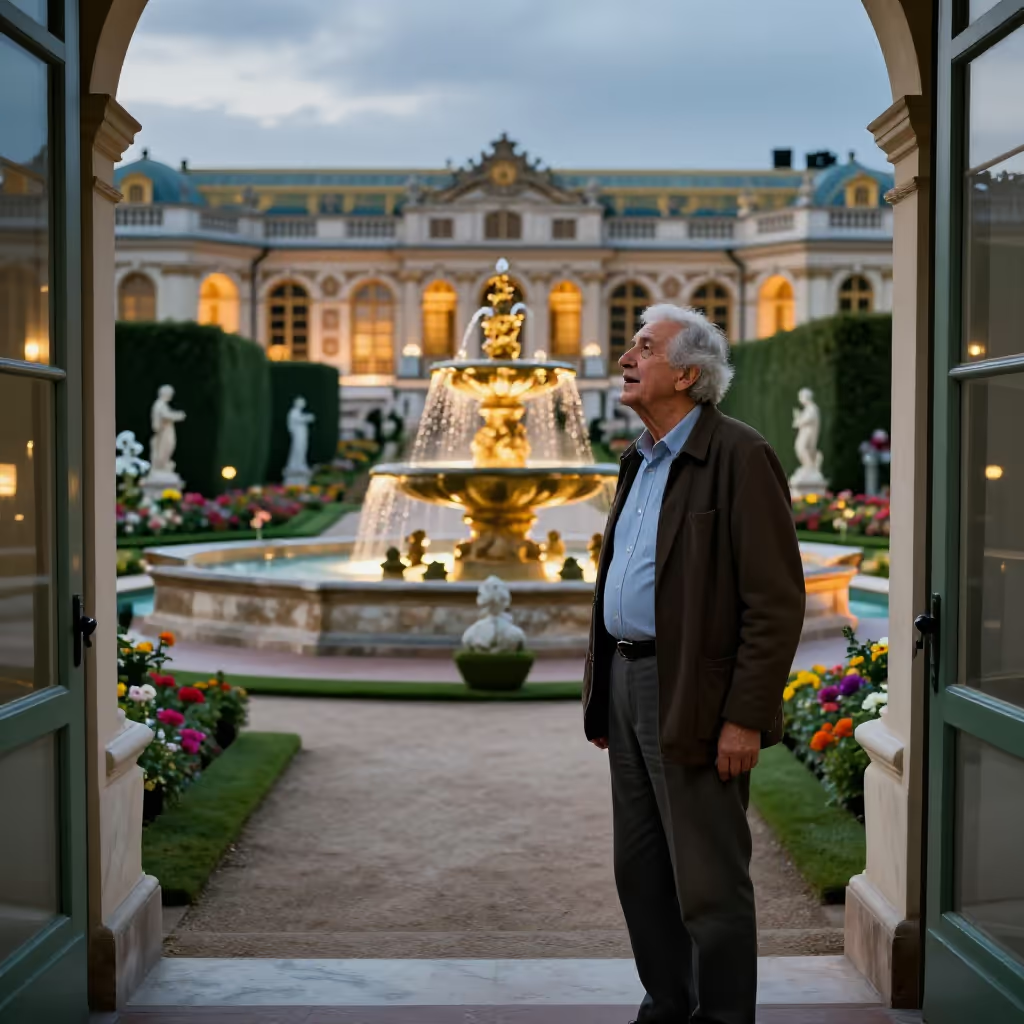
Used predicatively or as an exclamation to express that something is exceptionally beautiful, magnificent, or impressive. This use is rare and often elevated or poetic.
example
Der Anblick der blühenden Landschaft im Frühling war die reinste Pracht.
The sight of the blooming landscape in spring was pure splendor.
Usage tips
Word family
This adjectival use is a special form of the noun 'die Pracht' (splendor), which means 'Glanz' (shine/splendor) or 'Herrlichkeit' (glory/magnificence). Here the word is used like an adjective, but it is actually a noun.
EXAMPLE
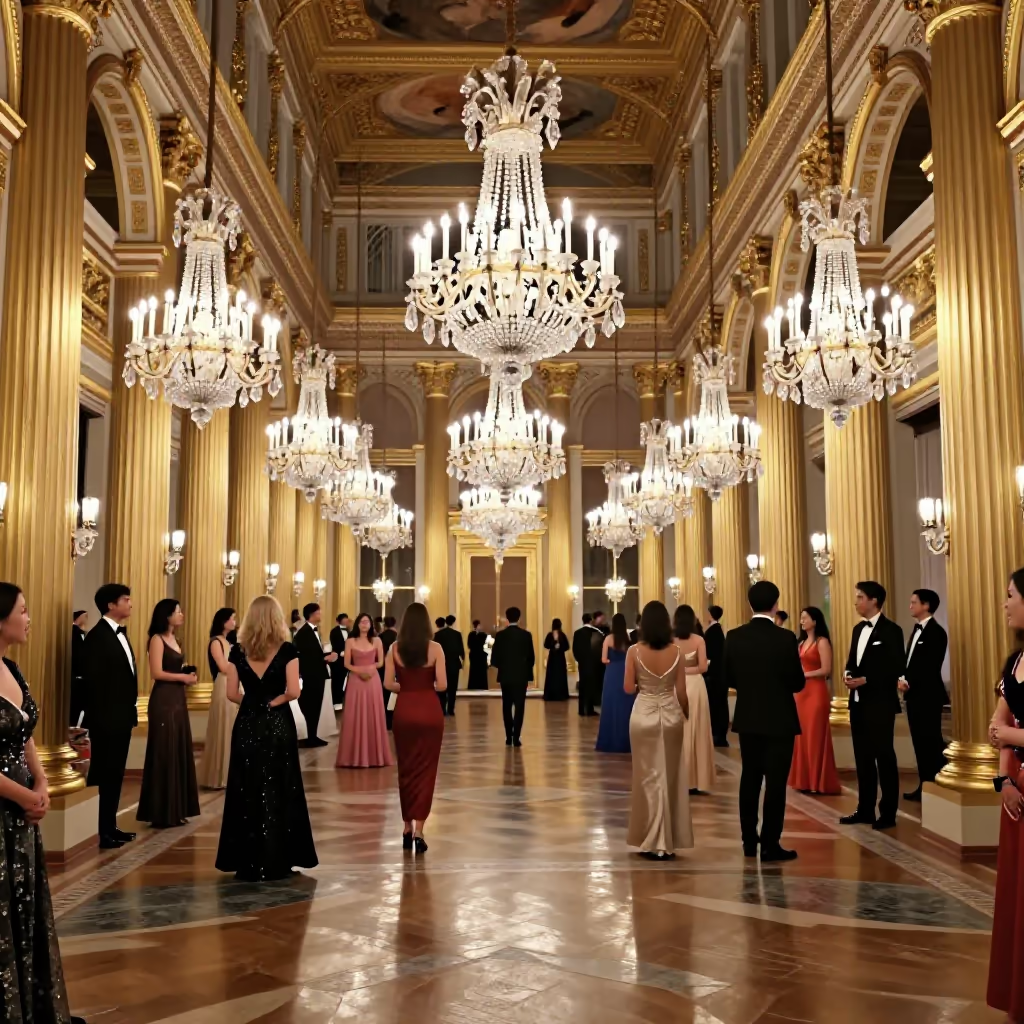
Der Königspalast war von unglaublicher Pracht.
The royal palace was of incredible splendor.
Sentence structure
'Pracht' (splendor) can only be used predicatively in this function, meaning after verbs like 'sein' (to be) or 'werden' (to become). It cannot stand before a noun.
EXAMPLE
Der Sonnenuntergang über dem Meer war einfach Pracht.
The sunset over the sea was simply splendor.
Register and style
This use is rare and sounds elevated, poetic, or somewhat old-fashioned. It is hardly used in normal everyday language.
EXAMPLE
Die Rosen in ihrem Garten sind eine wahre Pracht.
The roses in her garden are a true splendor.
Compare with
near_synonym
Pracht vs wunderbar
wonderful
'wunderbar' and 'die Pracht' can both express enthusiasm about something beautiful or magnificent. 'wunderbar' is a normal adjective and can be used very freely. 'Die Pracht', by contrast, is a rarer, elevated, or poetic expression. For example, people say 'Das ist eine Pracht' (That is splendid) when something seems especially beautiful or impressive. In everyday language, 'wunderbar' sounds more natural; 'die Pracht' is more suitable for admiring exclamations or a somewhat formal style.
Pracht
Der Garten im Frühling ist eine Pracht.
The garden in spring is a splendor.
wunderbar
Nach der langen Woche war der Spaziergang am See wunderbar.
After the long week, the walk by the lake was wonderful.