

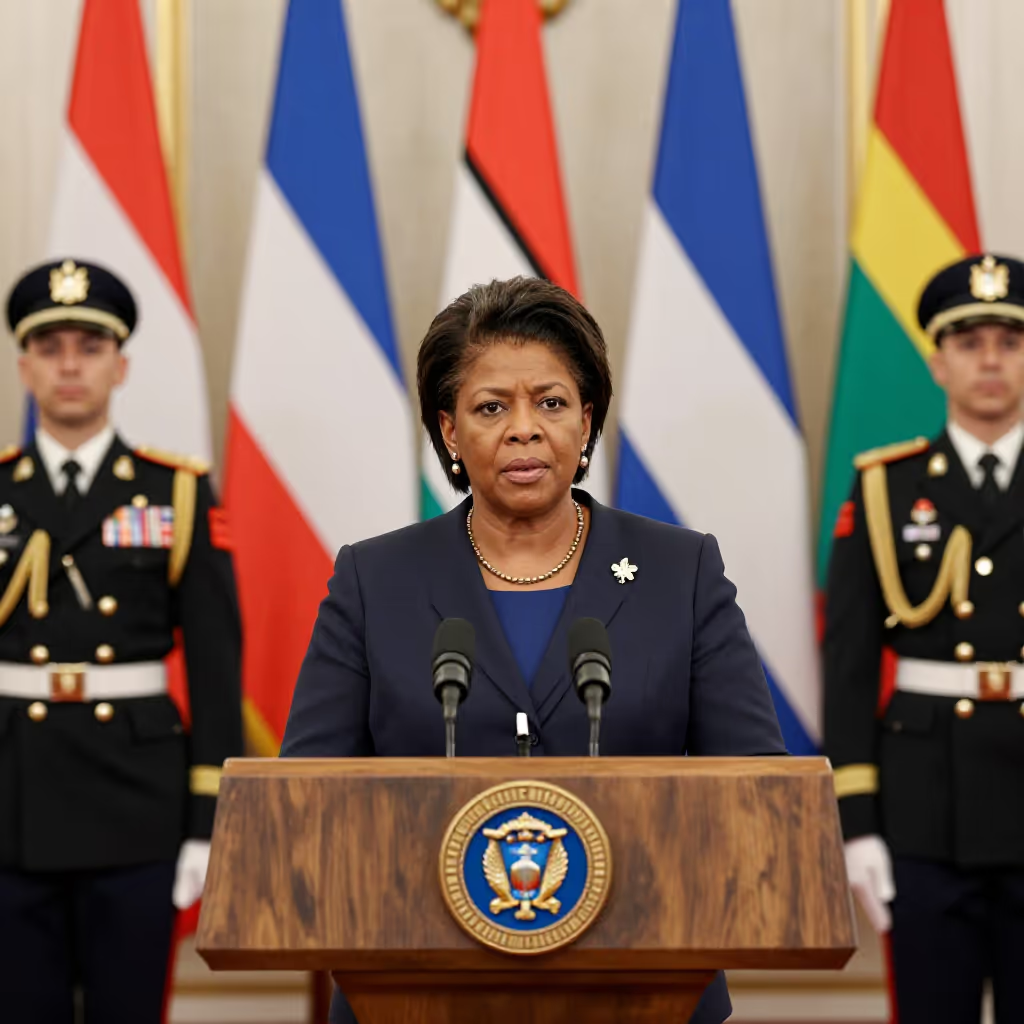
die Präsidentin
president
The female head of state of a republic.
EXAMPLE
Die Präsidentin hielt eine wichtige Rede an die Nation.
The president gave an important speech to the nation.
president
Loading your saved state.
president
The female head of state of a republic.
Die Präsidentin hielt eine wichtige Rede an die Nation.
The president gave an important speech to the nation.

president
The female chairperson or head of an organization, association, or authority.
Zur neuen Präsidentin des Sportvereins wurde Frau Meier gewählt.
Ms. Meier was elected the new president of the sports club.
To indicate whose president someone is, German usually uses the genitive. This construction is especially common in written language.
Sie ist die Präsidentin der Europäischen Kommission.
She is the president of the European Commission.
Common verbs used in connection with this office are "wählen" (to elect), "ernennen" (to appoint), "werden" (to become), and "sein" (to be).
Sie wurde mit großer Mehrheit zur Präsidentin gewählt.
She was elected president by a large majority.
You can tell from the context whether the head of state or the head of an organization is meant. Names of countries point to a head of state, while names of clubs, companies, or authorities refer to the head of an organization.
Die Präsidentin der Slowakei besucht nächste Woche Berlin.
The president of Slovakia is visiting Berlin next week.
chairwoman
A Vorsitzende and a Präsidentin can both lead an organization or association. Vorsitzende emphasizes the function of chairing, whereas Präsidentin is often the established official title for the female leader. The main deciding factor is therefore the organization's official title.

Die Präsidentin des Vereins eröffnete die Jahresversammlung mit einer kurzen Rede.
The association's president opened the annual meeting with a short speech.
Die Vorsitzende leitete die Sitzung des Vereins und ließ über den Antrag abstimmen.
The chairwoman led the association's meeting and called for a vote on the motion.