

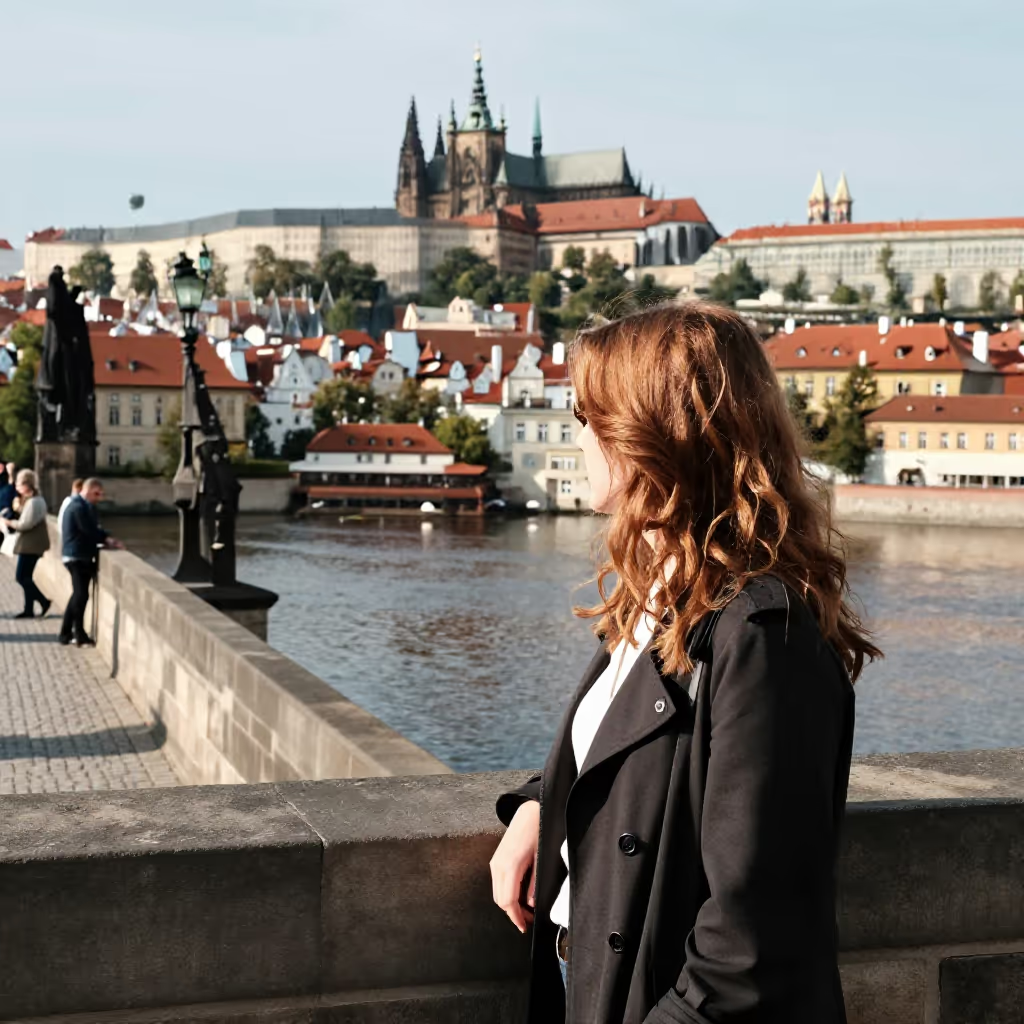
Refers to the city of Prague; originating from Prague or belonging to Prague. This adjective is not declined.
example
Der Prager Fenstersturz war ein entscheidendes Ereignis in der europäischen Geschichte.
The Defenestration of Prague was a decisive event in European history.
Usage tips
No declension
Adjectives derived from a city name and ending in '-er' are never declined. The form 'Prager' always stays the same, no matter which case, gender, or number follows.
EXAMPLE
Der Prager Hauptbahnhof ist sehr groß.
Prague's main train station is very large.
Word structure
The adjective is formed by adding the ending '-er' to the name of the city 'Prag' (Prague). This pattern applies to many cities, for example 'Berlin' → 'Berliner', 'Hamburg' → 'Hamburger', or 'Wien' → 'Wiener'.
EXAMPLE
Die Wiener Oper ist weltberühmt.
The Vienna State Opera is world-famous.
Always capitalized
Adjectives ending in '-er' that are derived from geographical names are always capitalized. They are treated like part of a proper noun.
EXAMPLE
Der Prager Frühling war ein wichtiges historisches Ereignis.
The Prague Spring was an important historical event.
Compare with
near_synonym · confusable
Prager vs tschechisch
Czech
'tschechisch' and 'Prager' can both fit with the Czech Republic, but they refer to areas of different sizes. 'tschechisch' means the country of the Czech Republic, its people, or the language. 'Prager' means only the city of Prague or something that comes from Prague. The words can be confused because Prague is in the Czech Republic. When you mean the whole country or the language, 'tschechisch' is correct. When you specifically mean Prague, 'Prager' fits better. Also, 'Prager' is not declined when used as an adjective.
Prager
Am Wochenende besuchen wir die Prager Altstadt.
At the weekend, we are visiting Prague's Old Town.
tschechisch
Im Kurs lernen wir einfache tschechische Sätze für die Reise.
In the course, we are learning simple Czech sentences for the trip.