

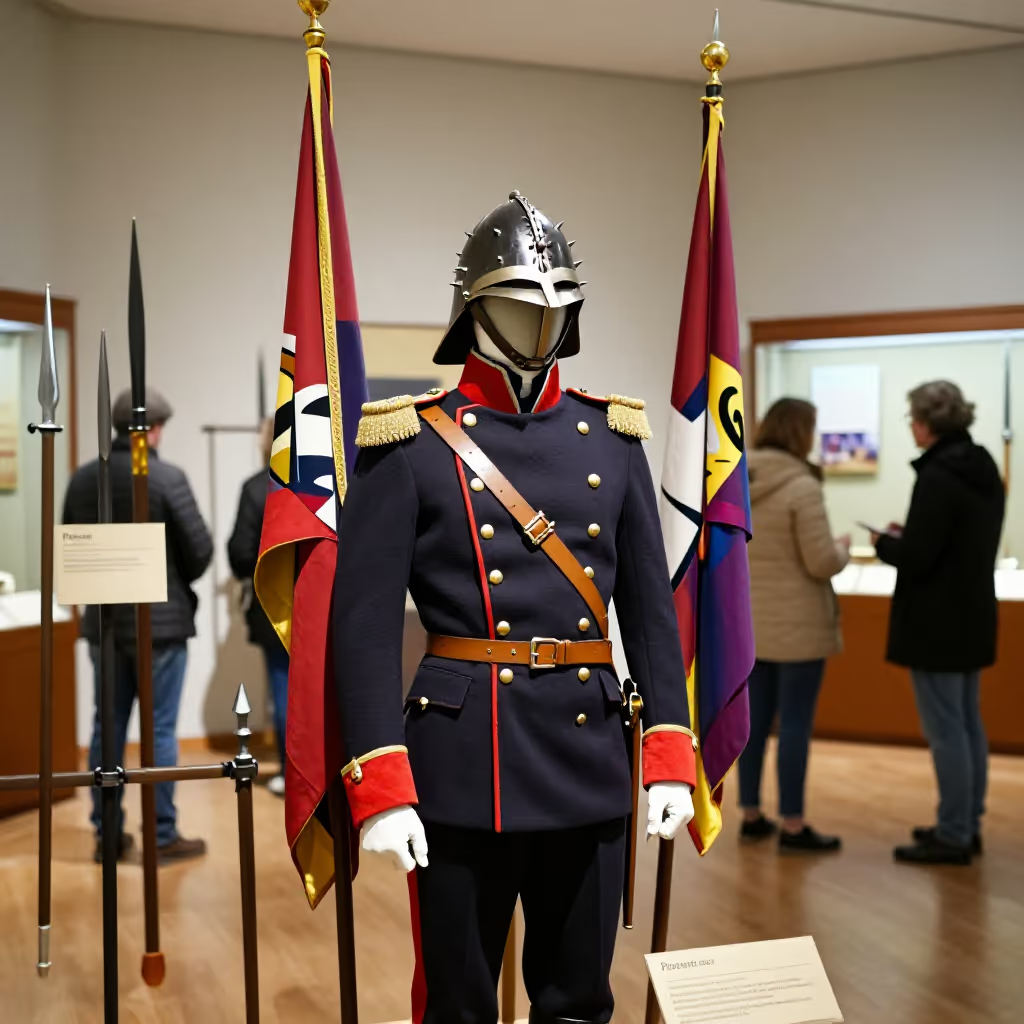
preußisch
Prussian
Relating to the historical state of Prussia, its inhabitants, its culture, or its history.
EXAMPLE
Das Schloss Sanssouci ist ein Meisterwerk preußischer Baukunst.
Sanssouci Palace is a masterpiece of Prussian architecture.
Prussian
Loading your saved state.
Prussian
Relating to the historical state of Prussia, its inhabitants, its culture, or its history.
Das Schloss Sanssouci ist ein Meisterwerk preußischer Baukunst.
Sanssouci Palace is a masterpiece of Prussian architecture.

Prussian
In a figurative sense, describing qualities stereotypically associated with Prussia, such as discipline, love of order, sense of duty, strictness, or thrift.
Mit preußischem Pflichtbewusstsein erledigte er auch die unangenehmsten Aufgaben.
With a Prussian sense of duty, he completed even the most unpleasant tasks.
The adjective 'preußisch' (Prussian) is derived from the name of the historical state 'Preußen' (Prussia). The ending '-isch' is a typical way to form adjectives from geographical names.
Die preußische Geschichte ist ein wichtiger Teil der deutschen Vergangenheit.
Prussian history is an important part of Germany's past.
If 'preußisch' (Prussian) refers to historical things such as kings, soldiers, or architecture, the literal meaning is intended. If it describes character traits such as discipline or order, it is used in the figurative, stereotypical sense.
Das Museum zeigt eine Sammlung preußischer Orden.
The museum displays a collection of Prussian medals.
In the figurative meaning, 'preußisch' (Prussian) is often combined with nouns that are considered virtues or character traits. Typical combinations are 'preußische Disziplin' (Prussian discipline), 'preußische Sparsamkeit' (Prussian thrift), or 'preußisches Pflichtbewusstsein' (Prussian sense of duty).
Manche bewundern die sprichwörtliche preußische Disziplin.
Some people admire the proverbial Prussian discipline.