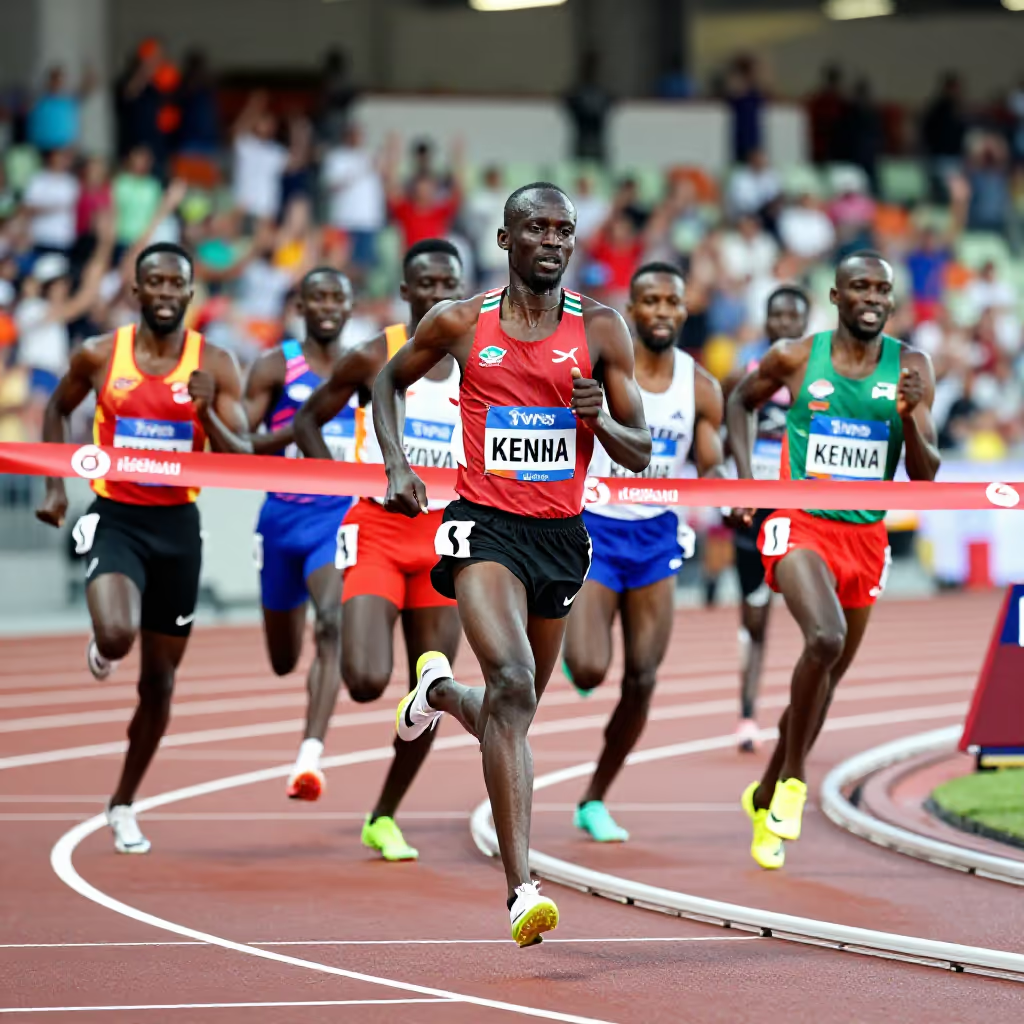
The best student in a class or year at a school or university. The term comes from Latin and means 'the first'.
example
Als Primus seines Jahrgangs durfte er die Abschlussrede halten.
As the top student in his year, he was allowed to give the graduation speech.

Usage tips
Word origin
The word 'Primus' comes directly from Latin and means 'der Erste' (the first). This origin explains its meaning as the best or leading person in a group.
EXAMPLE
Er war der Primus unter den Bewerbern.
He was the top candidate among the applicants.
Register and style
The term 'Primus' is used mainly in written language or in formal contexts. In a school context, it can sound somewhat old-fashioned, while in business journalism it is common for describing market leaders.
EXAMPLE
Die Zeitung bezeichnete das Softwareunternehmen als Primus der Branche.
The newspaper described the software company as the leader in the industry.
Typical usage
In the figurative meaning, 'Primus' is often used with the phrase 'als Primus gelten' (to be considered the leader) or in connection with a field in the genitive, as in 'Primus der Branche' (leader of the industry).
EXAMPLE
Dieses Modell gilt als Primus in seiner Klasse.
This model is considered the leader in its class.
Compare with
near_synonym · confusable
Primus vs Sieger
winner
'der Sieger' and 'der Primus' can both describe a person or group at the very top. 'Sieger' is used when someone wins a specific competition. 'Primus' means more the best person or the leader in a field, especially at school, or figuratively in an industry. The words can be confused because both have to do with first place. But 'Sieger' fits winning after a competition, while 'Primus' is more about consistently very strong performance or a leading position.
Primus
In Mathematik gilt Paul seit Jahren als Primus der Klasse.
In mathematics, Paul has been considered the top student in the class for years.
Sieger
Im Finale schoss der Sieger kurz vor Schluss das entscheidende Tor.
In the final, the winner scored the decisive goal shortly before the end.