

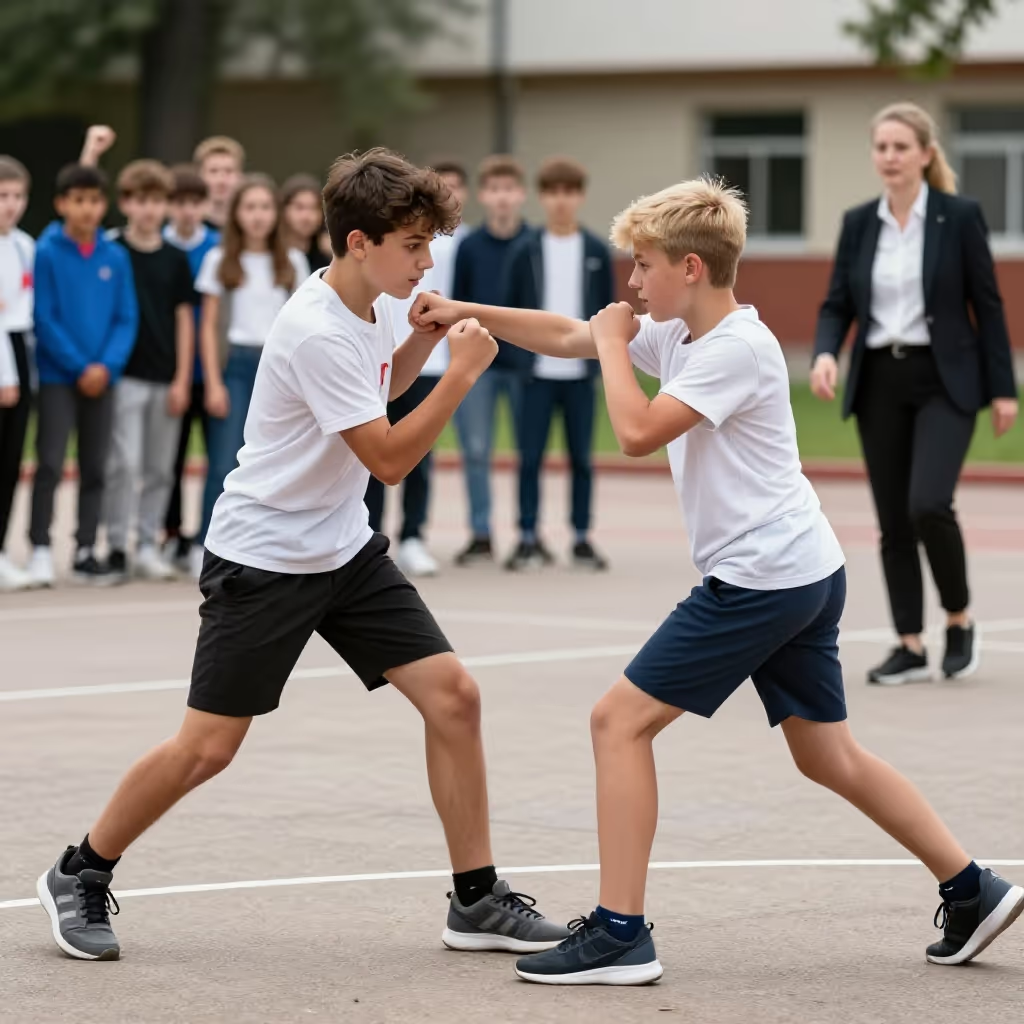
sich prügeln
to fight
To physically attack and hit each other; to be involved in a brawl.
EXAMPLE
Zwei Jugendliche haben sich auf dem Schulhof geprügelt.
Two teenagers got into a fight in the schoolyard.
to fight / beat
Loading your saved state.
to fight
To physically attack and hit each other; to be involved in a brawl.
Zwei Jugendliche haben sich auf dem Schulhof geprügelt.
Two teenagers got into a fight in the schoolyard.
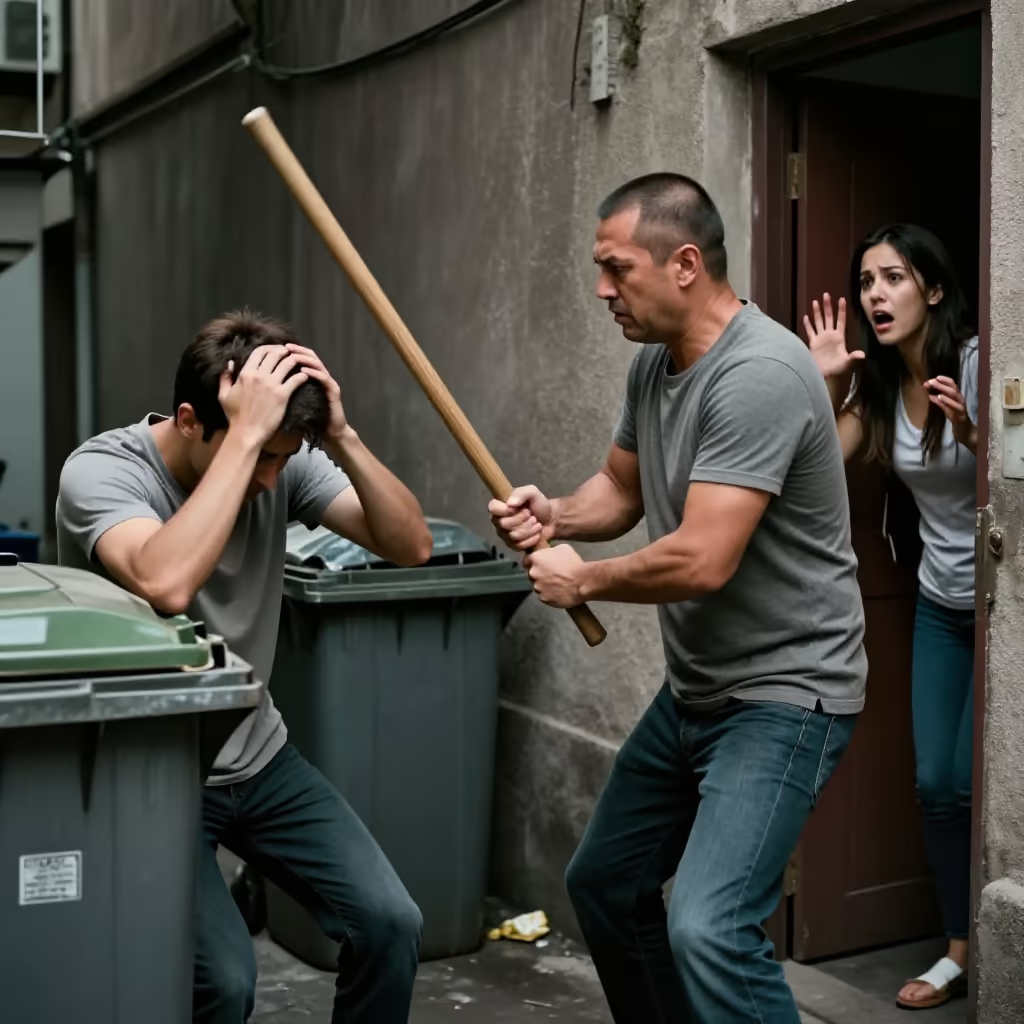
to beat
To hit someone violently and repeatedly, often with an object; to beat someone up.
Der Täter hat sein Opfer brutal geprügelt.
The perpetrator brutally beat his victim.
The use of the verb changes the meaning: 'sich prügeln' is reflexive and means that two or more people are hitting each other. 'Jemanden prügeln' is transitive and means that one person is hitting another.
Die beiden Männer prügelten sich vor der Bar.
The two men fought in front of the bar.
The verb 'prügeln' comes from the noun 'der Prügel' (stick/club), which means a thick stick or cudgel. The word therefore expresses a very violent and brutal form of hitting.
Er drohte ihm mit einem Prügel.
He threatened him with a club.
If you want to express whom someone is fighting with, the preposition 'mit' followed by the dative is used. The structure is: Person A prügelt sich mit Person B.
Er hat sich in der Schule oft mit älteren Schülern geprügelt.
At school, he often fought with older students.
to hit / beat
Both words can describe violent blows against a person. „Schlagen“ is more neutral and can also refer to individual blows or a fight between two people, while „prügeln“ strongly emphasizes a rough, usually repeated beating. Use „schlagen“ for a general description and „prügeln“ for a brutal fight.

Die beiden Männer prügelten sich vor dem Lokal lange und heftig.
The two men beat each other up for a long time in front of the bar.
Die beiden Männer schlugen sich nach einem kurzen Streit.
The two men hit each other after a brief argument.