

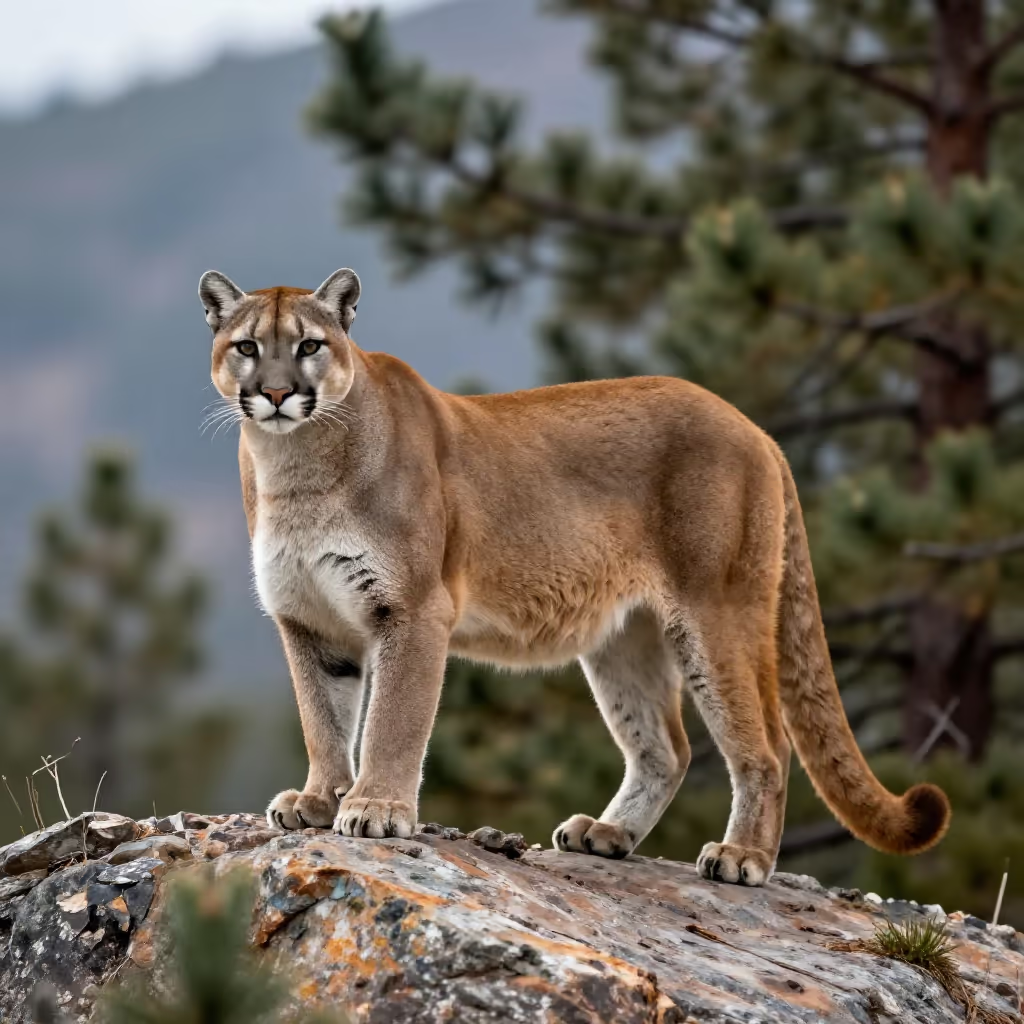
A large cat-like predator native to the Americas, also known as a mountain lion or cougar.
example
In den Rocky Mountains kann man mit viel Glück einen Puma in freier Wildbahn beobachten.
In the Rocky Mountains, with a lot of luck, you can observe a puma in the wild.

Usage tips
Context clue
Whether the animal or the brand is meant becomes clear from context. Words like 'Wildnis' (wilderness), 'Zoo' (zoo), or 'Raubtier' (predator) point to the animal. Words like 'Schuhe' (shoes), 'Kleidung' (clothing), or 'Sport' (sports) refer to the brand.
EXAMPLE
Der Puma ist ein elegantes Raubtier.
The puma is an elegant predator.
Typical collocations
When the animal is meant, you often hear about pumas that 'in freier Wildbahn leben' (live in the wild), 'Beute jagen' (hunt prey), or are considered 'gefährdet' (endangered).
EXAMPLE
Der Dokumentarfilm zeigte, wie ein Puma seine Beute jagt.
The documentary showed how a puma hunts its prey.
Use as a brand
When the brand is being referred to, the name is often used as part of a compound word, e.g. 'Puma-Schuhe' (Puma shoes), or with the preposition 'von' (from/by).
EXAMPLE
Seine neue Jacke ist von Puma.
His new jacket is from Puma.
Cultural context
Puma is a world-famous German sportswear company. It was founded in the same city as its competitor Adidas.
EXAMPLE
Viele berühmte Sportler haben Werbeverträge mit Puma.
Many famous athletes have endorsement deals with Puma.
Compare with
confusable
Puma vs Panther
panther
'der Panther' and 'der Puma' can be confused because both are large big cats. But they do not mean the same species. A panther is usually a black form of a leopard or jaguar. A puma is its own species from the Americas and is also called a mountain lion or cougar. It is normally not black and has a different appearance. For a black animal that looks like a leopard or jaguar, 'Panther' fits. For the American mountain lion, 'Puma' fits.