

pumpen
to pump
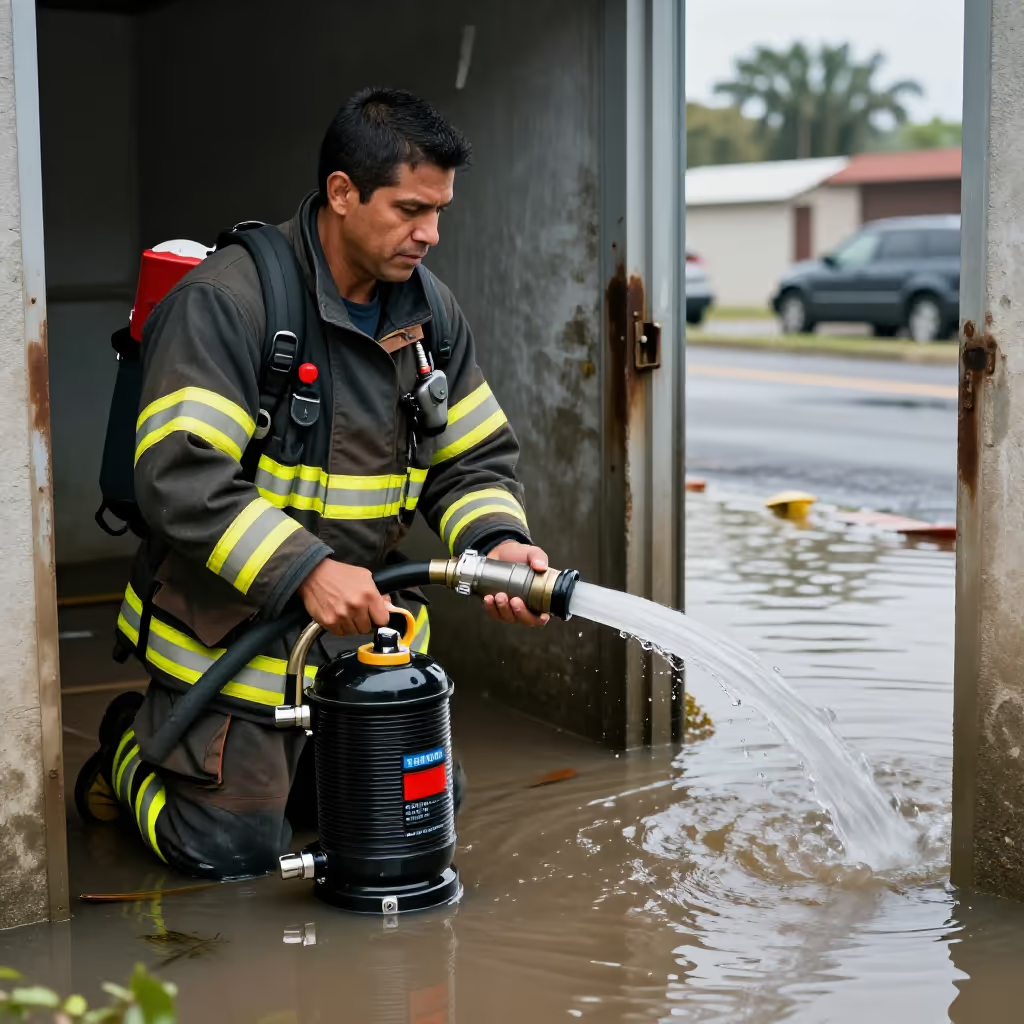
To move a liquid or gas from one place to another using a pump.
EXAMPLE
Die Feuerwehr musste das Wasser aus dem vollgelaufenen Keller pumpen.
The fire department had to pump the water out of the flooded basement.
to pump
Loading your saved state.
to pump
To move a liquid or gas from one place to another using a pump.
Die Feuerwehr musste das Wasser aus dem vollgelaufenen Keller pumpen.
The fire department had to pump the water out of the flooded basement.
to pump iron
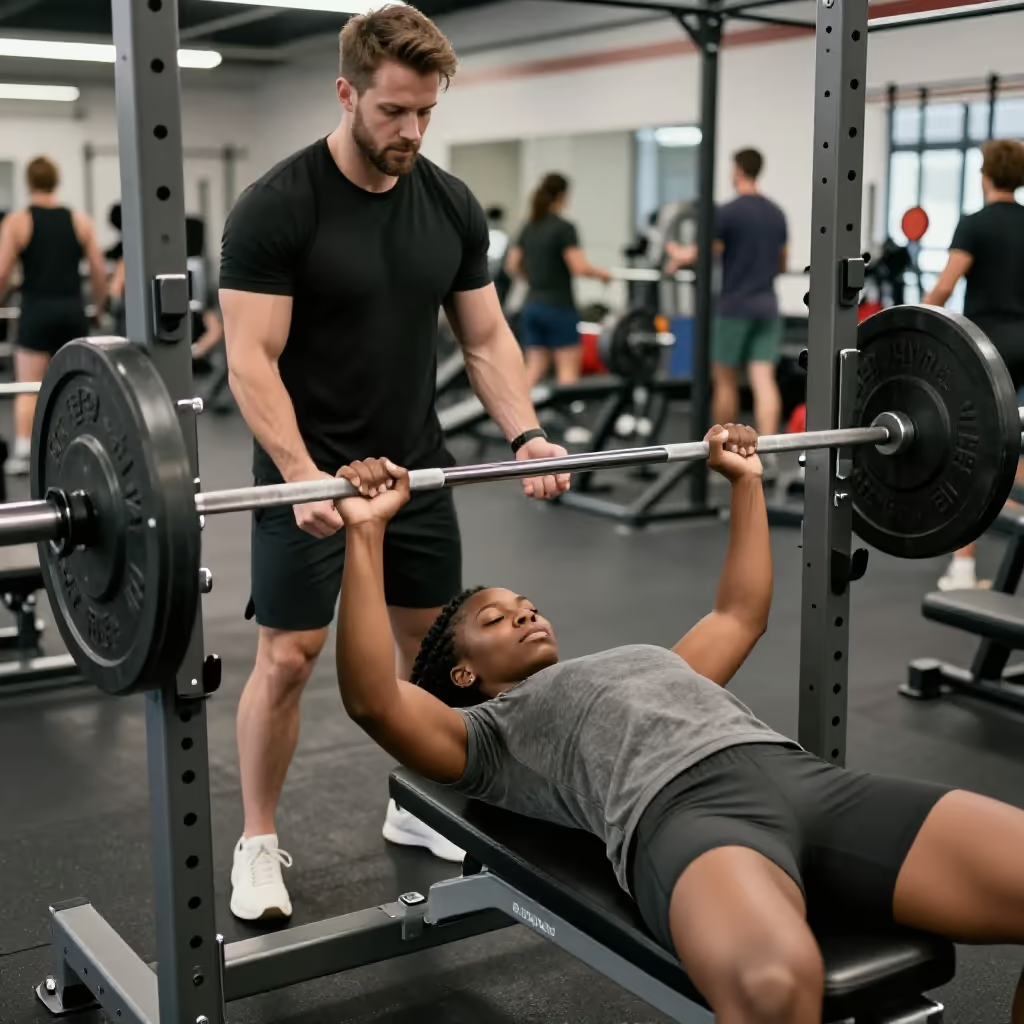
Colloquial for strength training, especially with weights, in order to build muscle.
Er geht dreimal pro Woche ins Fitnessstudio, um zu pumpen.
He goes to the gym three times a week to pump iron.
to pump up
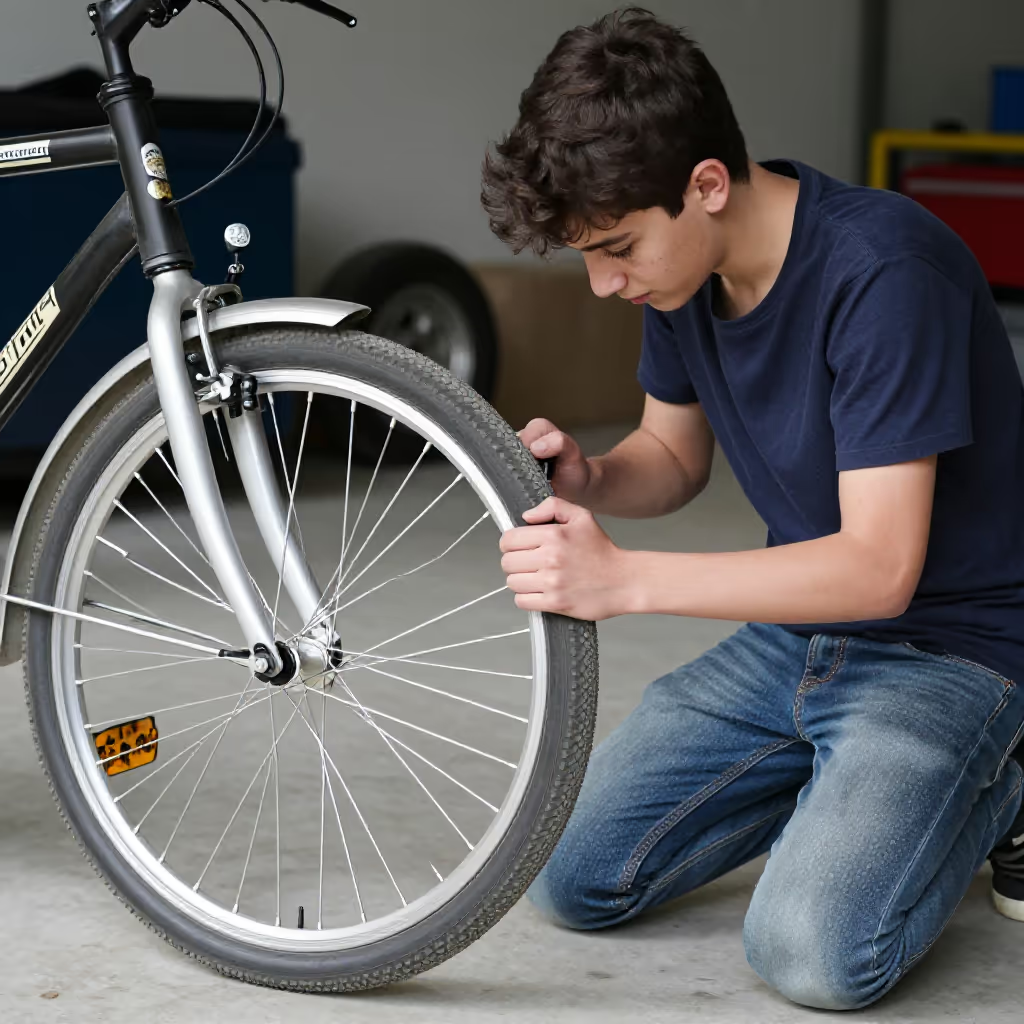
To force air into something in order to inflate it, for example a tire or a ball.
Bevor wir losfahren können, muss ich noch die Fahrradreifen pumpen.
Before we can set off, I still have to pump up the bicycle tires.
to pump
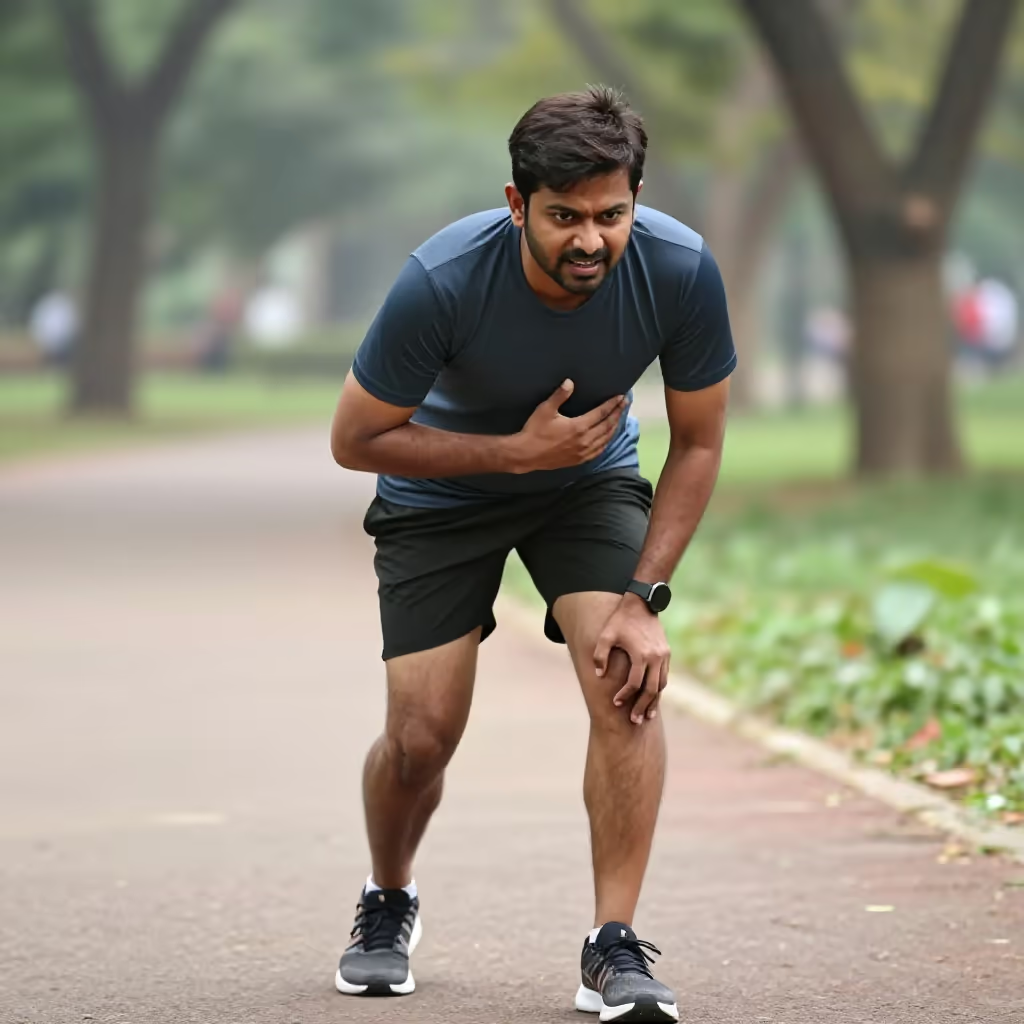
Describes the strong and fast beating of the heart, often because of exertion or excitement.
Nach dem Sprint die Treppe hoch musste ich erst mal tief durchatmen, mein Herz pumpte wie verrückt.
After sprinting up the stairs, I first had to take a deep breath; my heart was pumping like crazy.

to borrow
Colloquial for borrowing money.
Kannst du mir bis morgen zwanzig Euro pumpen?
Can you lend me twenty euros until tomorrow?
You can recognize the meaning of 'pumpen' (to pump) from the object or context. Is it about liquids (water, oil), the heart, air (tire, ball), sports (muscles), or money (colloquial)?
Mein Herz pumpte vor Aufregung.
My heart was pumping with excitement.
When a liquid or gas is moved, the verb often follows the pattern 'etwas + aus/von + Ort (dative) + in/nach + Ort (accusative) + pumpen' (something + out of/from + place + into/to + place + pump).
Eine große Anlage pumpt das Öl vom Bohrloch an die Küste.
A large facility pumps the oil from the borehole to the coast.
In the context of fitness and muscle building, 'pumpen' (to pump iron) is colloquial. It is often used without an object or in the phrase 'pumpen gehen' (to go pump iron).
Nach der Arbeit gehe ich heute noch mit einem Freund pumpen.
After work, I'm going to pump iron with a friend today.
When it is about filling something with air, the typical objects are things that can be inflated, for example 'Fahrradreifen' (bicycle tires), 'einen Ball' (a ball), or 'eine Luftmatratze' (an air mattress).
Kannst du mir helfen, die Luftmatratze für unsere Gäste zu pumpen?
Can you help me pump up the air mattress for our guests?
In this meaning, the subject is almost always 'das Herz' (the heart). The action is often described more precisely with adverbs such as 'schnell' (quickly), 'heftig' (violently), or 'wild' (wildly).
Als ich den lauten Knall hörte, fing mein Herz an, wild zu pumpen.
When I heard the loud bang, my heart started pumping wildly.
The use of 'pumpen' for 'Geld leihen' (to borrow money) is very colloquial and should only be used among friends or in informal situations.
Ich bin pleite, ich muss mir wohl etwas Geld von meinem Bruder pumpen.
I'm broke; I'll probably have to borrow some money from my brother.
to hit / beat
Both words can describe a heart working quickly. „Schlagen“ is the neutral term for a heartbeat, while „pumpen“ is colloquial and emphasizes the heart’s powerful work, often caused by exertion. Use „schlagen“ for a factual statement and „pumpen“ when the physical strain should be especially clear.
Nach dem Lauf pumpte ihr Herz so stark, dass sie eine Pause brauchte.
After the run, her heart was pumping so hard that she needed a break.
Nach dem Lauf schlug ihr Herz noch einige Minuten schnell.
Her heart continued to beat fast for several minutes after the run.