


pusten
to blow
To push air deliberately out of the mouth in order to cool something down, blow something out, or move something away.
EXAMPLE
Puste bitte die Kerzen auf dem Kuchen aus!
Please blow out the candles on the cake!
to blow / pant
Loading your saved state.
to blow
To push air deliberately out of the mouth in order to cool something down, blow something out, or move something away.
Puste bitte die Kerzen auf dem Kuchen aus!
Please blow out the candles on the cake!

to pant
Colloquial for breathing heavily because you have exerted yourself a lot; to be out of breath.
Nachdem ich die fünf Stockwerke hochgelaufen war, musste ich erst mal kräftig pusten.
After I had run up the five flights of stairs, I first had to pant heavily.
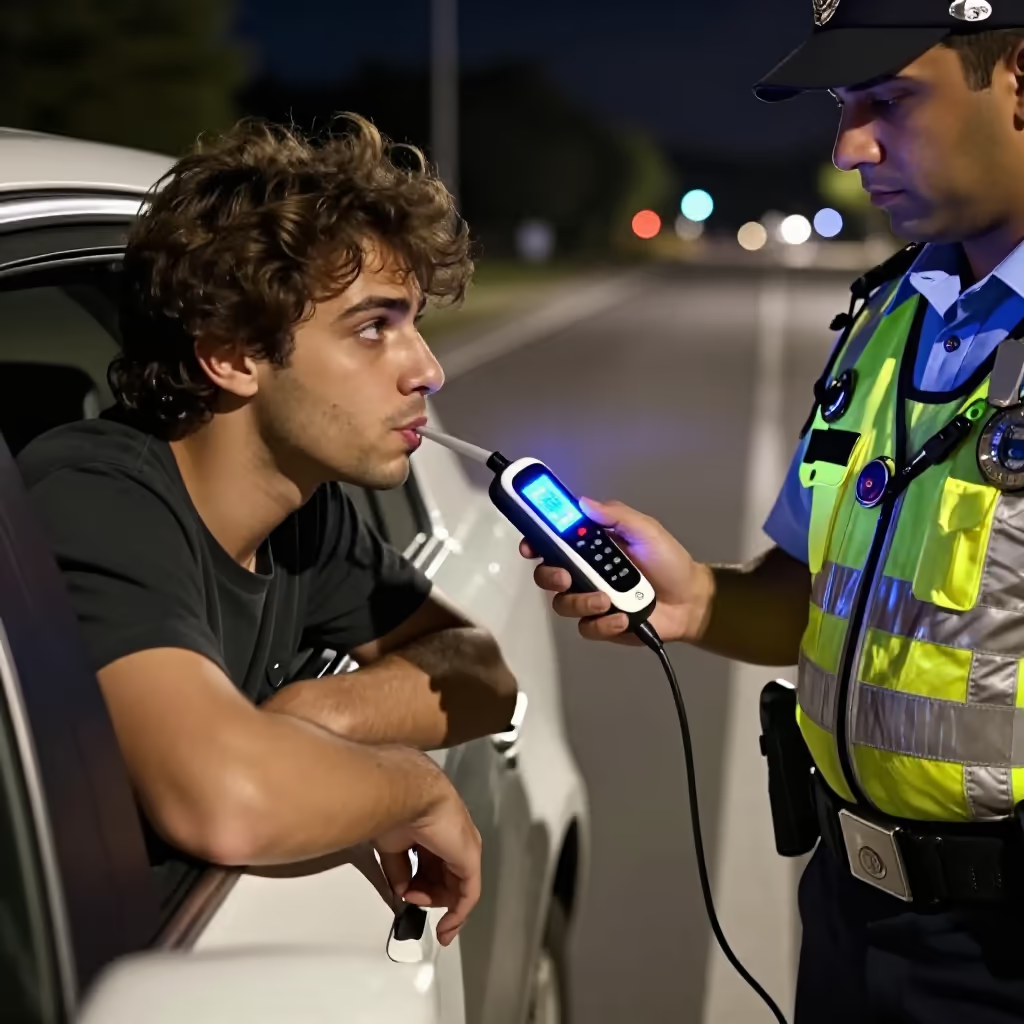
to blow
Colloquial for blowing into a police breathalyzer device in order to determine the blood alcohol level from one's breath.
Der Autofahrer wurde angehalten und musste pusten.
The driver was pulled over and had to blow.
The verb 'pusten' (to blow) is often combined with prepositions that indicate a direction. Common constructions are 'auf' (+ accusative), 'in' (+ accusative), or 'von' (+ dative).
Puste bitte nicht auf die heiße Suppe, das macht man nicht.
Please don't blow on the hot soup; that's not something people do.
Two very typical situations for 'pusten' (to blow) are blowing out candles on a birthday cake and comforting a child by blowing on a small wound or scratch.
Das Geburtstagskind pustete alle Kerzen auf einmal aus.
The birthday child blew out all the candles at once.
In the colloquial meaning 'schwer atmen' (to breathe heavily), you can usually recognize the context from a preceding description of physical exertion. Typical situations are climbing stairs, running, or doing sports.
Nach dem Sprint zum Bus musste ich erst mal ordentlich pusten.
After the sprint to the bus, I first had to really pant.
The meaning 'einen Alkoholtest machen' (to take a breathalyzer test) is used exclusively in the context of a police traffic stop. Signal words are 'Polizei' (police), 'Kontrolle' (check/traffic stop), or 'angehalten werden' (to be pulled over).
Der Fahrer musste anhalten und für den Alkoholtest pusten.
The driver had to stop and blow for the breathalyzer test.
to blow
Both words can mean forcing air out of your mouth, for example to blow out a candle. Pusten usually sounds more colloquial and is especially well suited to everyday situations. Blasen is more neutral and somewhat more formal; choose it when the action is being described objectively.

Puste kräftig, damit die Kerze ausgeht.
Blow hard so that the candle goes out.
Bitte blasen Sie kräftig, damit die Kerze ausgeht.
Please blow hard so that the candle goes out.