

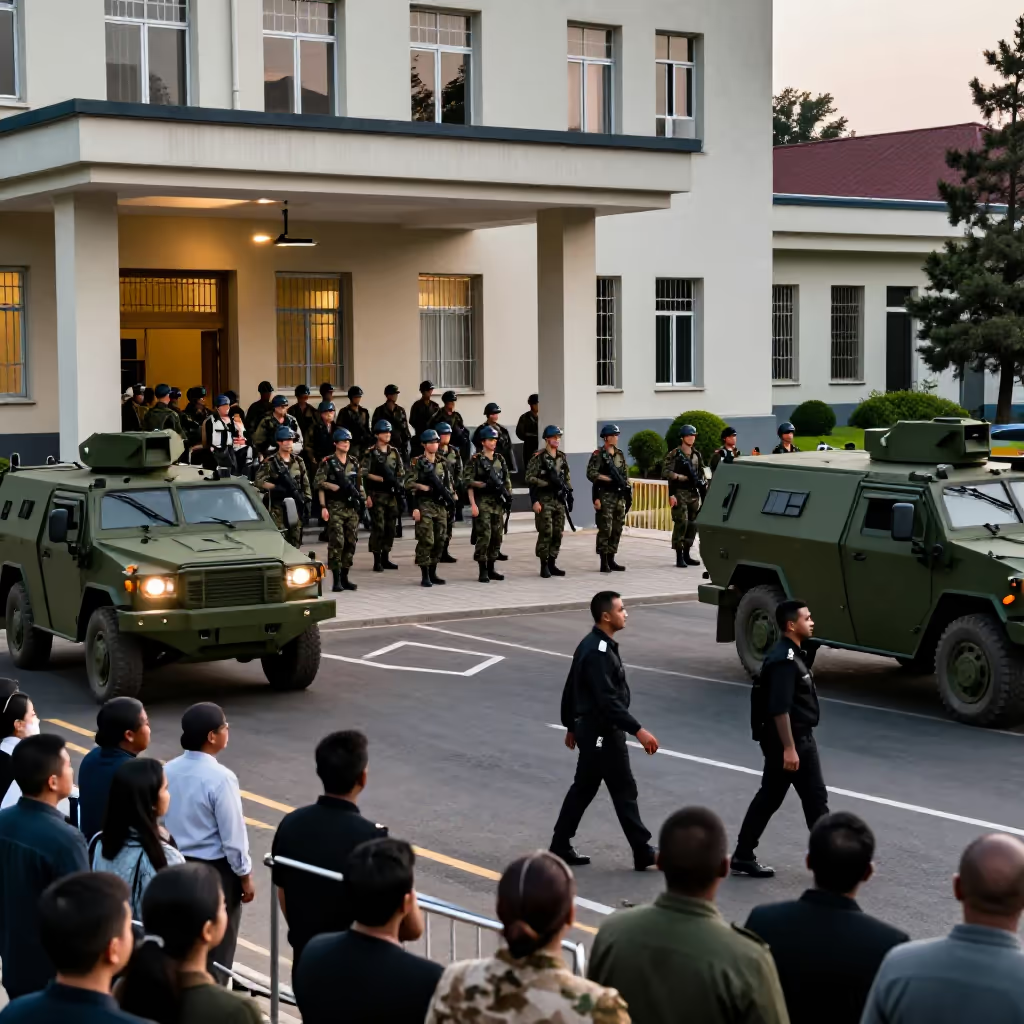
A usually violent and illegal attempt by a smaller group, often the military, to overthrow the government of a state and take power.
example
Die Regierung konnte den Putsch des Militärs niederschlagen.
The government was able to suppress the military coup.
Usage tips
Political context
The word 'Putsch' (coup) is used almost exclusively in a political or military context. It always describes the attempt to overthrow a government by force.
EXAMPLE
In den Nachrichten wurde über einen Putsch in einem afrikanischen Land berichtet.
The news reported on a coup in an African country.
Typical collocations
Common verbs used in connection with 'Putsch' (coup) are: to 'versuchen' (attempt), 'planen' (plan), or 'anführen' (lead) a coup. If the coup fails, it is 'niedergeschlagen' (suppressed/put down).
EXAMPLE
Die Generäle planten einen Putsch gegen den Präsidenten.
The generals planned a coup against the president.
Sentence structure with genitive
To say who carries out the coup, the genitive is often used. This structure is very common in news texts.
EXAMPLE
Der Putsch des Militärs scheiterte nach wenigen Stunden.
The military coup failed after a few hours.
Compare with
confusable
Putsch vs Revolution
revolution
'die Revolution' and 'der Putsch' can both have to do with overthrowing a government. However, a 'Putsch' is usually a quick, illegal attempt by a small group, often the military, to take power. A 'Revolution' is broader and deeper: it often affects large parts of society and fundamentally changes the political and social order. The words can be confused because both can be directed against an existing government. Memory tip: a coup comes from a small power group; a revolution changes the whole system.
Putsch
Beim Putsch versuchte eine Gruppe von Offizieren, die Regierung zu stürzen.
During the coup, a group of officers tried to overthrow the government.
Revolution
Nach der Revolution forderten viele Bürger mehr Rechte und freie Wahlen.
After the revolution, many citizens demanded more rights and free elections.