

das Puzzle
puzzle
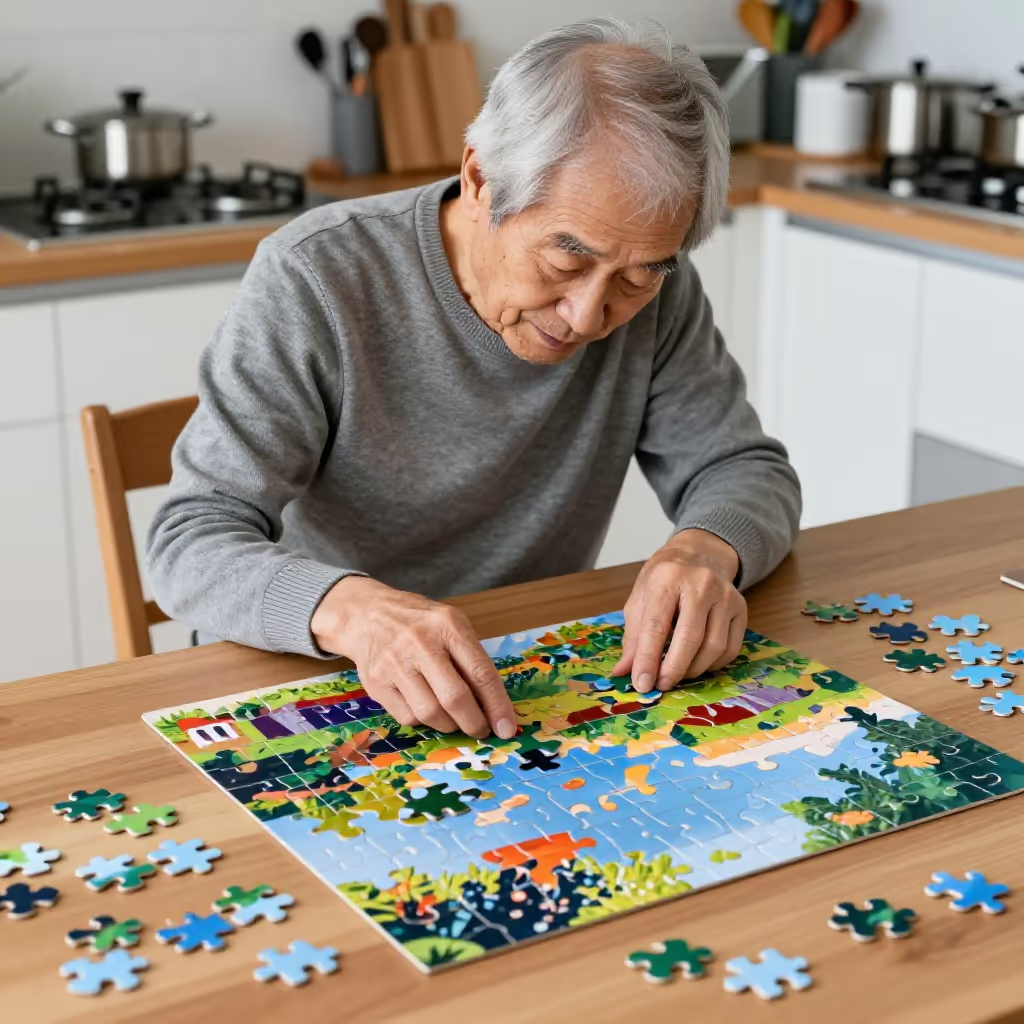
A patience game in which a picture cut into many small pieces has to be put back together.
EXAMPLE
An regnerischen Tagen legen wir gerne ein Puzzle mit 1000 Teilen.
On rainy days, we like to do a 1,000-piece puzzle.
puzzle
Loading your saved state.
puzzle
A patience game in which a picture cut into many small pieces has to be put back together.
An regnerischen Tagen legen wir gerne ein Puzzle mit 1000 Teilen.
On rainy days, we like to do a 1,000-piece puzzle.
puzzle
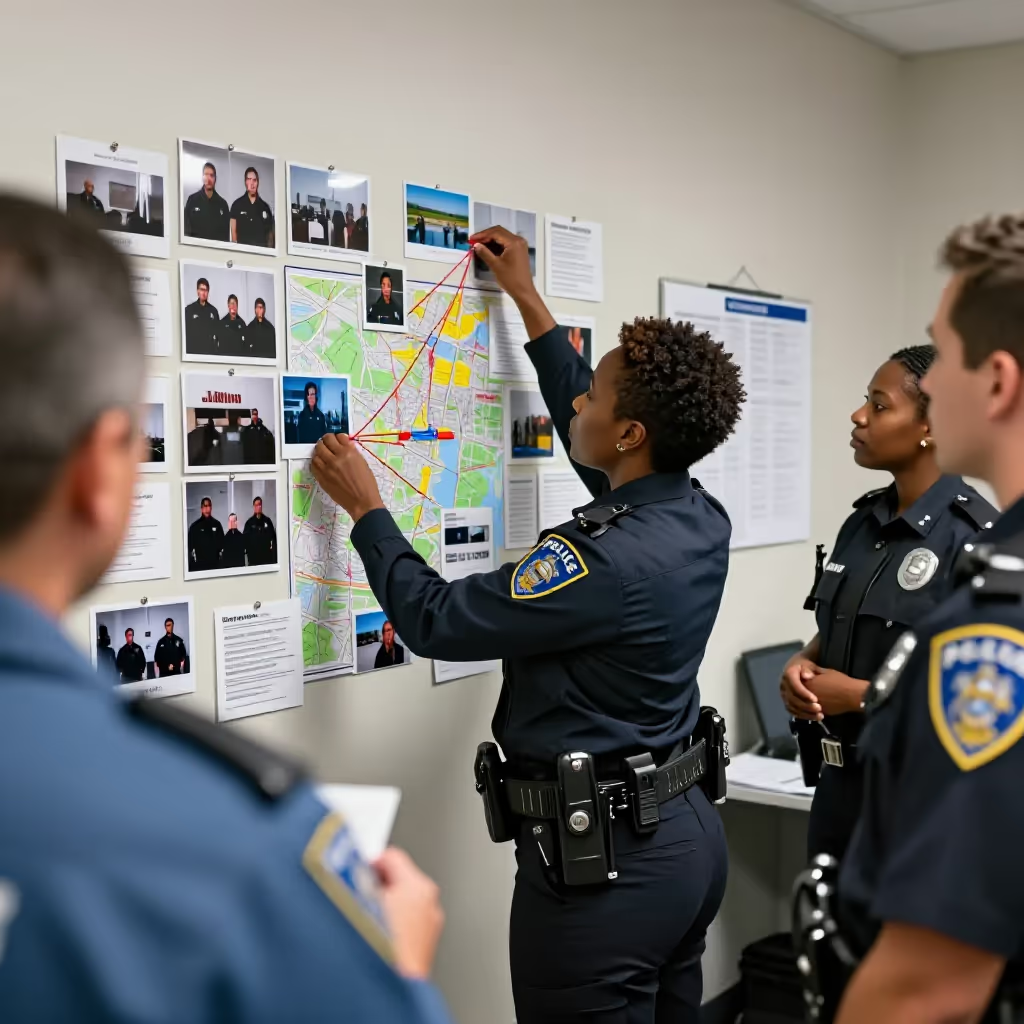
In a figurative sense, a difficult, mysterious task or a complex problem whose solution has to be assembled from many individual pieces.
Die Ermittler versuchten, die widersprüchlichen Hinweise zu einem schlüssigen Puzzle zusammenzufügen.
The investigators tried to fit the contradictory clues together into a coherent puzzle.
When putting together a picture from small pieces, German uses the fixed expression 'ein Puzzle legen' (to do a puzzle). The verb 'legen' (to lay/place) is typical here.
Am Wochenende haben wir den ganzen Nachmittag ein Puzzle gelegt.
At the weekend, we spent the whole afternoon doing a puzzle.
The individual elements of a puzzle are called 'die Teile' (pieces). People often refer to the number, for example 'ein Puzzle mit 500 Teilen' (a 500-piece puzzle) or 'das letzte Teil suchen' (to look for the last piece).
Mir fehlt nur noch ein Teil, dann ist das Puzzle fertig.
I'm only missing one piece, then the puzzle is finished.
In the figurative sense, 'Puzzle' describes a complex problem or mystery. Here, it is about fitting information or clues together like puzzle pieces to form a complete picture.
Für die Polizei war der Fall ein schwieriges Puzzle.
For the police, the case was a difficult puzzle.
Especially in the figurative meaning, the verbs 'zusammensetzen' (to put together) or 'zusammenfügen' (to fit together) are often used. You put the 'Teile' (pieces) or 'Hinweise' (clues) together into a whole.
Der Detektiv fügte die verschiedenen Spuren zu einem Puzzle zusammen.
The detective fitted the various clues together into a puzzle.
riddle / mystery
Rätsel and Puzzle can both refer to a difficult task. With a Rätsel, an unknown answer has to be found by thinking. A Puzzle, by contrast, emphasizes that the solution is made up of many individual pieces of information. The key question is therefore whether the answer being sought or its individual parts are the focus.
Aus vielen Hinweisen setzt die Ermittlerin das schwierige Puzzle zusammen.
The investigator assembles the difficult puzzle from many clues.
Die unbekannte Bedeutung der Nachricht ist ein schwieriges Rätsel.
The unknown meaning of the message is a difficult riddle.