

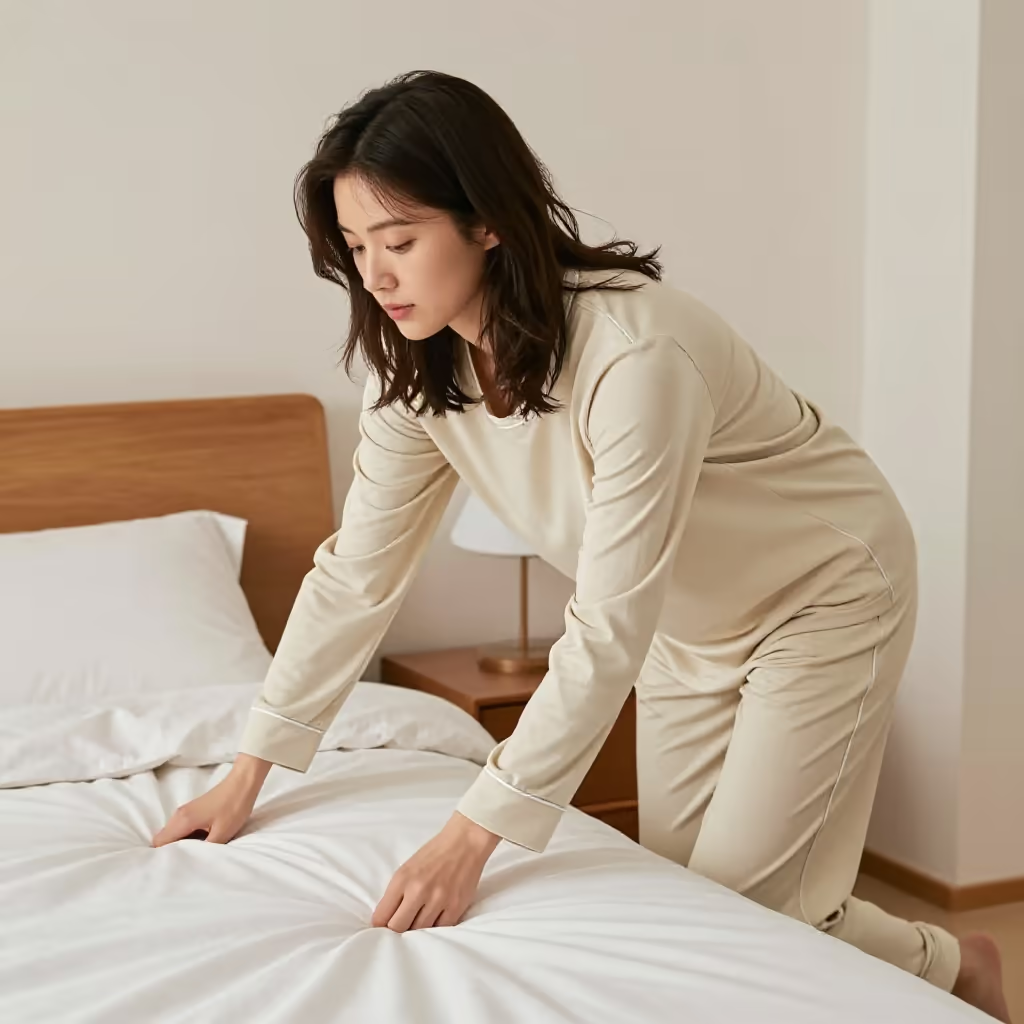
der Pyjama
pajamas
A comfortable, usually two-piece item of clothing consisting of pants and a top, worn for sleeping.
EXAMPLE
Am Sonntag bleibe ich gerne den ganzen Vormittag im Pyjama.
On Sundays, I like to stay in my pajamas all morning.
pajamas
Loading your saved state.
pajamas
A comfortable, usually two-piece item of clothing consisting of pants and a top, worn for sleeping.
Am Sonntag bleibe ich gerne den ganzen Vormittag im Pyjama.
On Sundays, I like to stay in my pajamas all morning.
Although a Pyjama (pajamas) usually consists of two pieces, the word is used in German as a countable noun in the singular. You speak of 'einem Pyjama' (one pair/set of pajamas) when you mean a set consisting of pants and a top.
Ich muss mir einen neuen Pyjama kaufen, meiner ist schon alt.
I need to buy myself a new pair of pajamas; mine are already old.
The expression 'im Pyjama sein' (to be in pajamas) or 'im Pyjama bleiben' (to stay in pajamas) is used very frequently. It describes wearing sleepwear, often in the context of relaxing on the weekend or being sick.
Er war krank und verbrachte den ganzen Tag im Pyjama auf dem Sofa.
He was sick and spent the whole day on the sofa in his pajamas.
As with other clothing, 'Pyjama' (pajamas) is often combined with the verbs 'anziehen' (to put on), 'ausziehen' (to take off), and 'tragen' (to wear).
Vor dem Schlafengehen zieht er immer seinen bequemsten Pyjama an.
Before going to bed, he always puts on his most comfortable pajamas.
pajamas
Here, Schlafanzug and Pyjama refer to the same comfortable, usually two-piece clothing worn for sleeping. The meanings given do not indicate any regional or stylistic difference. In this usage, both words are suitable.
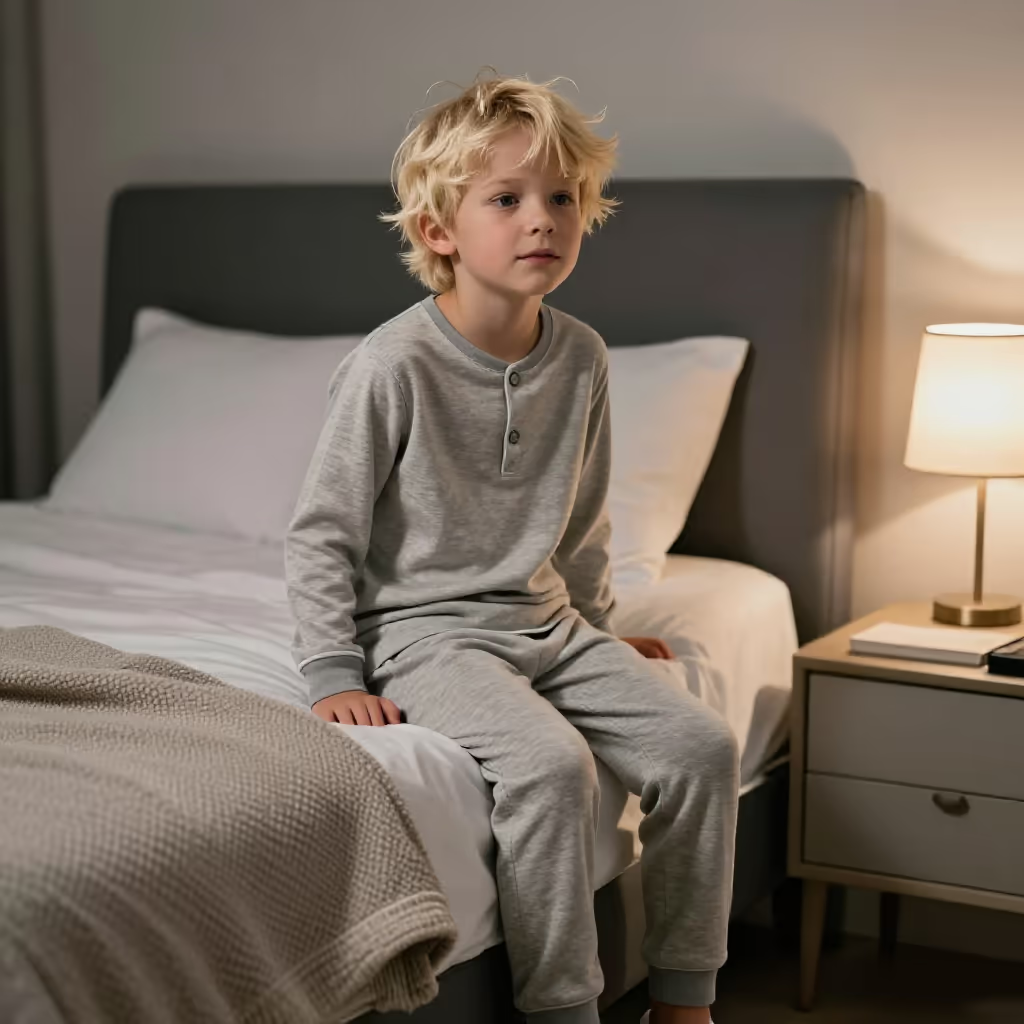
Vor dem Schlafengehen zieht er seinen bequemen Pyjama an.
He puts on his comfortable pajamas before going to bed.
Vor dem Schlafengehen zieht er seinen bequemen Schlafanzug an.
He puts on his comfortable pajamas before going to bed.