

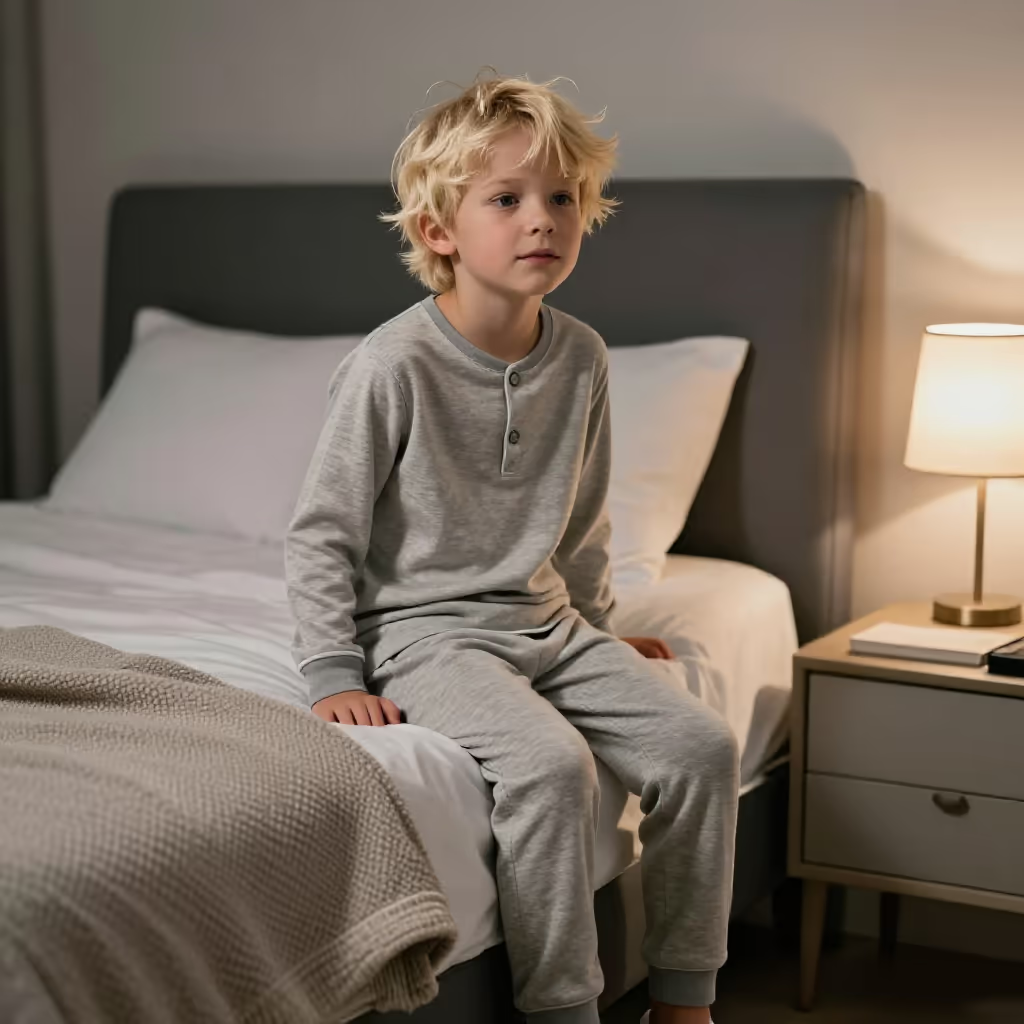
A two-piece item of clothing, consisting of pants and a top, worn specifically for sleeping.
example
An kalten Winterabenden ziehe ich mir am liebsten einen warmen Schlafanzug aus Flanell an.
On cold winter evenings, I like to put on warm flannel pajamas.
Usage tips
Compound structure
The word is a clear compound of 'Schlaf' (sleep, from 'schlafen' (to sleep)) and 'Anzug' (suit). So it literally means 'a suit for sleeping,' which directly explains its function.
EXAMPLE
Für die Kinder habe ich neue Schlafanzüge gekauft.
I bought new pajamas for the children.
Word family
The component 'Schlaf-' is used in many words that have to do with sleeping. If you see 'Schlaf-' at the beginning of a word, it probably has to do with this topic, as in 'Schlafzimmer' (bedroom) or 'Schlafsack' (sleeping bag).
EXAMPLE
Nach dem Bad zog er sich seinen Schlafanzug an und ging ins Schlafzimmer.
After the bath, he put on his pajamas and went into the bedroom.
Typical verbs
In everyday language, 'Schlafanzug' (pajamas) is often combined with the verbs 'anziehen' (to put on), 'ausziehen' (to take off), or 'tragen' (to wear). You can also say 'im Schlafanzug sein' (to be in pajamas).
EXAMPLE
Es ist schon spät, du solltest deinen Schlafanzug anziehen.
It's already late; you should put on your pajamas.
Compare with
synonym · confusable
Schlafanzug vs Pyjama
pajamas
'der Schlafanzug' and 'der Pyjama' mean almost the same thing in everyday language: comfortable clothing for sleeping, usually with pants and a top. 'Schlafanzug' is a German word and describes the function very directly. 'Pyjama' is also very common and sounds a little more international. Learners can easily confuse the words because both fit in the same situations. In most conversations, you can use either word.
Schlafanzug
Zu Hause zieht sich das Kind sofort seinen Schlafanzug an.
At home, the child immediately puts on his pajamas.
Pyjama
Er sitzt am Sonntagmorgen noch im Pyjama am Frühstückstisch.
On Sunday morning, he is still sitting at the breakfast table in his pajamas.