

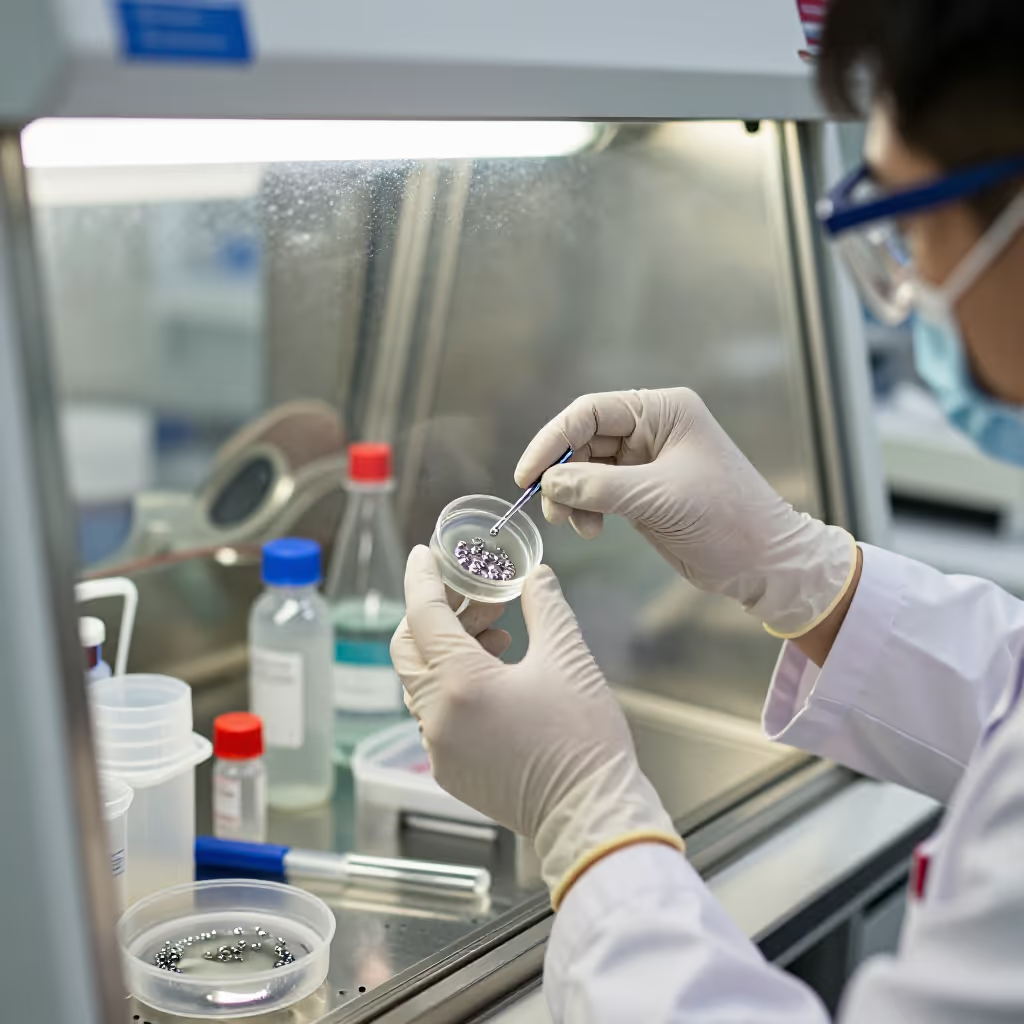
A chemical element that is the only metal that is liquid at room temperature. It is a silvery-white, very dense, and toxic heavy metal.
example
Wegen seiner Giftigkeit wird Quecksilber heute kaum noch in Thermometern verwendet.
Because of its toxicity, mercury is hardly used in thermometers anymore today.

Usage tips
Word structure
The word is made up of 'queck' and 'Silber' (silver). 'Queck' is an old German word for 'living' or 'agile'. So 'Quecksilber' (mercury/quicksilver) literally means 'living silver', which describes its liquid and mobile property.
EXAMPLE
Die Alchemisten nannten Quecksilber auch „lebendiges Silber“.
The alchemists also called mercury 'living silver'.
Context clue
The two meanings are easy to distinguish. If people are talking about chemistry, thermometers, or toxicity, they mean the metal. If the expression 'im Blut haben' (to have in one's blood) is used to describe a person, the idiom is meant.
EXAMPLE
Früher enthielten viele Thermometer Quecksilber.
In the past, many thermometers contained mercury.
Fixed expression
The figurative meaning exists only in the fixed idiom 'Quecksilber im Blut haben' (to have quicksilver in one's blood). The structure is unchangeable and describes a very lively, energetic person.
EXAMPLE
Man sagt, sie hat Quecksilber im Blut, weil sie immer aktiv ist.
People say she has quicksilver in her blood because she is always active.
Typical use
The idiom 'Quecksilber im Blut haben' (to have quicksilver in one's blood) is used colloquially and very often refers to active and restless children.
EXAMPLE
Mein Neffe kann keine Sekunde still sitzen, er hat wirklich Quecksilber im Blut.
My nephew can't sit still for a second; he really has quicksilver in his blood.
Compare with
antonym
Quecksilber vs ruhig
quiet / calm
'ruhig' and 'Quecksilber im Blut haben' can describe a contrast in people. 'ruhig' means that someone is calm or moves very little. The idiom 'Quecksilber im Blut haben' (to have quicksilver in one's blood), on the other hand, says that someone is very restless, lively, and constantly in motion. It is often used colloquially for children. Important: 'das Quecksilber' as a substance is not meant here; only the fixed idiom is relevant.
Quecksilber
Tom hat heute wieder Quecksilber im Blut und rennt durch die ganze Wohnung.
Tom has quicksilver in his blood again today and is running all around the apartment.
ruhig
Beim Arzt blieb Sofia ruhig, obwohl sie etwas Angst hatte.
At the doctor's office, Sofia stayed calm even though she was a little afraid.