

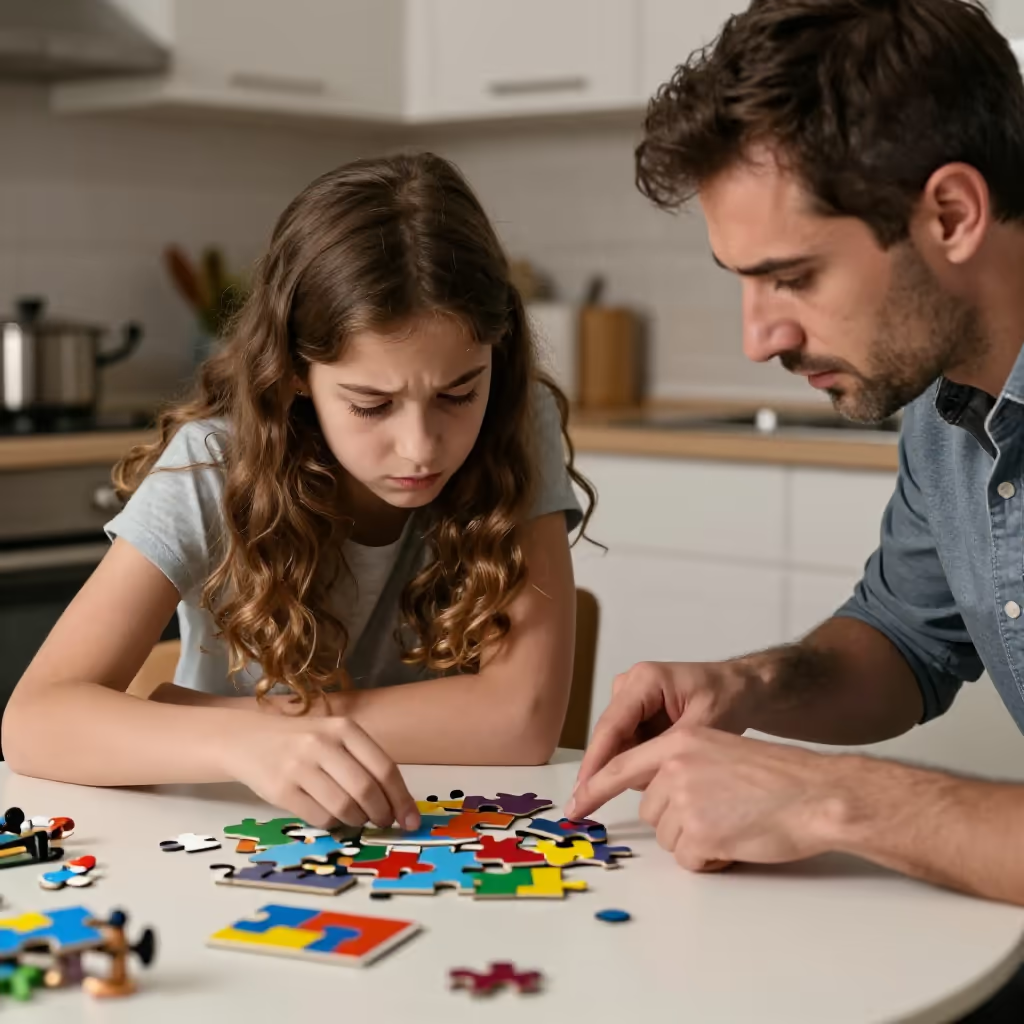
To think intensely about something in order to find a solution or explanation for a problem, a mystery, or an unclear situation.
example
Die Polizei rätselt noch immer über das Motiv des Täters.
The police are still puzzling over the perpetrator's motive.
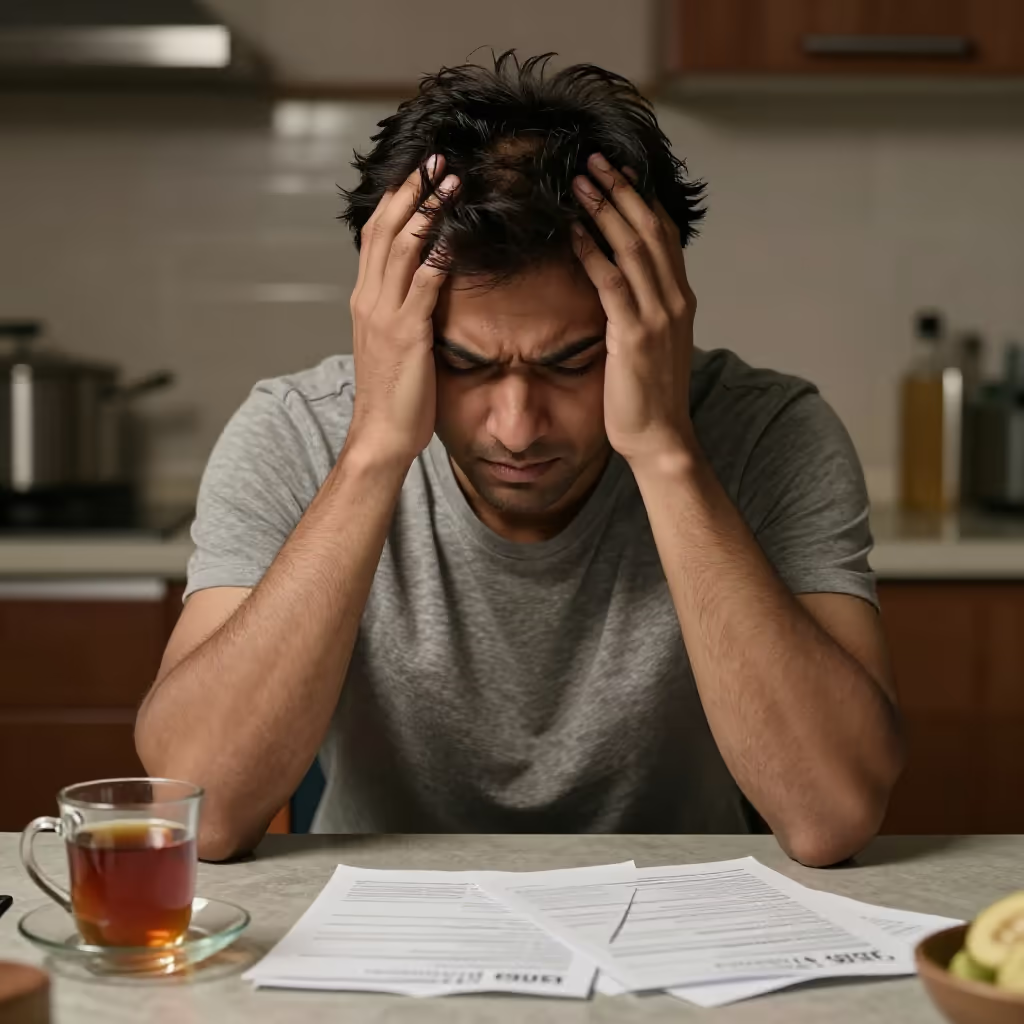
Usage tips
Word family
The verb 'rätseln' (to puzzle over) is derived directly from the noun 'das Rätsel' (the riddle/puzzle). So when you 'rätseln', you are trying to solve a puzzle or find an answer to a difficult question.
EXAMPLE
Die Wissenschaftler rätseln, wie die alten Pyramiden gebaut wurden.
The scientists are puzzling over how the ancient pyramids were built.
Correct preposition
When you name the topic that is being thought about, you use the preposition 'über' with the accusative. You can also combine it with a subordinate clause and 'darüber'.
EXAMPLE
Die Ermittler rätseln über die Identität des Opfers.
The investigators are puzzling over the identity of the victim.
Typical subjects
'Rätseln' (to puzzle over) is often used when experts or a group of people are looking for an explanation together. Typical subjects are therefore 'die Polizei' (the police), 'die Experten' (the experts), or 'die Wissenschaftler' (the scientists).
EXAMPLE
Die Experten rätseln noch immer über die Ursache des Phänomens.
The experts are still puzzling over the cause of the phenomenon.
Compare with
near_synonym · confusable
rätseln vs überlegen
to consider
'überlegen' and 'rätseln' both mean that someone is thinking. The difference lies in the goal and the situation. 'überlegen' is used generally when you want to make a decision or consider a possibility. 'rätseln' is used when something is unclear, mysterious, or hard to explain. In that case, you are looking for a solution or explanation. Learners may confuse the words because both describe thinking. Memory tip: for a decision, you use 'überlegen'; for a mystery or problem, you use 'rätseln'.
rätseln
Der Chef hat lange gerätselt, warum der Zug am Bahnhof nicht weiterfährt.
The boss puzzled for a long time over why the train was not continuing from the station.
überlegen
Nach der Nachricht überlegen die Eltern, ob sie mit der Lehrerin sprechen sollen.
After the message, the parents are considering whether they should speak with the teacher.