

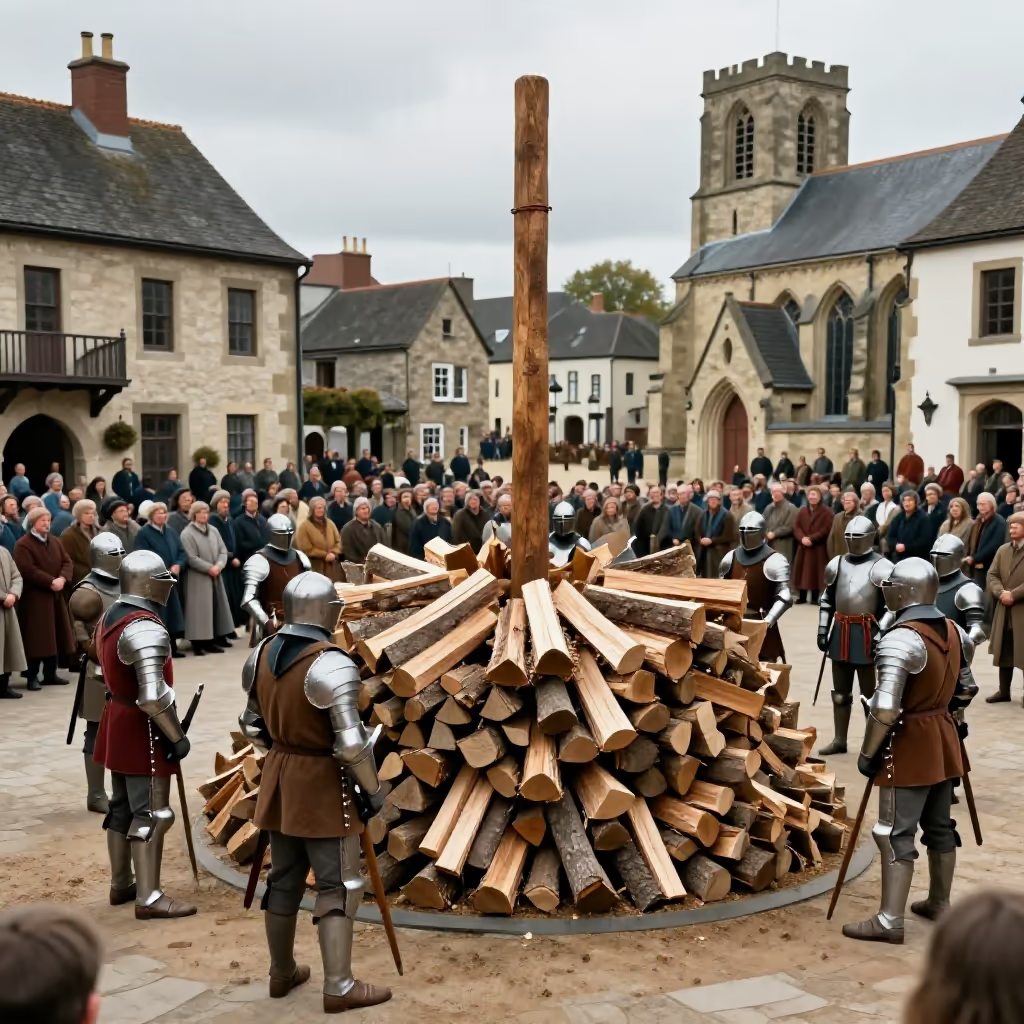
A piled-up stack of wood that historically served to publicly burn people, especially convicted heretics or witches.
example
Im Mittelalter wurde Jeanne d'Arc auf dem Scheiterhaufen verbrannt.
In the Middle Ages, Joan of Arc was burned at the stake.
Usage tips
Compound word
The word is made up of 'das Scheit' (an old word for a piece of wood or log) and 'der Haufen' (the pile). A 'Scheiterhaufen' is therefore literally a 'pile of logs'.
EXAMPLE
Für das große Feuer wurde ein riesiger Scheiterhaufen errichtet.
A huge pyre was built for the big fire.
Historical context
This word is used almost exclusively in a historical context. It is strongly associated with the Middle Ages, the Inquisition, and the burning of witches.
EXAMPLE
In vielen historischen Romanen wird die Verbrennung auf dem Scheiterhaufen thematisiert.
In many historical novels, burning at the stake is addressed as a theme.
Typical collocations
The most common collocation is 'jemanden auf dem Scheiterhaufen verbrennen' (to burn someone at the stake). The preposition is always 'auf' with the dative here. You can also say that someone 'auf dem Scheiterhaufen endet' (ends up at the stake) or 'stirbt' (dies).
EXAMPLE
Der verurteilte Ketzer sollte auf dem Scheiterhaufen verbrannt werden.
The convicted heretic was to be burned at the stake.