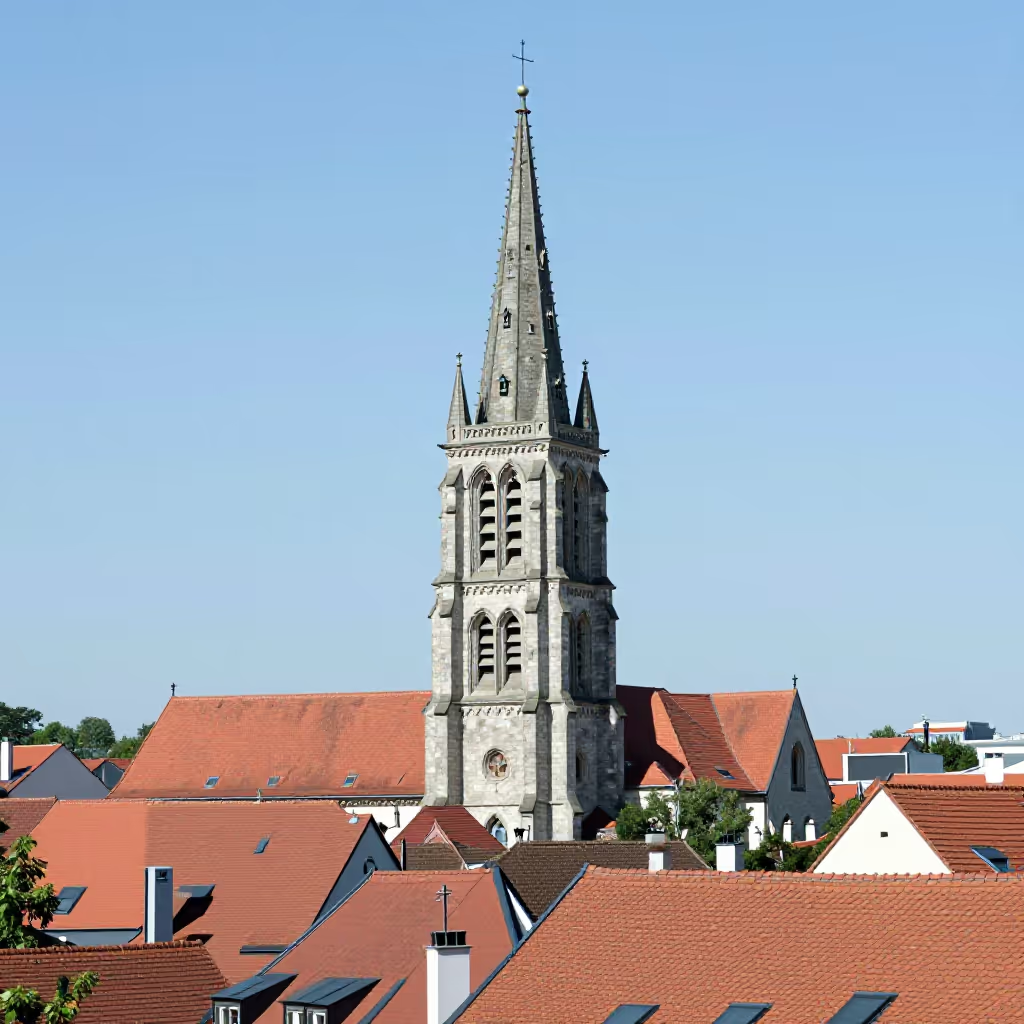
To rise high above the surroundings or stick out of something. It is often used for mountains, towers, or other tall objects.
example
Die Gipfel der Alpen ragen majestätisch in den Himmel.
The peaks of the Alps tower majestically into the sky.

Usage tips
Sentence structure with prepositions
The verb 'ragen' (to tower/protrude) is very often combined with prepositions that indicate a position or direction. Typical patterns are 'in etwas (Akk.) ragen' (to protrude into something), 'aus etwas (Dat.) ragen' (to stick out of something), and 'über etwas (Akk.) ragen' (to tower over something).
EXAMPLE
Ein alter Turm ragt über die Dächer der Stadt.
An old tower rises above the roofs of the city.
Register and style
'Ragen' (to tower/protrude) is an expressive verb that is often used in written language or in vivid, elevated language. It creates a strong visual image of height and size.
EXAMPLE
Die Wolkenkratzer ragen wie Nadeln in den Nachthimmel.
The skyscrapers tower like needles into the night sky.
Typical subjects
In its literal meaning, 'ragen' (to tower/protrude) is mostly used for large, immovable objects. Typical subjects are 'Berggipfel' (mountain peaks), 'Türme' (towers), 'Felsen' (rocks), 'Gebäude' (buildings), or 'Klippen' (cliffs).
EXAMPLE
Die steilen Klippen ragen direkt aus dem Meer empor.
The steep cliffs rise directly out of the sea.
Figurative meaning
In the figurative meaning, 'ragen' (to stand out) is used for people or their abstract qualities. The verb then describes that someone or something is superior to others or clearly stands out from a group.
EXAMPLE
Ihr Talent ragt weit aus dem Durchschnitt heraus.
Her talent stands out far above the average.
Compare with
near_synonym · confusable
ragen vs reichen
to hand / to suffice
'reichen' and 'ragen' can both describe something extending to a point or in a direction. 'reichen' is more general: something can reach as far as a boundary, down to the floor, or up to the ceiling. 'ragen' is used more when something clearly stands upward or sticks out of something, for example a tower, a mountain, or a branch. Learners may confuse the words because both describe extension. In practical terms: 'reichen' emphasizes the endpoint, while 'ragen' emphasizes noticeable protruding or towering.