

die Raserei
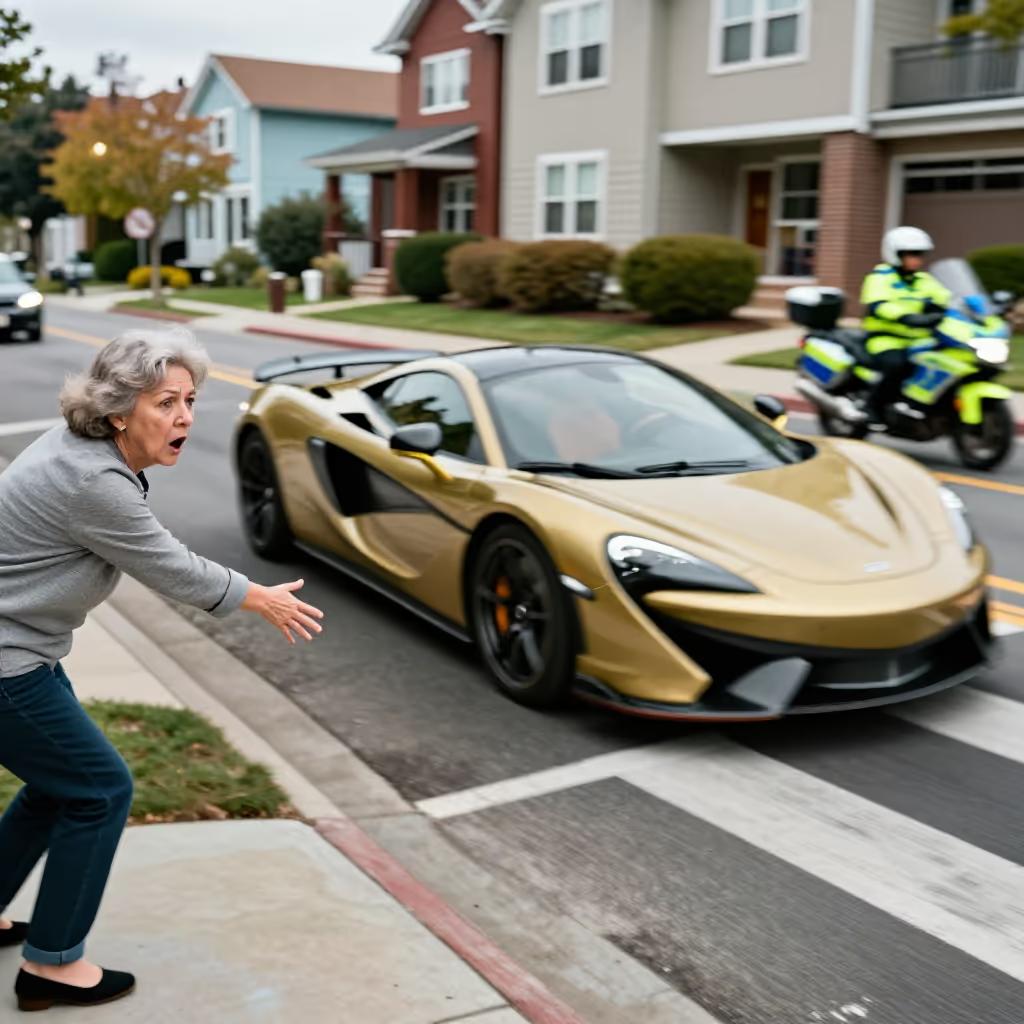
speeding
Driving a vehicle at an extremely excessive and reckless speed.
EXAMPLE
Wegen seiner Raserei auf der Autobahn verlor er den Führerschein.
Because of his speeding on the highway, he lost his driver's license.
speeding / frenzy
Loading your saved state.
speeding
Driving a vehicle at an extremely excessive and reckless speed.
Wegen seiner Raserei auf der Autobahn verlor er den Führerschein.
Because of his speeding on the highway, he lost his driver's license.

frenzy
A state of extreme, uncontrolled anger or rage; a fit of rage.
In seiner Raserei schlug er mit der Faust auf den Tisch.
In his frenzy, he slammed his fist on the table.
'Die Raserei' (speeding/frenzy) is derived from the verb 'rasen'. This verb also has two main meanings: to drive very fast and to be extremely angry. The noun takes on both meanings.
Er raste mit 180 km/h über die Landstraße.
He raced along the country road at 180 km/h.
You can easily tell which meaning is intended from the context. If it is about cars, speed, or traffic, it means fast driving. If it is about feelings, arguments, or destruction, it means a fit of rage.
Die Polizei will die Raserei auf den Autobahnen stärker kontrollieren.
The police want to monitor speeding on the highways more closely.
In the meaning of driving fast, 'Raserei' (speeding) is used almost exclusively negatively and is a term from traffic safety and traffic law. It always refers to dangerous and reckless driving.
Raserei ist eine der häufigsten Unfallursachen.
Speeding is one of the most common causes of accidents.
In the context of anger, 'Raserei' (frenzy) is often combined with adjectives like 'blind' (blind) or 'wild' (wild). A common phrase is also 'ein Anfall von Raserei' (a fit of frenzy/rage).
In blinder Raserei bemerkte er nicht, dass er sich selbst verletzte.
In a blind frenzy, he did not notice that he was injuring himself.
rage
In Rage and Raserei both describe extreme, uncontrollable anger. Someone can be in Rage without any visible action being described. Raserei places greater emphasis on wild raging or a fit of uncontrollable anger. Use Raserei when the anger is clearly expressed through intense behavior.
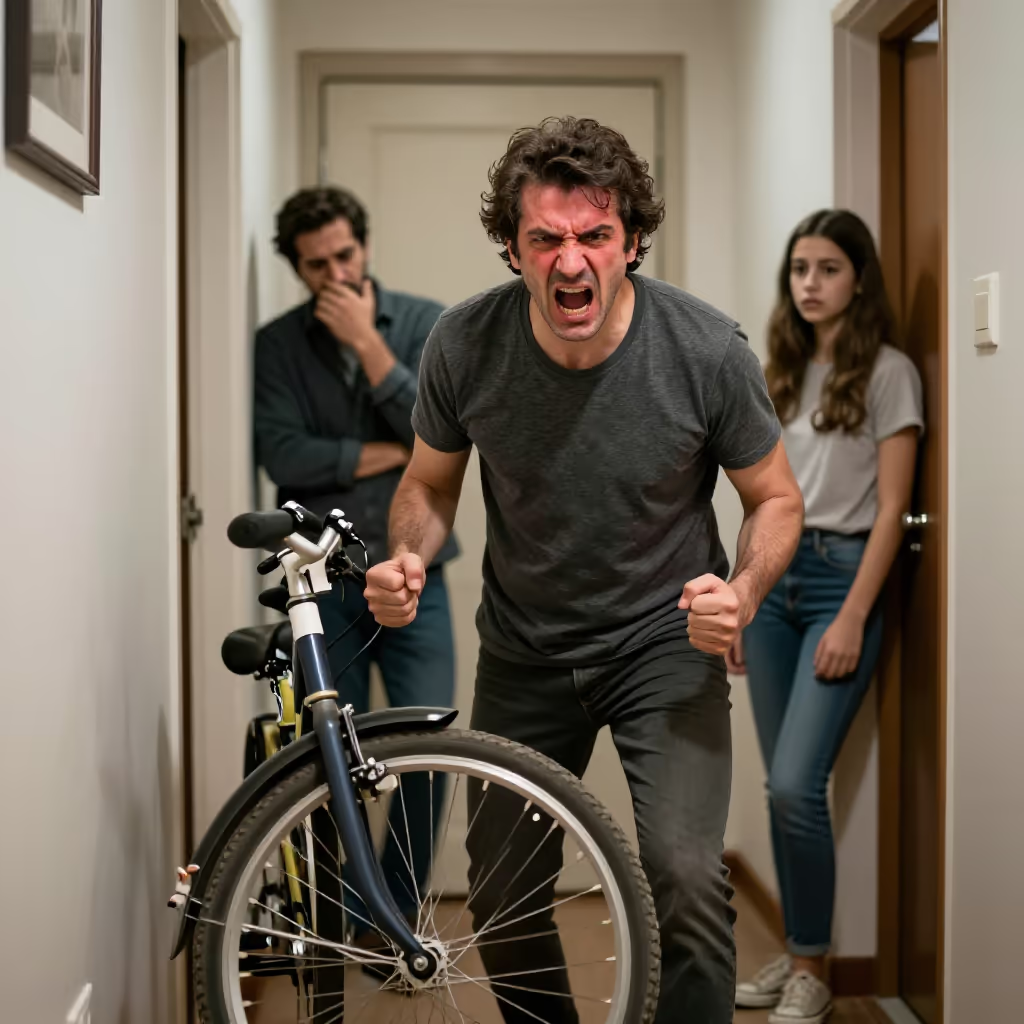
In seiner Raserei warf der Mann mehrere Gegenstände zu Boden.
In his fit of rage, the man threw several objects onto the floor.
Der Kunde geriet in Rage, als man seine Beschwerde ablehnte.
The customer flew into a rage when his complaint was rejected.