

rausschaffen
to get out
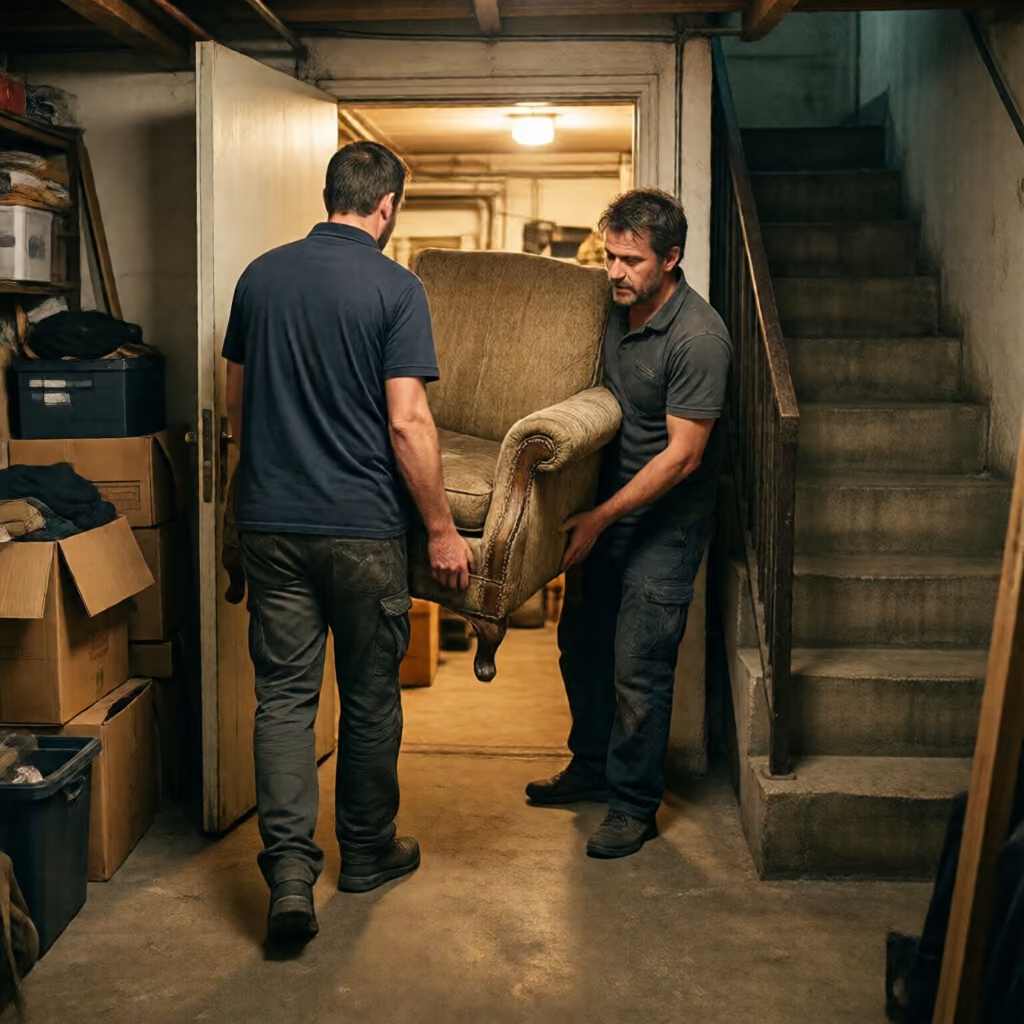
Colloquial: to bring someone or something out of a room or another area.
EXAMPLE
Wir müssen die alten Möbel aus dem Keller rausschaffen.
We need to get the old furniture out of the basement.
to get out / remove
rausschaffen – schaffte raus – hat rausgeschafft
Loading your saved state.
to get out
Colloquial: to bring someone or something out of a room or another area.
Wir müssen die alten Möbel aus dem Keller rausschaffen.
We need to get the old furniture out of the basement.
| ich | schaffe raus |
|---|---|
| du | schaffst raus |
| er/sie/es | schafft raus |
| wir | schaffen raus |
| ihr | schafft raus |
| sie | schaffen raus |
| ich | schaffte raus |
|---|---|
| du | schafftest raus |
| er/sie/es | schaffte raus |
| wir | schafften raus |
| ihr | schafftet raus |
| sie | schafften raus |
| ich | habe rausgeschafft |
|---|---|
| du | hast rausgeschafft |
| er/sie/es | hat rausgeschafft |
| wir | haben rausgeschafft |
| ihr | habt rausgeschafft |
| sie | haben rausgeschafft |
| du | schaff raus! |
|---|---|
| ihr | schafft raus! |
| Sie | schaffen Sie raus! |
| ich | hatte rausgeschafft |
|---|---|
| du | hattest rausgeschafft |
| er/sie/es | hatte rausgeschafft |
| wir | hatten rausgeschafft |
| ihr | hattet rausgeschafft |
| sie | hatten rausgeschafft |
| ich | werde rausschaffen |
|---|---|
| du | wirst rausschaffen |
| er/sie/es | wird rausschaffen |
| wir | werden rausschaffen |
| ihr | werdet rausschaffen |
| sie | werden rausschaffen |
| ich | schaffe raus |
|---|---|
| du | schaffest raus |
| er/sie/es | schaffe raus |
| wir | schaffen raus |
| ihr | schaffet raus |
| sie | schaffen raus |
Used for reported speech.
| ich | schaffte raus |
|---|---|
| du | schafftest raus |
| er/sie/es | schaffte raus |
| wir | schafften raus |
| ihr | schafftet raus |
| sie | schafften raus |
Used for wishes and “would”.
| infinitive | rausschaffen |
|---|---|
| with zu | rauszuschaffen |
| present participle | rausschaffend |
| past participle | rausgeschafft |
'Rausschaffen' (to get out) consists of 'raus' (out) and 'schaffen' (get / bring) and is separable. In a main clause, 'raus' comes at the end of the sentence; in a subordinate clause, the verb stays together. With the infinitive using 'zu' (to), 'zu' comes between the two parts.
Wir schaffen den kaputten Schrank raus.
We get the broken cabinet out.
Ich helfe dir, weil du den Schrank nicht allein rausschaffst.
I'm helping you because you can't get the cabinet out on your own.
Wir versuchen, den Schrank durch die schmale Tür rauszuschaffen.
We're trying to get the cabinet out through the narrow door.
The person or thing you get out is in the accusative. The place it comes from can be added with 'aus' (out of) and the dative.
Die Helfer schafften den verletzten Mann aus dem Gebäude raus.
The helpers got the injured man out of the building.
Common collocations include 'alte Möbel rausschaffen' (to get old furniture out), 'den Müll rausschaffen' (to take out the trash), and 'schwere Kisten rausschaffen' (to get heavy crates out). The verb is especially useful when talking about tidying up, renovating, and moving.
Bevor wir die Wände streichen, müssen wir die alten Möbel rausschaffen.
Before we paint the walls, we need to get the old furniture out.