

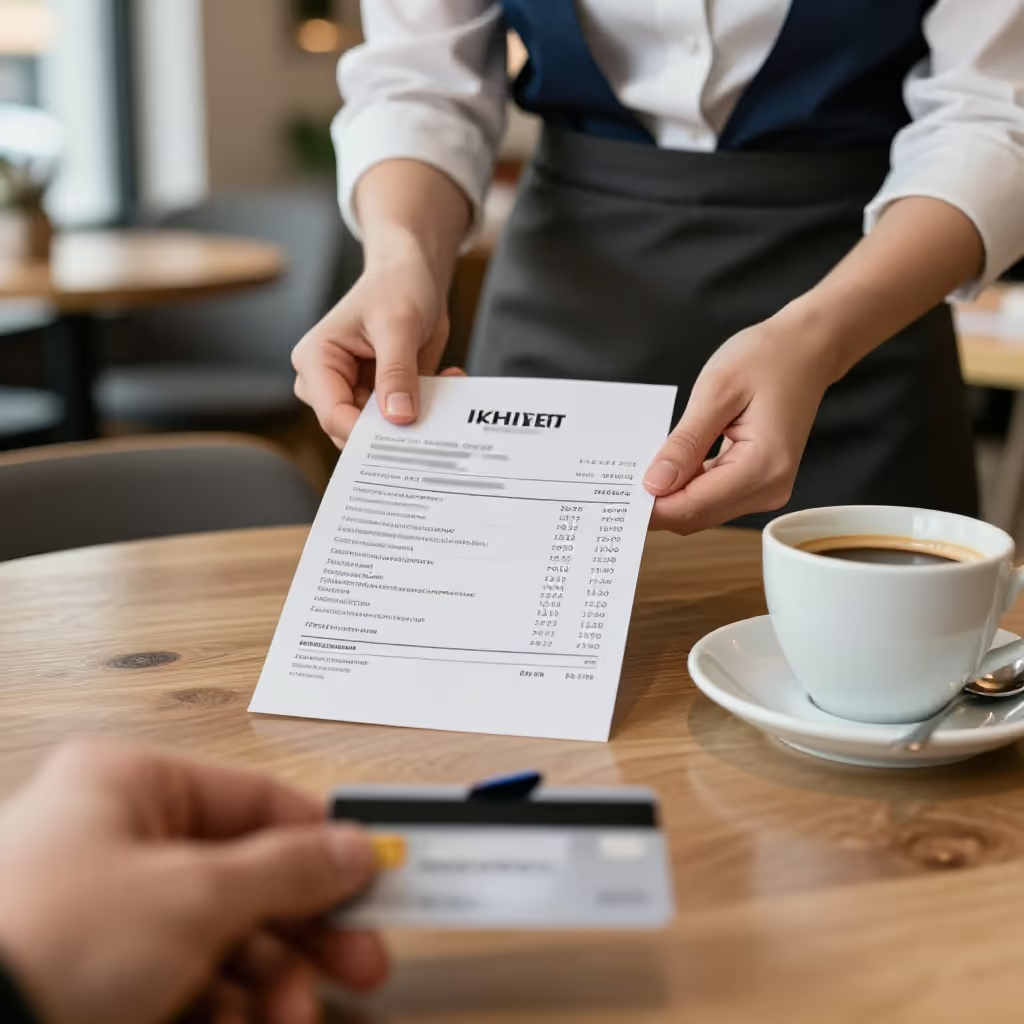
die Rechnung
bill / invoice
A document that lists the costs for goods received or services provided and requests payment.
EXAMPLE
Herr Ober, könnten Sie uns bitte die Rechnung bringen?
Waiter, could you please bring us the bill?
bill / calculation
Loading your saved state.
bill / invoice
A document that lists the costs for goods received or services provided and requests payment.
Herr Ober, könnten Sie uns bitte die Rechnung bringen?
Waiter, could you please bring us the bill?

calculation
A mathematical computation or calculation.
Nach meiner Rechnung müssten wir um 15 Uhr ankommen.
By my calculation, we should arrive at 3 p.m.

to take into account
To consider or take into account a circumstance or requirement.
Der neue Zeitplan muss den Ferien der Mitarbeiter Rechnung tragen.
The new schedule must take the employees' vacations into account.

to thwart someone's plans
To unexpectedly thwart or prevent someone's plans or intentions.
Wir wollten grillen, aber der plötzliche Regen hat uns einen Strich durch die Rechnung gemacht.
We wanted to barbecue, but the sudden rain thwarted our plans.

to get one's money's worth
To get what one had hoped for or what matches one's own wishes and interests.
Bei dem riesigen Buffet ist jeder auf seine Rechnung gekommen.
At the huge buffet, everyone got their money's worth.
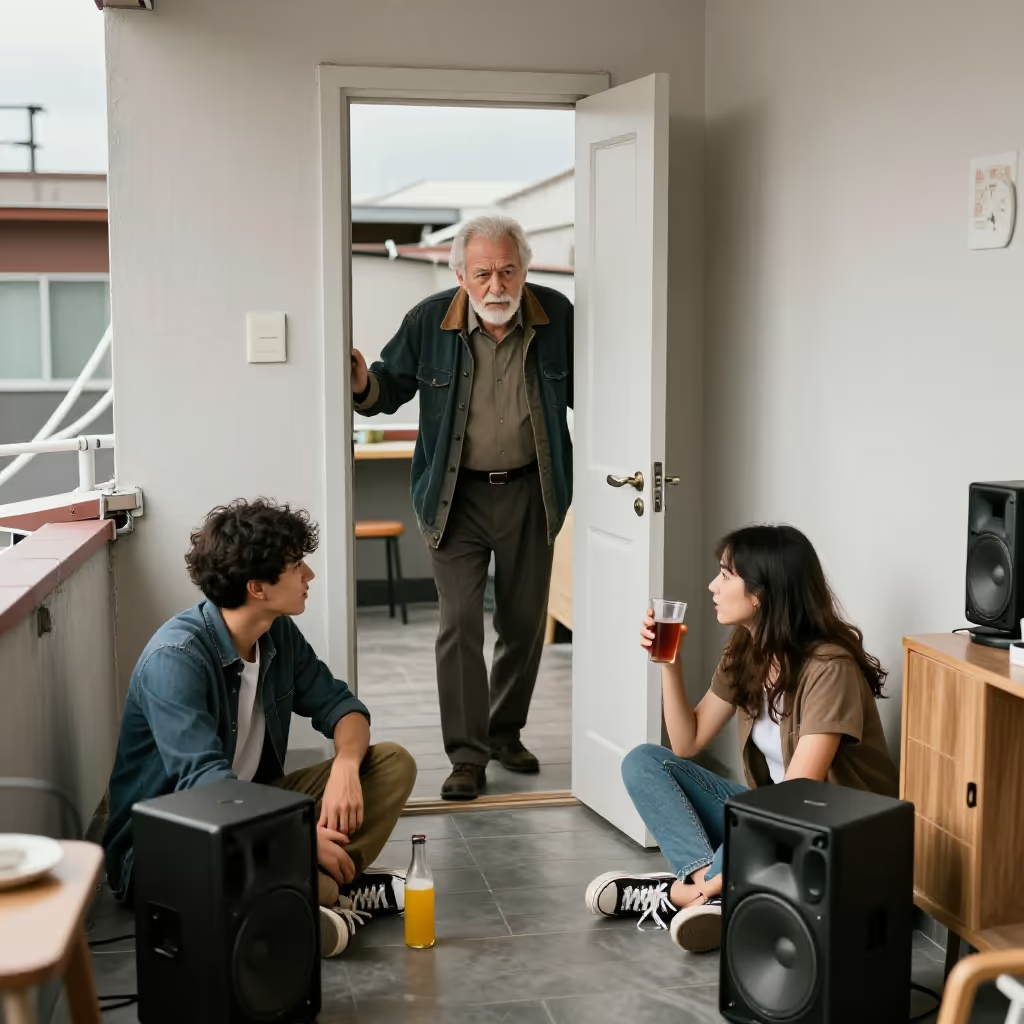
to reckon without the host
To make plans without considering a crucial person or an important, unpredictable factor.
Er dachte, er kann das Auto am Wochenende haben, aber da hat er die Rechnung ohne seinen Bruder gemacht.
He thought he could have the car for the weekend, but there he had reckoned without his brother.
'Die Rechnung' (the bill/calculation) is derived directly from the verb 'rechnen' (to calculate). This connection helps you understand the basic meanings 'payment request' (m01) and 'calculation' (m02).
Ich rechne kurz aus, was jeder bezahlen muss.
I'll quickly calculate how much everyone has to pay.
You can recognize the meaning from the context: if it's about money, paying, or services, the payment request (m01) is meant. If it's about logic, planning, or numbers, the calculation (m02) is meant.
Die Rechnung für die Autoreparatur war sehr hoch.
The bill for the car repair was very high.
In the context of a payment request, typical verbs are 'eine Rechnung bezahlen' (to pay a bill), 'eine Rechnung begleichen' (to settle a bill, more formal), 'eine Rechnung ausstellen' (to issue an invoice), or 'eine Rechnung bekommen' (to receive a bill).
Bitte begleichen Sie die Rechnung innerhalb von 14 Tagen.
Please settle the invoice within 14 days.
In the sense of a calculation, there is the fixed expression 'die Rechnung geht auf' (the calculation works out). It means that a plan works or an outcome occurs as expected.
Wir haben weniger ausgegeben als geplant. Unsere Rechnung ist voll aufgegangen.
We spent less than planned. Our calculation worked out perfectly.
The fixed expression 'Rechnung tragen' (to take into account) requires the dative. You take 'etwas' (something) or 'jemandem' (someone) into account.
Bei der Planung müssen wir den neuen Umständen Rechnung tragen.
In our planning, we must take the new circumstances into account.
The expression 'einen Strich durch die Rechnung machen' (to thwart someone's plans) also uses the dative. You thwart 'jemandem' (someone's) plans.
Ich wollte am Samstag ausschlafen, aber der laute Nachbar hat mir einen Strich durch die Rechnung gemacht.
I wanted to sleep in on Saturday, but the loud neighbor thwarted my plans.
calculation
In a mathematical context, both words can be connected with determining a result. „Die Rechnung“ usually refers to the specific sequence of arithmetic operations or the result, while „die Berechnung“ emphasizes the process of determining it. Use „Rechnung“ for the specific task and „Berechnung“ for the process.
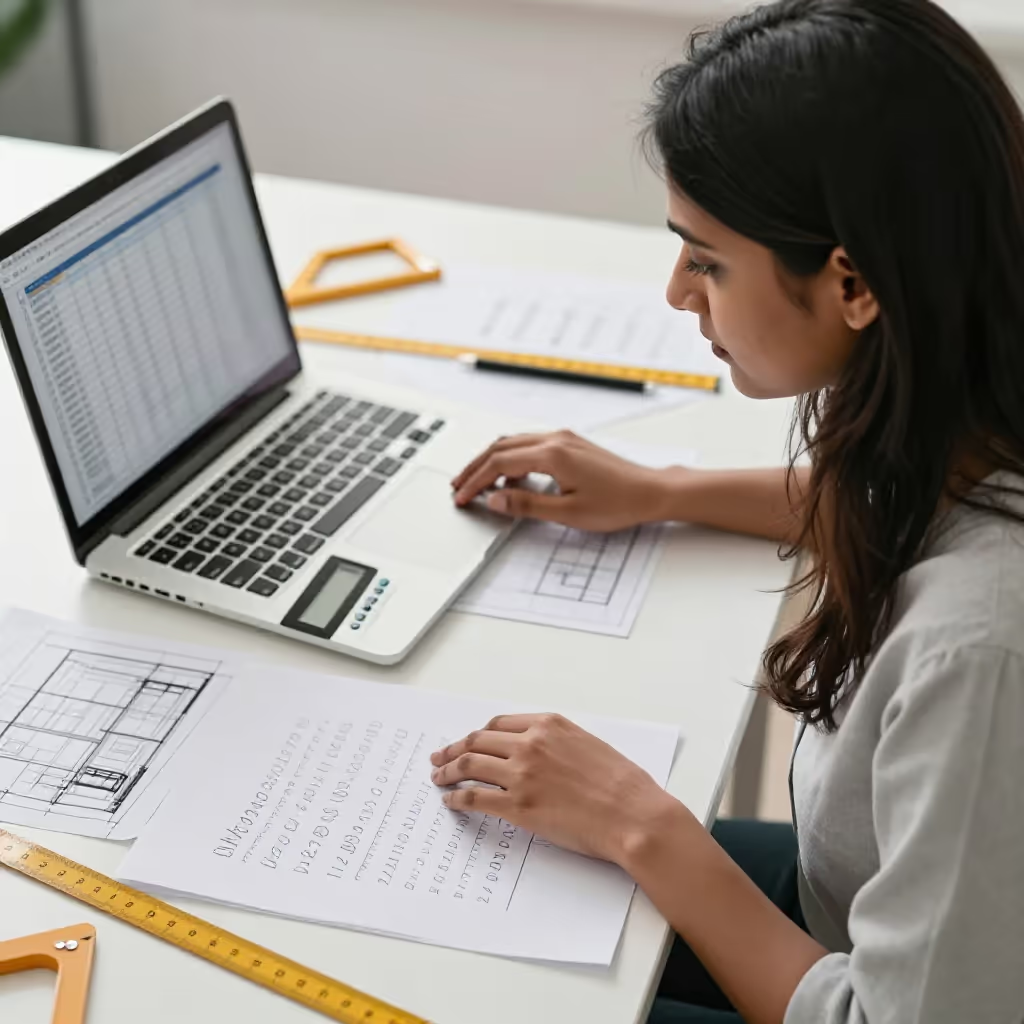
Die Rechnung 24 geteilt durch 6 ergibt 4.
The calculation 24 divided by 6 equals 4.
Die Berechnung des Ergebnisses dauerte wegen der vielen Zahlen einige Minuten.
Calculating the result took a few minutes because there were so many numbers.