


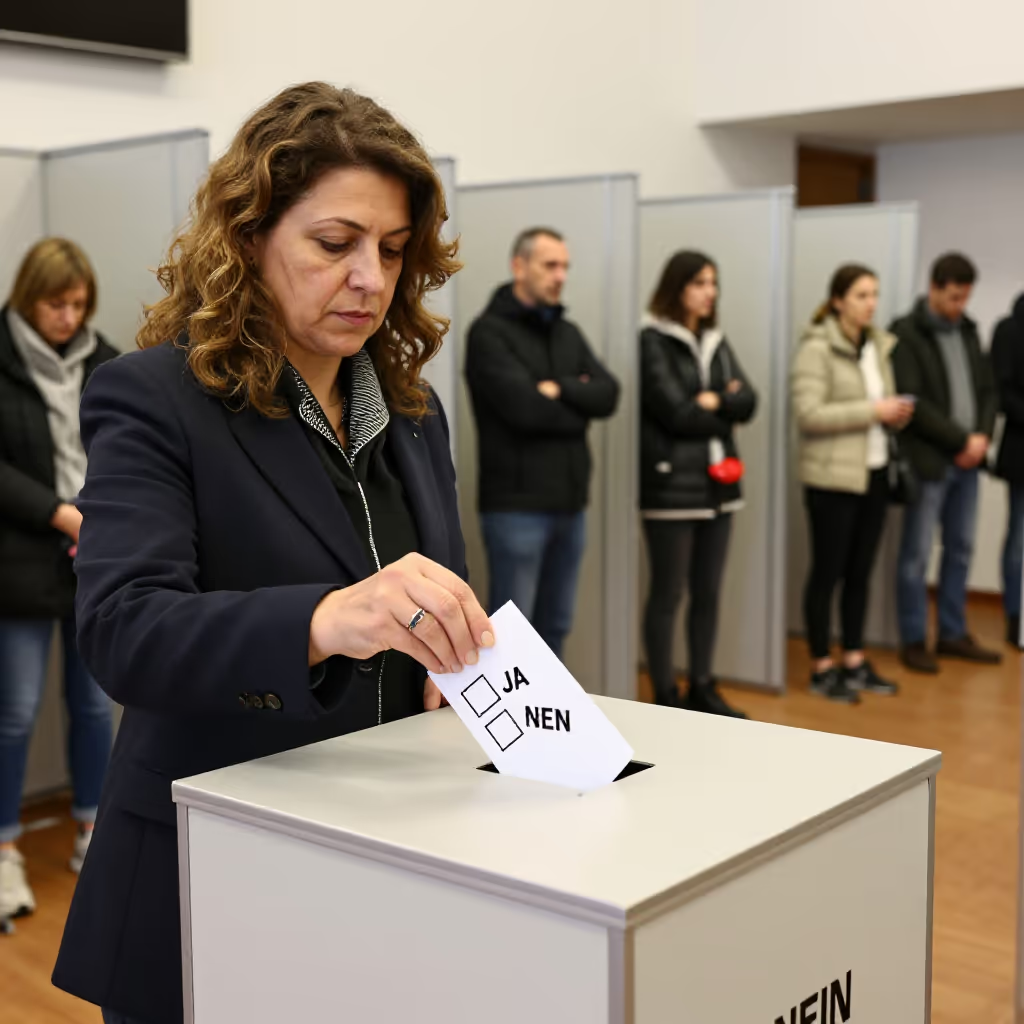
A popular vote in which the voting population directly decides on a specific political issue or law.
example
In einem Referendum stimmte die Mehrheit der Bürger für den Bau der neuen Brücke.
In a referendum, the majority of citizens voted in favor of building the new bridge.
Usage tips
Word structure
'Referendum' is a loanword from Latin. The ending '-um' is a typical feature of neuter nouns of Latin origin, as also in 'Museum' (museum) or 'Zentrum' (center).
EXAMPLE
Das Ergebnis des Referendums ist für die Regierung bindend.
The result of the referendum is binding for the government.
Typical collocations
In a political context, 'Referendum' (referendum) is often combined with certain verbs. You can 'abhalten' (hold), 'durchführen' (carry out), 'fordern' (demand), or 'initiieren' (initiate) a referendum.
EXAMPLE
Die Opposition fordert ein Referendum zur neuen Steuerreform.
The opposition is demanding a referendum on the new tax reform.
Correct preposition
To name the topic of the popular vote, the preposition 'über' (about/on) followed by the accusative is used.
EXAMPLE
Es gab ein Referendum über den Austritt aus der Union.
There was a referendum on leaving the union.
Compare with
near_synonym · confusable
Referendum vs Wahl
choice / election
'die Wahl' and 'das Referendum' both belong to the political sphere and have to do with voting. 'die Wahl' is usually a political process in which citizens elect people to office or also vote on issues. 'das Referendum' is more specific: the population directly decides on a particular political question or law. The words can be confused because in both cases citizens vote. If it is about candidates or parties, you normally say 'Wahl'. If it is about a specific issue, 'Referendum' fits.
Referendum
Beim Referendum stimmten die Bürger über das neue Gesetz ab.
In the referendum, citizens voted on the new law.
Wahl
Viele Bürger informieren sich vor der Wahl über die Kandidaten.
Many citizens learn about the candidates before the election.