

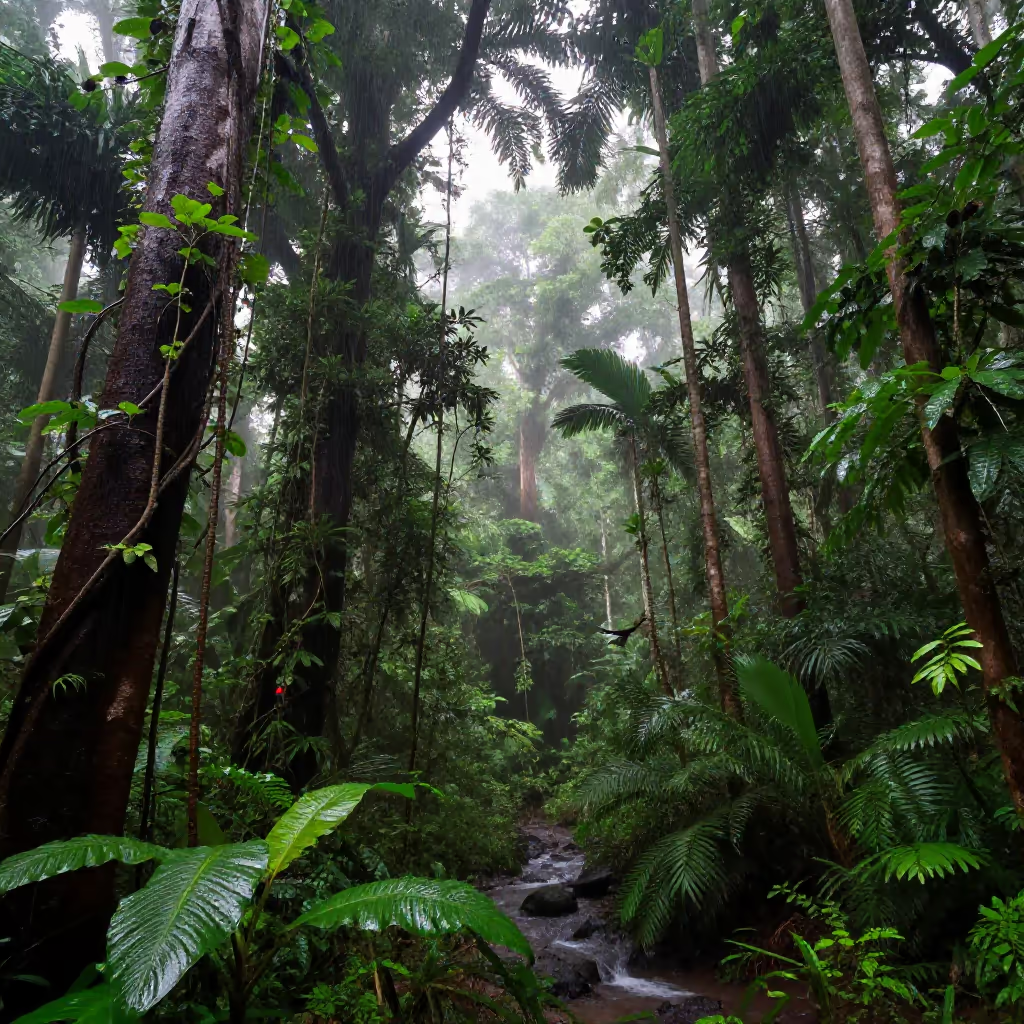
A forest in tropical or subtropical regions with very high annual rainfall, characterized by great biodiversity.
example
Der Schutz der Regenwälder ist entscheidend für das globale Klima und die Biodiversität.
Protecting rainforests is crucial for the global climate and biodiversity.
Usage tips
Word composition
The word is a clear compound of 'der Regen' (rain) and 'der Wald' (forest). So it literally describes a forest where it rains a lot.
EXAMPLE
Der Amazonas ist der größte Regenwald der Welt.
The Amazon is the largest rainforest in the world.
Typical collocations
'Regenwald' (rainforest) is often used with verbs related to protecting or destroying. Typical combinations are 'den Regenwald schützen' (to protect the rainforest), 'den Regenwald erhalten' (to preserve the rainforest), or 'den Regenwald abholzen' (to cut down the rainforest).
EXAMPLE
Viele Organisationen kämpfen dafür, den Regenwald zu schützen.
Many organizations are fighting to protect the rainforest.
Thematic context
This word appears very frequently in texts and discussions about environmental protection, climate change, and species diversity (biodiversity).
EXAMPLE
Die Zerstörung der Regenwälder beschleunigt den Klimawandel.
The destruction of rainforests accelerates climate change.
Compare with
antonym
Regenwald vs Wüste
desert
'die Wüste' and 'der Regenwald' both refer to large natural landscapes, but they stand in clear contrast. A desert is very dry and has only a few plants because it hardly ever rains. A rainforest is very humid, densely overgrown, and has very many plants and animals. So the difference is mainly water, plants, and climate: dry and barren in the desert, humid and green in the rainforest.
Regenwald
Warum ist der Regenwald für so viele Tiere ein wichtiger Lebensraum?
Why is the rainforest an important habitat for so many animals?
Wüste
In der Wüste kann es tagsüber sehr heiß und nachts überraschend kalt sein.
In the desert, it can be very hot during the day and surprisingly cold at night.