

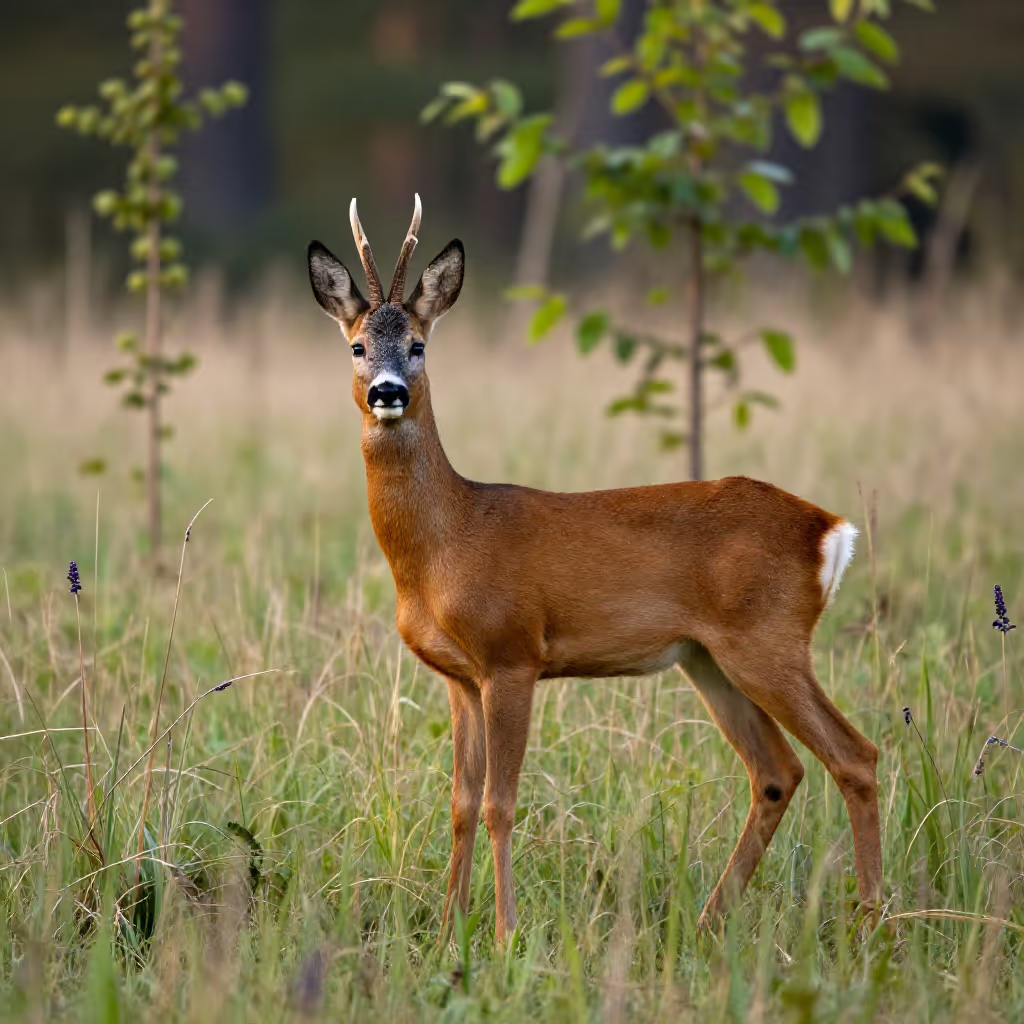
A medium-sized mammal from the deer family, widespread in Europe and Asia, known for its slender appearance.
example
Am Waldrand konnten wir ein Reh mit seinem Kitz beobachten.
At the edge of the forest, we were able to observe a roe deer with its fawn.
Usage tips
Typical collocations
The adjective 'scheu' (shy / timid) is used very frequently with 'Reh' (roe deer). The combination 'ein scheues Reh' (a timid roe deer) is a fixed expression that describes the animal's typical characteristic.
EXAMPLE
Das Kind war so leise wie ein scheues Reh.
The child was as quiet as a timid roe deer.
Word family
The young of a roe deer has its own name: 'das Rehkitz' (roe deer fawn). This word is also very common.
EXAMPLE
Im hohen Gras versteckte sich ein kleines Rehkitz.
A small roe deer fawn was hiding in the tall grass.
Typical context
Roe deer are often described in a particular context: you typically see them 'am Waldrand' (at the edge of the forest) or 'auf einer Lichtung' (in a clearing), usually at twilight or dawn.
EXAMPLE
Früh am Morgen sahen wir ein Reh am Waldrand stehen.
Early in the morning, we saw a roe deer standing at the edge of the forest.
Compare with
near_synonym · confusable
Reh vs Hirsch
stag / idiot
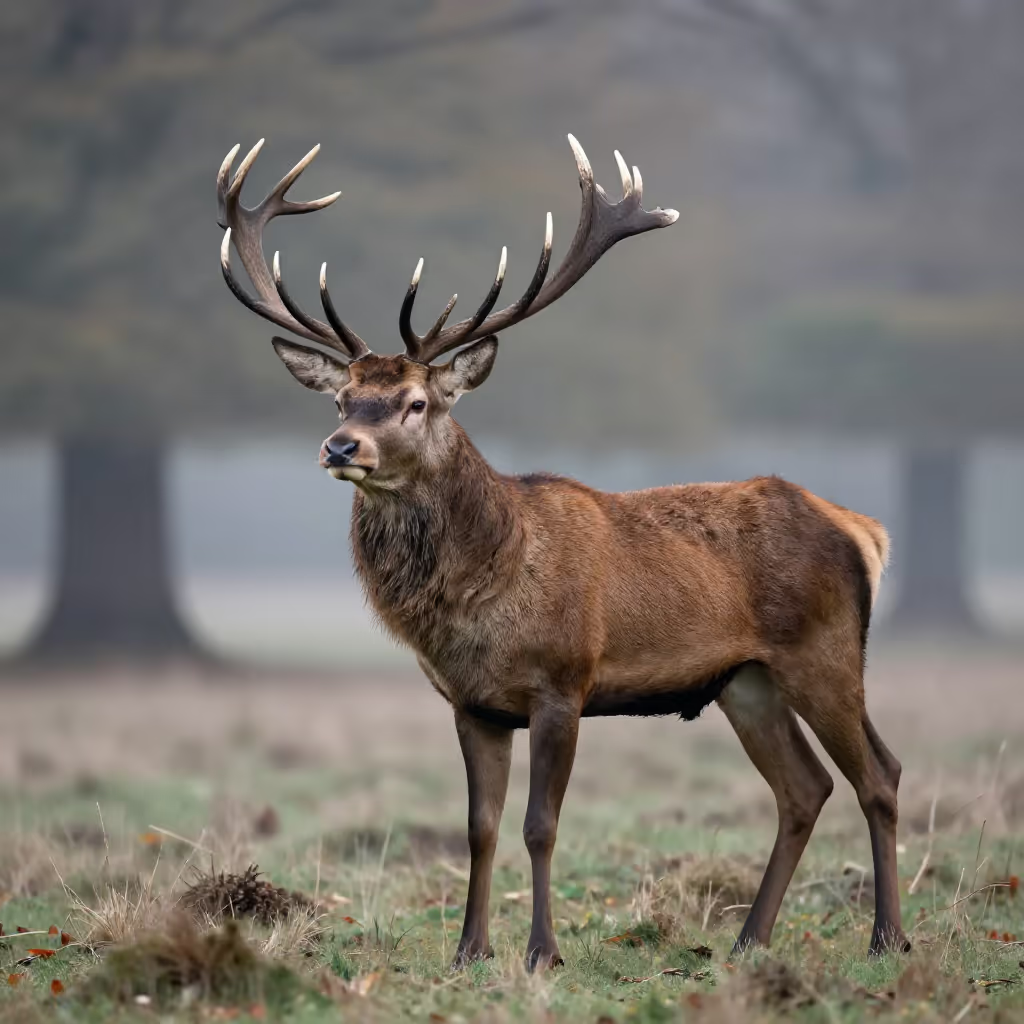
'der Hirsch' and 'das Reh' both refer to animals from the same animal family and can look similar in the forest. However, they are not the same. A 'Hirsch' is much larger; 'Hirsch' often means a male animal with large antlers, especially a red deer stag. A 'Reh' is smaller and slimmer. Learners can easily confuse the words because both are often simply presented in German as forest animals with antlers. A practical way to remember it: 'der Hirsch' is large, 'das Reh' is smaller.
Reh
Beim Spaziergang sahen wir ein Reh zwischen den Bäumen.
During our walk, we saw a roe deer between the trees.
Hirsch
Am Waldrand stand ein großer Hirsch mit einem breiten Geweih.
At the edge of the forest stood a large stag with wide antlers.