

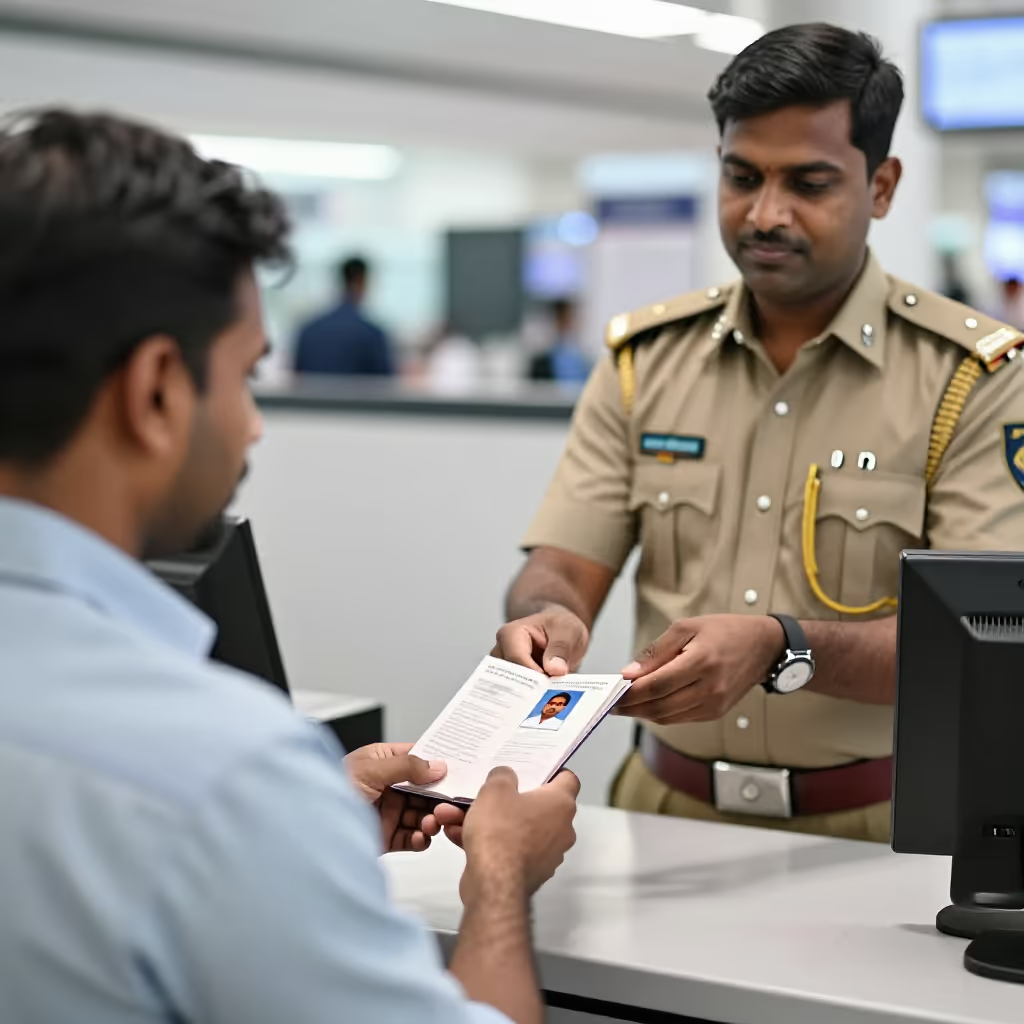
An official government document that confirms a person's identity and nationality and is needed for travel abroad.
example
Für die Reise in die USA benötigen Sie einen gültigen Reisepass.
For the trip to the USA, you need a valid passport.
Usage tips
Word composition
The word 'Reisepass' (passport) is made up of 'Reise' (journey/trip) and 'Pass' (pass/passport). So it is literally a pass that you need for a trip.
EXAMPLE
Ohne gültigen Reisepass darfst du nicht ins Flugzeug steigen.
Without a valid passport, you are not allowed to board the plane.
Typical verbs
Common verbs in connection with a passport are 'beantragen' (to apply for), 'verlängern lassen' (to have renewed), and 'vorzeigen' (to show/present).
EXAMPLE
Ich muss meinen Reisepass bald verlängern lassen, da er in zwei Monaten abläuft.
I need to have my passport renewed soon because it expires in two months.
Checking validity
The adjective 'gültig' (valid) is very important. People often talk about whether a passport is 'gültig' (valid) or 'abgelaufen' (expired).
EXAMPLE
Bitte prüfen Sie vor der Buchung, ob Ihr Reisepass noch lange genug gültig ist.
Please check before booking whether your passport is still valid long enough.
Compare with
synonym · confusable
Reisepass vs Pass
passport / pass
'der Pass' and 'der Reisepass' can mean the same document used for traveling abroad. 'Reisepass' is more specific and unambiguous. In everyday speech, 'Pass' is often used as a short form of 'Reisepass', but it can also have other meanings, for example in sports or in the mountains. That is why 'Pass' can sometimes be ambiguous. If the context is travel, an airport, or a border, most people understand 'Pass' as 'Reisepass'. In official or very clear situations, 'Reisepass' is the more precise form.
Reisepass
Prüf bitte, ob dein Reisepass im Sommer noch gültig ist.
Please check whether your passport is still valid in the summer.
Pass
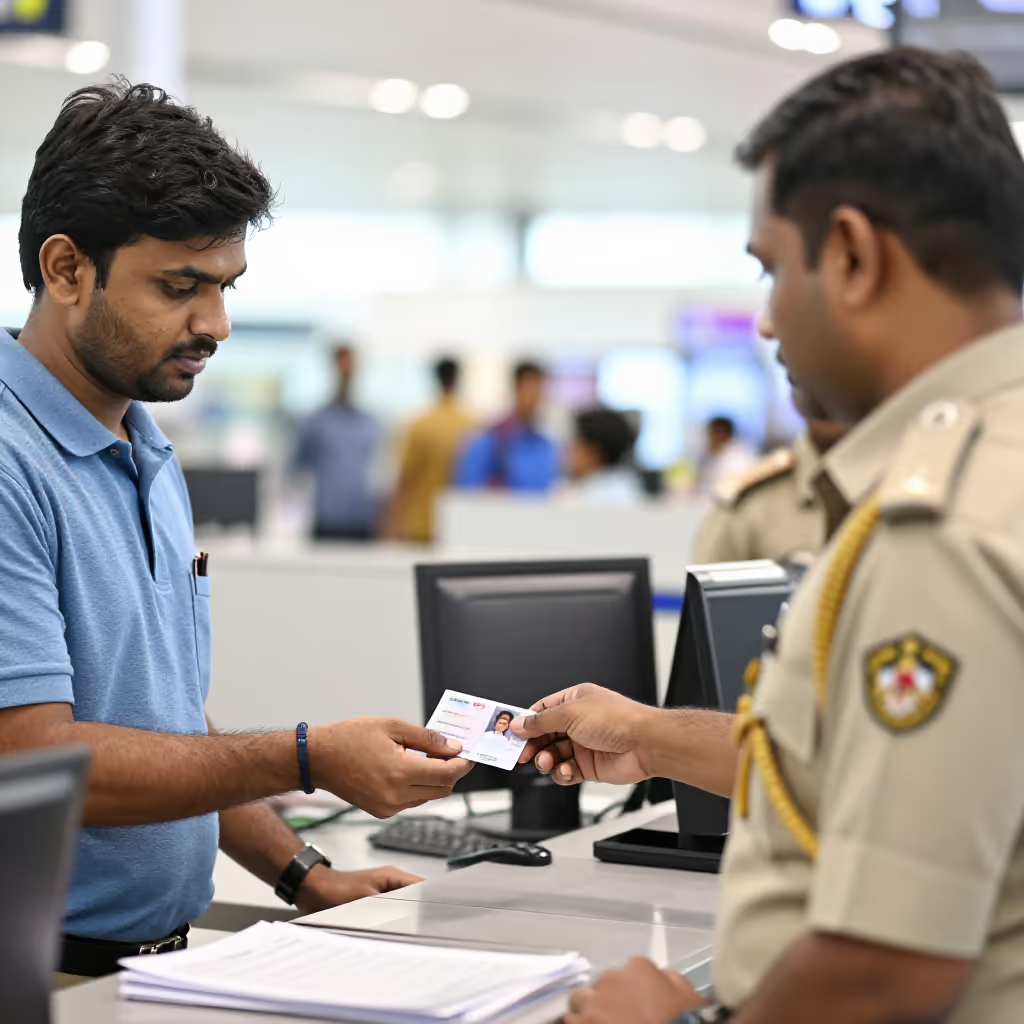
Am Flughafen musste Anna ihren Pass und das Ticket zeigen.
At the airport, Anna had to show her passport and ticket.